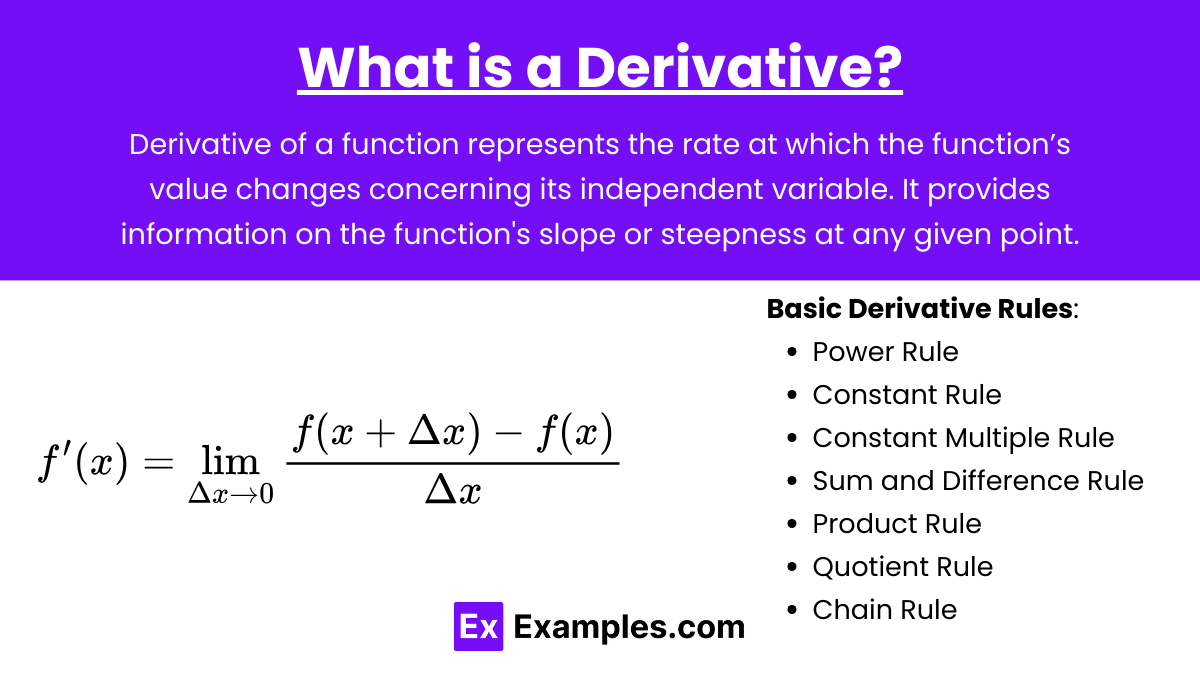
Finding the primitive of ln x requires a specialized technique because standard power rules don't apply directly to logarithmic functions. The antiderivative, or indefinite integral, of $f(x) = \ln(x)$ is evaluated as $x \ln(x) - x + C$, where $C$ represents the constant of integration.
You can solve this integration problem using a method called integration by parts. This core calculus procedure transforms the integral of a product into a simpler form, turning a difficult logarithmic expression into an algebraic one that you can solve easily.
The Core Method: Integration by Parts
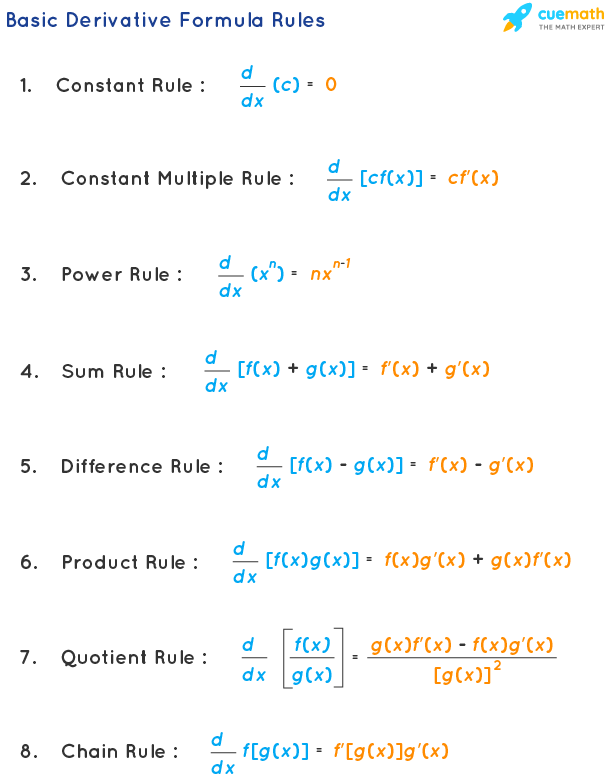
Integration by parts stems from the product rule for differentiation. The standard formula states that the integral of $u , dv$ equals $uv$ minus the integral of $v , du$. To apply this formula to the natural logarithm, you must split the integrand into two parts: $u$ and $dv$.
- Let $u = \ln(x)$
- Let $dv = dx$
Next, differentiate $u$ with respect to $x$ to find $du$, and integrate $dv$ to find $v$:
- $du = \frac{1}{x} , dx$
- $v = x$
Substitute these expressions into the integration by parts formula:
$$\int \ln(x) , dx = x \ln(x) - \int x \left(\frac{1}{x}\right) , dx$$
Simplify the remaining integral inside the expression. Multiplying $x$ by $\frac{1}{x}$ yields $1$:
$$\int \ln(x) , dx = x \ln(x) - \int 1 , dx$$
Integrating $1$ with respect to $x$ gives $x$. Putting it all together and adding the constant of integration yields the final result:
$$\int \ln(x) , dx = x \ln(x) - x + C$$
Verifying the Solution via Differentiation
A reliable way to confirm an antiderivative is correct is to differentiate it. Taking the derivative of your result should return the original function, $\ln(x)$. Let's apply the product rule to the first term, $x \ln(x)$, and the power rule to the second term, $-x$:
$$\frac{d}{dx} \left[ x \ln(x) - x + C \right]$$
Using the product rule for $x \ln(x)$:
$$\left( x \cdot \frac{1}{x} \right) + \left( \ln(x) \cdot 1 \right) - 1$$
This simplifies to:
$$1 + \ln(x) - 1 = \ln(x)$$
The derivative matches the original integrand precisely. This confirms that the derived primitive is accurate.
Definite Integrals Involving Logarithms
When evaluating definite integrals of $\ln(x)$ over a specific interval $[a, b]$, you apply the Fundamental Theorem of Calculus. First, find the antiderivative, and then calculate the difference between the upper and lower limits.
For example, evaluate the definite integral from $1$ to $e$:
$$\int_{1}^{e} \ln(x) , dx = \left[ x \ln(x) - x \right]_{1}^{e}$$
Substitute the upper limit $e$:
$$(e \ln(e) - e) = (e \cdot 1 - e) = e - e = 0$$
Substitute the lower limit $1$:
$$(1 \ln(1) - 1) = (1 \cdot 0 - 1) = -1$$
Subtract the lower limit evaluation from the upper limit evaluation:
$$0 - (-1) = 1$$
The net accumulated area under the curve of $y = \ln(x)$ from $x = 1$ to $x = e$ is exactly $1$. You can review further integration techniques through resources provided by MIT OpenCourseWare.
Common Mistakes to Avoid
Calculus students often run into predictable traps when evaluating logarithmic integrals. Avoiding these errors saves time and prevents cascading calculation failures.
- Forgetting the constant of integration: Omitting $+ C$ on indefinite integrals is a frequent mistake. Because an infinite number of vertical shifts share the same derivative, you must include $C$ to represent the complete family of antiderivatives.
- Incorrectly assigning $u$ and $dv$: If you try to set $u = dx$ and $dv = \ln(x)$, you end up needing the very integral you're trying to solve. Always assign the logarithmic term to $u$ so that differentiation simplifies it into an algebraic fraction.
- Domain oversight: Remember that the natural logarithm is only valid for positive real numbers ($x > 0$). Never evaluate integrals across domains that include zero or negative values without proper absolute value adjustments in related logarithmic expansions.
Frequently Asked Questions
What is the integral of $(\ln(x))^2$?
You can solve the integral of the squared natural logarithm, $\int (\ln(x))^2 , dx$, by applying integration by parts twice. The resulting antiderivative is $x(\ln(x))^2 - 2x\ln(x) + 2x + C$.
Why can't we use the standard power rule for $\ln(x)$?
The power rule applies to terms of the form $x^n$ where $n \neq -1$. Because $\ln(x)$ is a transcendental function rather than a polynomial power, standard algebraic rules do not apply directly, requiring calculus tools like integration by parts.
How does this integrate with substitution methods?
While direct substitution doesn't work out-of-the-box for $\ln(x)$ alone, integration by parts is effectively a modified version of the product rule designed specifically for functions that lack obvious inner-outer derivative pairs. For deep dives into rigorous proofs, consult Wolfram MathWorld.
What is the primitive of $\frac{1}{x}$?
The derivative of $\ln(x)$ is $\frac{1}{x}$, which means the reverse operation is true: the primitive of $\frac{1}{x}$ is $\ln|x| + C$. Be careful not to confuse this with the primitive of $\ln(x)$ itself.