Finding the exact length of a curved path in the coordinate plane requires more than a straight ruler or the standard distance formula. Because curves bend continuously, you need integration to sum up an infinite number of microscopic straight segments. The foundational arc length formula calculus course teaches you how to slice any smooth curve into infinitesimal linear chunks and integrate them from a starting point to an ending point.
Mastering this concept connects single-variable integration to geometry, physics, and engineering. Whether you are analyzing the sagging cables of power lines or calculating the exact distance traveled along a parabolic trajectory, understanding how to set up and evaluate these radical integrals is essential for advanced mathematics.
The Foundation of Arc Length
To understand where the arc length formula comes from, picture a smooth curve plotted on a Cartesian coordinate plane. If you zoom in extremely close on any small section of that curve, the arc begins to look nearly straight. You can approximate the total length of the curve by drawing a series of chord segments connecting points along the path, much like inscribing polygons inside a circle.
Let the coordinates of two adjacent points on the curve be $(x, y)$ and $(x + dx, y + dy)$. The straight-line distance $ds$ of this tiny hypotenuse is given by the Pythagorean theorem:
$ds = \sqrt{dx^2 + dy^2}$
To integrate this along the curve with respect to $x$, factor out $dx^2$ from inside the square root:
$ds = \sqrt{1 + \left(\frac{dy}{dx}\right)^2} dx$
Summing all these infinitesimal segments from $x = a$ to $x = b$ yields the definitive single-variable integral for arc length. If a function $f(x)$ is smooth and its derivative $f'(x)$ is continuous on the interval $[a, b]$, the arc length $L$ is:
$L = \int_{a}^{b} \sqrt{1 + [f'(x)]^2} , dx$
This simple expression turns geometric measurement into an exercise in algebraic manipulation and integration techniques.
Step-by-Step Guide to Calculating Arc Lengths
Setting up an arc length problem requires careful attention to the domain and the derivative of the function. Follow these structured steps to evaluate a curve successfully without getting trapped by complex radicals.
- Verify smoothness: Check that the function $f(x)$ is continuous and differentiable on the chosen interval $[a, b]$. If the derivative has a vertical asymptote or a sharp corner in that range, the standard formula requires modification or piecewise integration.
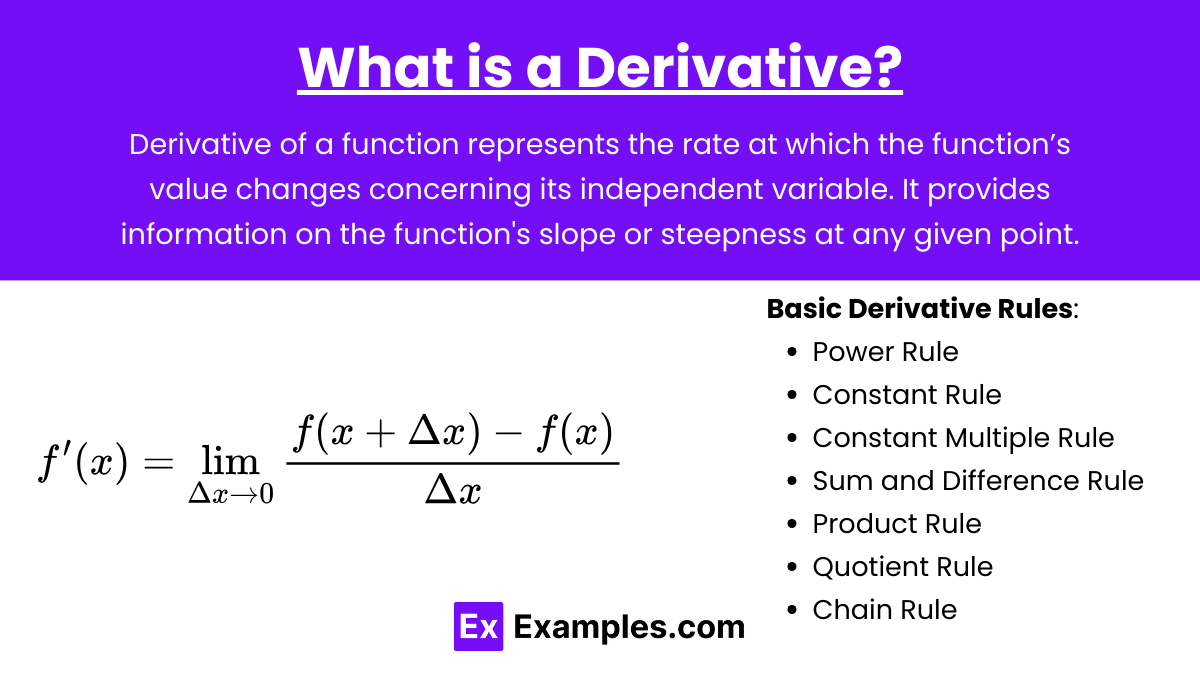
- Compute the derivative: Find $f'(x)$ with respect to your variable of integration. Take your time here, as arithmetic errors in the derivative propagate through the entire integral.
- Square the derivative: Calculate $[f'(x)]^2$. Look for opportunities to factor or simplify using algebraic identities, especially trigonometric identities like $1 + \tan^2(\theta) = \sec^2(\theta)$.
- Add one: Add $1$ to your squared derivative expression inside a radical. If you structured your problem well, this expression will often simplify into a perfect square trinomial, allowing you to eliminate the square root.
- Evaluate the definite integral: Integrate the resulting expression between your lower and upper limits $a$ and $b$, then apply the Fundamental Theorem of Calculus.
Practical Example: The Parabola
Consider finding the length of the parabola $y = x^2$ from $x = 0$ to $x = 1$.
First, compute the derivative: $\frac{dy}{dx} = 2x$.
Next, square the derivative: $\left(\frac{dy}{dx}\right)^2 = (2x)^2 = 4x^2$.
Substitute this into the arc length integral:
$L = \int_{0}^{1} \sqrt{1 + 4x^2} , dx$
This particular integral requires a trigonometric substitution, specifically $2x = \tan(\theta)$, or looking up a standard integral table. Evaluating it gives an exact length of approximately $1.4789$ units, demonstrating how even simple polynomial curves lead to non-trivial integrals. For further reading on trigonometric substitution methods, refer to the MIT OpenCourseWare Calculus Resource.
Working with Parametric and Y-Dependent Curves
Not every curve is written neatly as a function of $y$ in terms of $x$. You will frequently encounter curves oriented vertically or defined parametrically by time or another independent variable $t$.
Integrating with Respect to $Y$
If a curve is given as $x = g(y)$ from $y = c$ to $y = d$, the formula mirrors the standard $x$-version by swapping the variables:
$L = \int_{c}^{d} \sqrt{1 + [g'(y)]^2} , dy$
This approach saves time when the derivative with respect to $y$ is significantly simpler than solving for $y$ explicitly as a function of $x$.
Parametric Curves
When a curve's coordinates are defined by two separate functions of a parameter $t$, such as $x = x(t)$ and $y = y(t)$ for $t_1 \le t \le t_2$, the incremental distance formula expands to account for changes in both directions simultaneously:
$L = \int_{t_1}^{t_2} \sqrt{\left(\frac{dx}{dt}\right)^2 + \left(\frac{dy}{dt}\right)^2} , dt$
This formulation is indispensable in physics for tracking particle trajectories and projectile motion along curved paths.
Unlocking the Mystery of the Catenary
One of the most famous applications of arc length calculus involves the catenary, the curve formed by a hanging flexible cable or chain supported only at its ends under its own weight. At first glance, a hanging chain looks like a parabola, but physical reality and mathematical derivation prove otherwise.
The standard equation for a catenary curve resting on the $y$-axis with a scaling factor $a$ is:
$y = a \cosh\left(\frac{x}{a}\right)$
Here, $\cosh$ represents the hyperbolic cosine function, defined as $\cosh(u) = \frac{e^u + e^{-u}}{2}$.
Finding the Length of a Catenary Segment
Let us calculate the arc length of this catenary from $x = -1$ to $x = 1$.
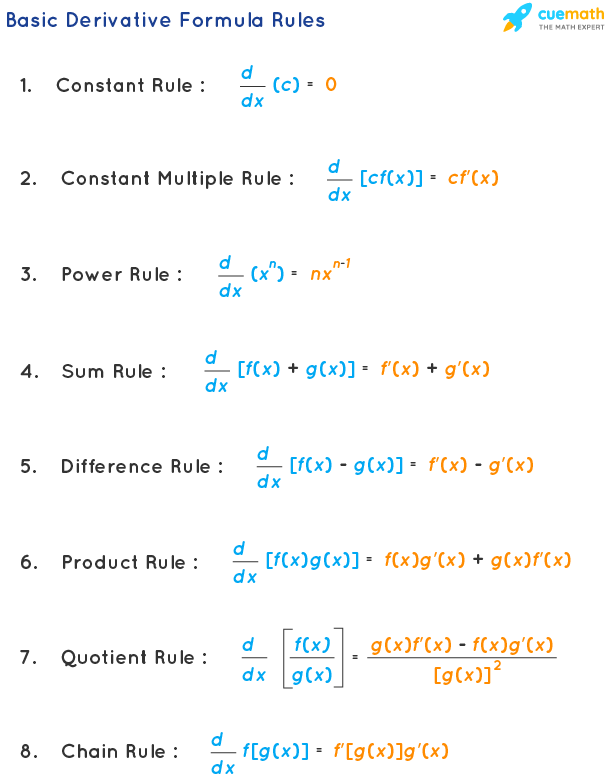
- Find the derivative: Using the chain rule and the derivative of hyperbolic cosine ($\frac{d}{dx}\cosh(u) = \sinh(u)$), we get: $$\frac{dy}{dx} = \sinh\left(\frac{x}{a}\right)$$
- Square the derivative: $$\left(\frac{dy}{dx}\right)^2 = \sinh^2\left(\frac{x}{a}\right)$$
- Add one: Recall the hyperbolic identity $1 + \sinh^2(u) = \cosh^2(u)$. Substituting this in gives: $$1 + \sinh^2\left(\frac{x}{a}\right) = \cosh^2\left(\frac{x}{a}\right)$$
- Simplify the radical: Because hyperbolic cosine is positive for all real numbers, the square root simplifies cleanly: $$\sqrt{\cosh^2\left(\frac{x}{a}\right)} = \cosh\left(\frac{x}{a}\right)$$
- Integrate: $$L = \int_{-1}^{1} \cosh\left(\frac{x}{a}\right) , dx$$
Integrating $\cosh(u)$ yields $\sinh(u)$, multiplied by $a$ from the chain rule:
$$L = \left[ a \sinh\left(\frac{x}{a}\right) \right]_{-1}^{1} = a \sinh\left(\frac{1}{a}\right) - a \sinh\left(-\frac{1}{a}\right)$$
Since hyperbolic sine is an odd function ($\sinh(-u) = -\sinh(u)$), this simplifies to:
$$L = 2a \sinh\left(\frac{1}{a}\right)$$
This elegant result shows why engineers rely on hyperbolic functions when designing suspension bridges, power transmission lines, and architectural arches. For historical context and advanced applications in structural engineering, explore resources provided by the Mathematical Association of America.
Common Mistakes to Avoid
Even experienced calculus students stumble on arc length problems due to specific algebraic traps. Keep these pitfalls in mind while solving problems:
- Forgetting the radical: It is common to accidentally integrate just $\sqrt{f'(x)}$ or forget the $+1$ entirely. Always trace back to the Pythagorean theorem ($ds^2 = dx^2 + dy^2$) to verify your integrand's structure.
- Bad algebraic expansions: When squaring binomial derivatives like $(x^2 + 1)^2$, students sometimes incorrectly write $x^4 + 1$ instead of expanding the middle term properly to $x^4 + 2x^2 + 1$.
- Ignoring domain restrictions: If your derivative contains a denominator that equals zero at a point within your interval, the integral may be improper. Check for vertical tangents before evaluating definite limits.
Frequently Asked Questions
Why does the arc length formula contain a square root?
The square root comes directly from the Pythagorean theorem applied to infinitesimal triangles formed by tiny changes in the horizontal ($dx$) and vertical ($dy$) directions along a curve.
Can every arc length integral be solved by hand?
No. Many innocent-looking algebraic curves produce non-elementary integrals when you add $1$ to the squared derivative inside a square root. In those cases, numerical integration methods like Simpson's Rule or Gaussian quadrature are required.
What is the difference between a parabola and a catenary?
A parabola is defined quadratically by a second-degree polynomial equation ($y = x^2$), whereas a catenary is governed by exponential and hyperbolic cosine functions. Catenaries model physical hanging chains under uniform gravitational loads, while parabolas do not.
How do I know whether to integrate with respect to $x$ or $y$?
Choose the variable that makes the derivative cleaner and avoids unnecessary square roots or inverse functions. If a curve is easier to write as an explicit function of $y$, integrate with respect to $y$.