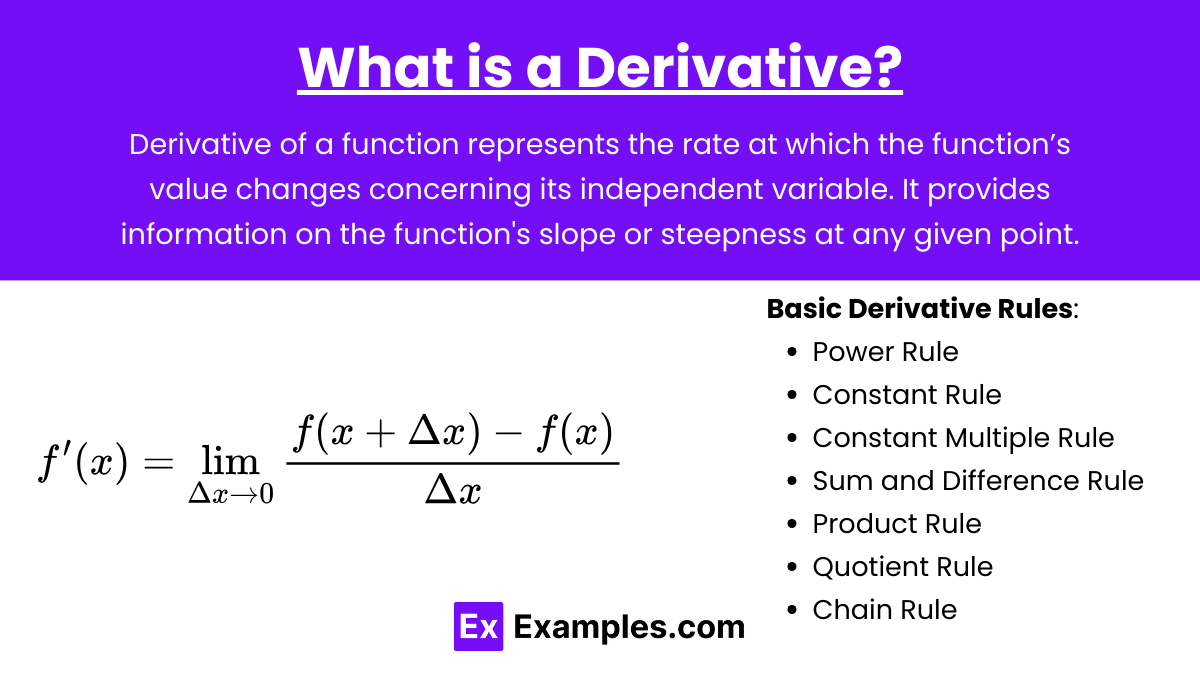
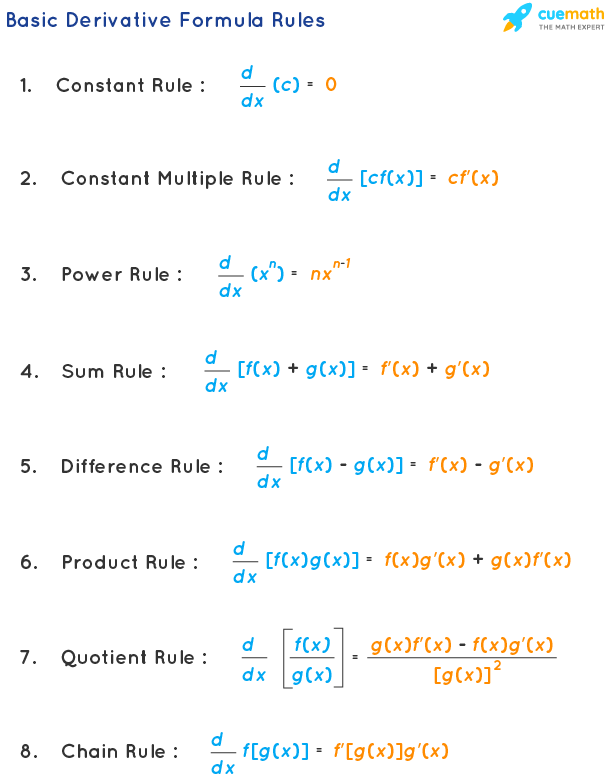
Finding the integral of $\cos(x)$ is one of the first major milestones you'll hit when moving past basic polynomial calculus. You're looking for the antiderivative of a fundamental trigonometric function, which means you want to find a function whose derivative gives you $\cos(x)$ back. That function is $\sin(x)$, plus a constant of integration because differentiation strips away constant values.
When you take the derivative of $\sin(x)$, you get $\cos(x)$. Therefore, working in reverse, the indefinite integral of $\cos(x)$ with respect to $x$ is $\sin(x) + C$. Mastering this basic building block lets you solve complex definite integrals, handle trigonometric substitutions, and compute areas under wave curves in physics and engineering. Let's break down how this works, why that constant matters, and how to handle trickier variations you'll see on exams.
The Core Formula and Why It Works
The fundamental integration rule for the cosine function states that:
$$\int \cos(x) , dx = \sin(x) + C$$
Here, $dx$ tells you that you're integrating with respect to the variable $x$, and $C$ represents the constant of integration. You can't skip $C$ if you're writing an indefinite integral. Every time you differentiate a function, any constant term vanishes to zero. Because $5$, $-100$, and $0$ all disappear when you take their derivative, going backward means you have to account for that lost information by adding $C$.
Let's test this with a quick differentiation check. If you have $f(x) = \sin(x) + 7$, its derivative is:
$$\frac{d}{dx} [\sin(x) + 7] = \cos(x) + 0 = \cos(x)$$
Since any vertical shift of $\sin(x)$ yields $\cos(x)$ as its derivative, the family of all possible antiderivatives requires that $+ C$ catch-all.
Definite Integrals of Cosx
When you're evaluating a definite integral, you're looking for a net signed area between the curve and the $x$-axis over a specific interval $[a, b]$. Because you subtract the lower limit from the upper limit, the constant $C$ cancels out entirely.
Let's evaluate the integral of $\cos(x)$ from $0$ to $\frac{\pi}{2}$:
$$\int_{0}^{\frac{\pi}{2}} \cos(x) , dx = \Big[ \sin(x) \Big]_{0}^{\frac{\pi}{2}}$$
Plug in the upper and lower limits using the Fundamental Theorem of Calculus:
$$\sin\left(\frac{\pi}{2}\right) - \sin(0) = 1 - 0 = 1$$
This means the net area under the cosine curve from $0$ to $\frac{\pi}{2}$ radians is exactly $1$.
Handling Negative Areas
If you extend your interval, you'll encounter negative regions. For instance, integrating from $0$ to $\pi$:
$$\int_{0}^{\pi} \cos(x) , dx = \Big[ \sin(x) \Big]_{0}^{\pi} = \sin(\pi) - \sin(0) = 0 - 0 = 0$$
The positive lobe from $0$ to $\frac{\pi}{2}$ cancels out the negative lobe from $\frac{\pi}{2}$ to $\pi$. Keeping track of your unit circle values prevents sign errors here.
Integration by Substitution with Cosine
Real problems rarely hand you a clean, isolated $\cos(x)$. You'll often deal with composite functions where the argument inside the cosine isn't just $x$, or where a chain rule factor is hanging out nearby. That's where $u$-substitution comes in.
Suppose you need to evaluate:
$$\int \cos(5x) , dx$$
Let your inner function be $u = 5x$. Then the derivative is $\frac{du}{dx} = 5$, which means $dx = \frac{du}{5}$. Substitute these into the integral:
$$\int \cos(u) \cdot \frac{1}{5} , du = \frac{1}{5} \int \cos(u) , du$$
Integrate $\cos(u)$ to get $\sin(u)$, then substitute $5x$ back in:
$$\frac{1}{5} \sin(5x) + C$$
Whenever you have a linear coefficient $kx$ inside your cosine function, the integral scales by $\frac{1}{k}$.
A More Complex Substitution Example
Consider this integral:
$$\int 2x \sin(x^2) , dx$$
Wait, that's sine, not cosine. Let's look at a cosine variant:
$$\int 3x^2 \cos(x^3) , dx$$
Set $u = x^3$. Your derivative is $du = 3x^2 , dx$, which matches the rest of your integrand perfectly. Rewrite the integral:
$$\int \cos(u) , du = \sin(u) + C = \sin(x^3) + C$$
Recognizing derivative patterns inside your integrals saves you from getting stuck on harder problems. You can review standard calculus rules and proofs directly on Wikipedia's integration page.
Common Mistakes to Avoid
Calculus students drop points on exams because of a few predictable errors with trigonometric functions. Keep these pitfalls in mind.
- Mixing up derivatives and integrals: Remember that $\frac{d}{dx}[\sin(x)] = \cos(x)$, but $\frac{d}{dx}[\cos(x)] = -\sin(x)$. When you integrate, the signs go the opposite way. The integral of $\sin(x)$ is $-\cos(x)$, but the integral of $\cos(x)$ is positive $\sin(x)$.
- Dropping the constant $C$: If your problem is an indefinite integral and you forget $+ C$, expect lost points. It's a non-negotiable part of the answer.
- Forgetting the chain rule scale factor: When integrating $\cos(ax)$, students often forget to divide by $a$. Always check your work by taking the derivative of your answer to see if you get the original integrand back.
- Confusing angle units: Unless specified otherwise, calculus formulas for trigonometric functions assume you're working in radians, not degrees. Keep your calculator in radian mode.
For a deeper dive into how these functions behave graphically and analytically, check out the resources at Khan Academy Calculus.
Frequently Asked Questions
What is the integral of $\cos(x)$?
The indefinite integral of $\cos(x)$ with respect to $x$ is $\sin(x) + C$, where $C$ represents the constant of integration.
Why is there a plus $C$ in the answer?
Integration reverses differentiation. Because the derivative of any constant number is zero, taking the derivative of $\sin(x) + 5$ or $\sin(x) - 12$ both yield $\cos(x)$. Adding $+ C$ accounts for all possible constant shifts that disappeared when the function was originally differentiated.
What is the integral of $\cos^2(x)$?
You can't integrate $\cos^2(x)$ directly with basic rules. You need to use the trigonometric half-angle identity: $\cos^2(x) = \frac{1 + \cos(2x)}{2}$. Integrating that gives: $$\int \frac{1 + \cos(2x)}{2} , dx = \frac{1}{2}x + \frac{1}{4}\sin(2x) + C$$
How do I integrate $\cos(x)$ with limits?
To evaluate a definite integral, find the antiderivative $\sin(x)$, plug in your upper limit, and subtract the value of the antiderivative evaluated at your lower limit. The constant $C$ cancels out during subtraction, so you don't need to include it.