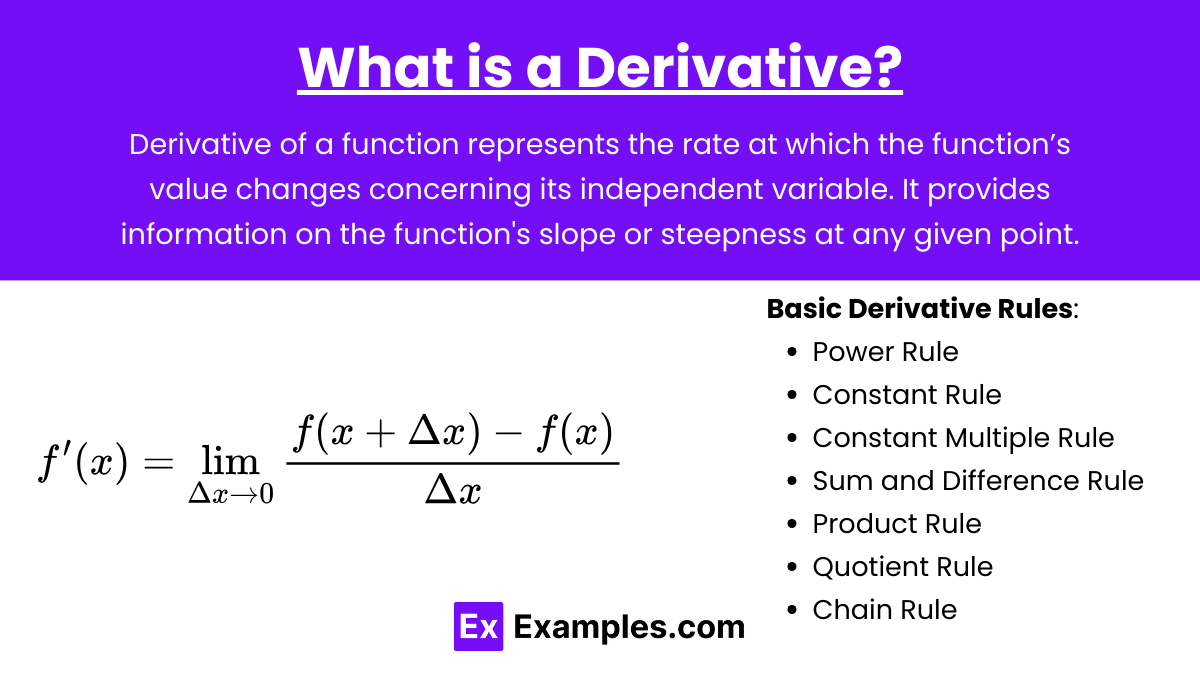
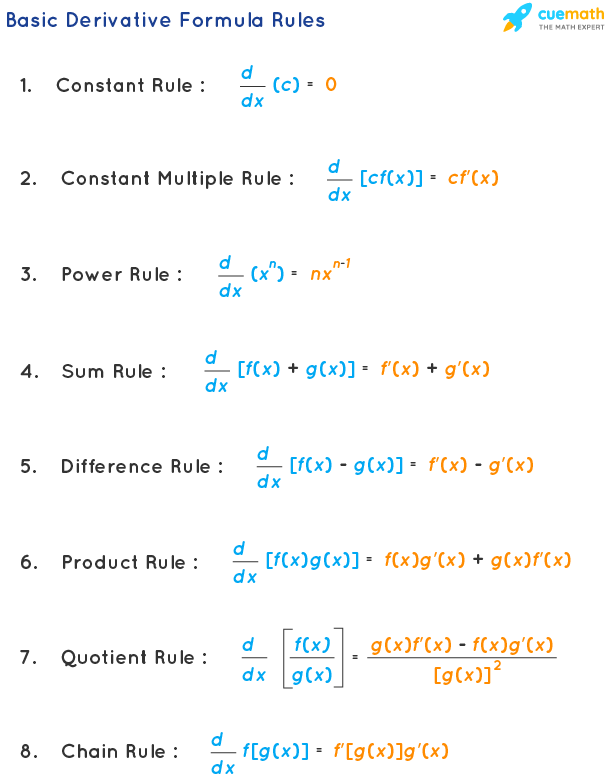
When you evaluate the limit in terms of the constants, you aren't just plugging in numbers to get a clean scalar answer. You're preserving symbols like $a$, $b$, or $c$ throughout the algebraic manipulation to find a generalized expression. This skill shows up constantly in introductory calculus, particularly when working with difference quotients, derivative definitions, and parametric functions.
If you treat constants as active variables by accident, your algebra falls apart. Let's break down how to handle symbolic parameters correctly without losing track of what's changing and what's fixed.
What It Means to Keep Constants Symbolic
In standard limit problems, you're given a function like $\lim_{x \to 2} (3x^2 - 5)$ and you happily substitute $2$ for $x$. But when a problem asks you to evaluate the limit in terms of the constants involved, letters like $c$, $k$, or $h$ stay in the expression because they represent fixed parameters rather than the running variable.
Think of it this way: the variable is what moves, while the constants shape the boundary or scale the function.
- The Variable ($x, t, h$): This is the value approaching a specific target. Its influence vanishes or resolves as the limit is applied.
- The Constants ($a, b, c$): These stay fixed during the limit process. Your final answer will depend directly on them.
For a deep dive into foundational rules, check out the Calculus Volume 1 Limit Laws.
Step-by-Step Approach for Parameterized Limits
When faced with an expression cluttered with extra letters, don't panic. Follow a structured process to simplify before taking the limit.
Step 1: Attempt Direct Substitution First
Always test the waters with direct substitution. If the function is continuous at your target value, plug it in.
Suppose you want to evaluate: $$\lim_{x \to a} (c_1 x^2 + c_2 x)$$
Since this is a simple polynomial in terms of $x$, you substitute $a$ for every instance of $x$: $$c_1 a^2 + c_2 a$$
The constants $c_1$ and $c_2$ remain intact, scaling your final result based on the target value $a$.
Step 2: Handle Indeterminate Forms Using Algebra
Things get tricky when direct substitution hands you an indeterminate form like $\frac{0}{0}$. This happens frequently when evaluating difference quotients for derivatives, where parameters like $h$ approach $0$.
Consider this classic setup: $$\lim_{h \to 0} \frac{(x + h)^2 - x^2}{h}$$
If you plug in $h = 0$ immediately, you get $\frac{0}{0}$. To fix this, expand the numerator completely: $$\lim_{h \to 0} \frac{x^2 + 2xh + h^2 - x^2}{h}$$
Cancel out the opposing terms: $$\lim_{h \to 0} \frac{2xh + h^2}{h}$$
Factor out the common $h$ from the numerator: $$\lim_{h \to 0} \frac{h(2x + h)}{h} = \lim_{h \to 0} (2x + h)$$
Now apply direct substitution by setting $h = 0$, leaving you with $2x$. Here, $x$ acts as the fixed constant relative to $h$, giving you the standard power rule derivative structure.
Common Pitfalls When Constants Get Involved
Working with symbolic letters instead of numbers exposes you to specific traps. Keep these guardrails in mind during exams or homework sets.
- Treating constants as variables: It's easy to accidentally substitute your limit target into the wrong letter. Double-check which variable the limit is approaching (e.g., $x \to a$ means $x$ changes, while $a$ is treated as a constant).
- Failing to factor early: If you see parameters squared or grouped in binomials, don't try to rationalize or apply advanced rules before expanding basic algebraic brackets.
- Ignoring domain constraints on parameters: Some constants come with hidden rules. For example, if a constant sits in a denominator, remember it cannot equal zero unless explicitly stated.
For extra practice problems with step-by-step breakdowns, explore the Khan Academy Limit Strategies Guide.
Frequently Asked Questions
What if my constants cancel out completely?
Sometimes algebraic simplification removes all instances of a parameter, leaving you with a clean integer or a simpler expression. That's entirely normal and means the limit value doesn't depend on that specific constant.
How do I know which letter is the variable?
Look underneath the "lim" operator. The expression like $x \to 0$ or $h \to c$ explicitly tells you which letter is moving. Every other letter in the equation functions as a constant for that specific problem.
Can I use L'Hôpital's Rule with constants?
Yes. If you encounter a $\frac{0}{0}$ or $\frac{\infty}{\infty}$ indeterminate form involving parameters, you can take the derivative with respect to the active variable while treating the constants like normal coefficients.
Why do calculus textbooks use so many constants?
Parameters build generalized formulas. Instead of solving a limit for the number $5$ or $10$ over and over, solving it in terms of constant $c$ lets you apply the exact same formula to any real number instantly.