Calculus students often hit a wall when standard substitution fails, leaving behind fractions with square roots in the denominator. These tricky expressions usually require inverse trigonometric integrals to solve. Mastering these specific antiderivatives bridges the gap between basic polynomial calculus and advanced university-level mathematics.
Inverse trigonometric integrals are formulas used to find the antiderivatives of functions that yield inverse sine, inverse tangent, or inverse secant. When an integrand features a fraction containing the difference or sum of a constant squared and a variable squared—such as $\frac{1}{\sqrt{a^2 - x^2}}$—standard integration rules fall short. Recognizing these structural patterns allows you to apply standard integration formulas derived directly from inverse trigonometric derivatives.
Understanding the Core Formulas
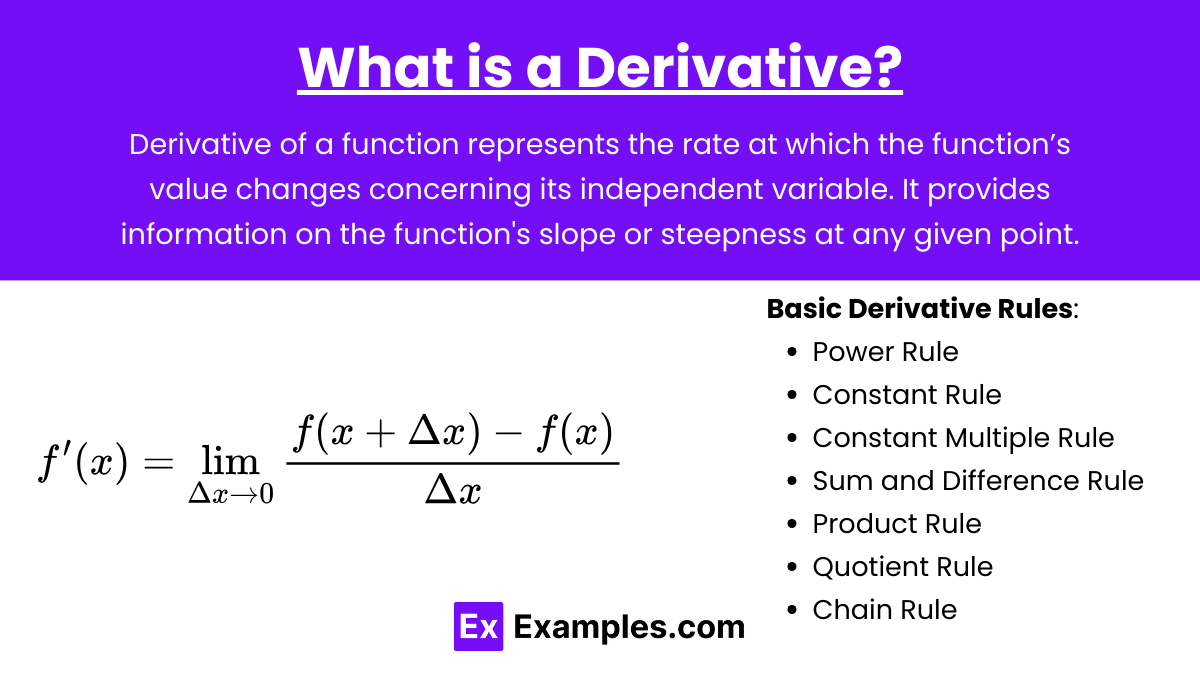
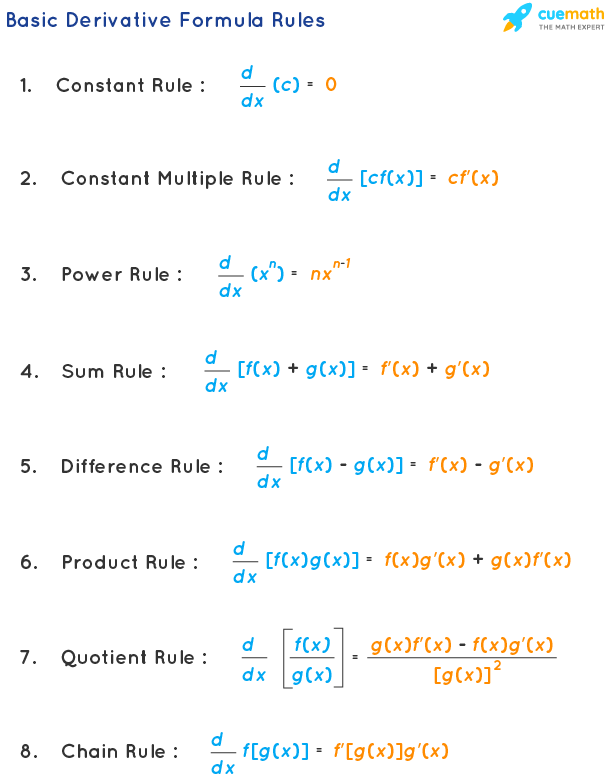
Every integration rule comes from a differentiation rule played in reverse. Knowing how derivatives of inverse trig functions work makes remembering their integrals straightforward.
The primary derivatives involve three main functions:
- $\frac{d}{dx}(\arcsin x) = \frac{1}{\sqrt{1 - x^2}}$
- $\frac{d}{dx}(\arctan x) = \frac{1}{1 + x^2}$
- $\frac{d}{dx}(\text{arcsec } x) = \frac{1}{|x|\sqrt{x^2 - 1}}$
Reading these equations right to left gives the foundational integration formulas for general constants. Let's look at the standard generalized formulas where $a > 0$:
- $\int \frac{1}{\sqrt{a^2 - x^2}} , dx = \arcsin\left(\frac{x}{a}\right) + C$
- $\int \frac{1}{a^2 + x^2} , dx = \frac{1}{a}\arctan\left(\frac{x}{a}\right) + C$
- $\int \frac{1}{x\sqrt{x^2 - a^2}} , dx = \frac{1}{a}\text{arcsec}\left(\frac{|x|}{a}\right) + C$
Notice the presence of the constant $a$. Many textbook problems drop $a$ or assume it equals $1$, but keeping it in your calculations prevents major algebraic errors when constants scale up.
Proof by Substitution: Where the Formulas Come From
Memorizing formulas helps on exams, but understanding their derivation builds genuine mathematical intuition. Let's prove the formula for $\int \frac{1}{\sqrt{a^2 - x^2}} , dx$ using trigonometric substitution.
Set $x = a \sin \theta$.
Differentiating both sides with respect to $\theta$ gives $dx = a \cos \theta , d\theta$.
Substitute these expressions into the original integral:
$$\int \frac{1}{\sqrt{a^2 - (a \sin \theta)^2}} \cdot (a \cos \theta , d\theta)$$
Simplify the denominator by factoring out $a^2$:
$$\int \frac{a \cos \theta}{\sqrt{a^2(1 - \sin^2 \theta)}} , d\theta$$
Use the Pythagorean identity $1 - \sin^2 \theta = \cos^2 \theta$:
$$\int \frac{a \cos \theta}{\sqrt{a^2 \cos^2 \theta}} , d\theta = \int \frac{a \cos \theta}{a \cos \theta} , d\theta = \int 1 , d\theta = \theta + C$$
Since we set $x = a \sin \theta$, we know that $\sin \theta = \frac{x}{a}$, which means $\theta = \arcsin\left(\frac{x}{a}\right)$. Substituting this back gives the final result:
$$\arcsin\left(\frac{x}{a}\right) + C$$
This exact logic applies to the tangent and secant variants. For a deeper look into foundational calculus proofs, check out the MIT OpenCourseWare Single Variable Calculus notes.
Step-by-Step Problem Solving
Applying these formulas requires careful identification of $a^2$ and $x^2$. Let's walk through two distinct examples to see how this works in practice.
Example 1: Basic Inverse Sine Integration
Evaluate the definite integral:
$$\int_{0}^{2} \frac{1}{\sqrt{16 - x^2}} , dx$$
First, identify your components by comparing the denominator to $\sqrt{a^2 - x^2}$:
- $a^2 = 16$, which means $a = 4$
- $x^2 = x^2$, which means $x = x$
Now, apply the inverse sine integration rule:
$$\int \frac{1}{\sqrt{4^2 - x^2}} , dx = \arcsin\left(\frac{x}{4}\right)$$
Evaluate this antiderivative from $0$ to $2$:
$$\left[ \arcsin\left(\frac{x}{4}\right) \right]_{0}^{2} = \arcsin\left(\frac{2}{4}\right) - \arcsin\left(\frac{0}{4}\right)$$
Simplify the fractions:
$$\arcsin\left(\frac{1}{2}\right) - \arcsin(0)$$
From unit circle trigonometry, we know that the angle whose sine is $\frac{1}{2}$ is $\frac{\pi}{6}$, and the angle whose sine is $0$ is $0$.
$$\frac{\pi}{6} - 0 = \frac{\pi}{6}$$
The exact value of the definite integral is $\frac{\pi}{6}$.
Example 2: Requiring U-Substitution First
Sometimes an integral doesn't match the standard form immediately. You have to clean it up first using a basic $u$-substitution before applying an inverse trig rule.
Evaluate:
$$\int \frac{3}{9 + 4x^2} , dx$$
The denominator looks close to $a^2 + x^2$, but the $4x^2$ term gets in the way. Let's use $u$-substitution to handle the variable term.
Let $u = 2x$. Then $du = 2 , dx$, meaning $dx = \frac{du}{2}$.
Rewrite the integral with $u$:
$$\int \frac{3}{9 + u^2} \cdot \frac{du}{2} = \frac{3}{2} \int \frac{1}{3^2 + u^2} , du$$
Now the denominator matches $a^2 + u^2$ perfectly, where $a = 3$. Apply the inverse tangent formula:
$$\frac{3}{2} \cdot \frac{1}{3} \arctan\left(\frac{u}{3}\right) + C$$
Simplify the coefficients:
$$\frac{1}{2} \arctan\left(\frac{u}{3}\right) + C$$
Substitute $u = 2x$ back into the expression:
$$\frac{1}{2} \arctan\left(\frac{2x}{3}\right) + C$$
This multi-step approach is standard on university calculus exams. For official mathematical standards and notation guides, visit the National Institute of Standards and Technology.
Common Mistakes to Avoid
Calculus students drop points on exams because of a few recurring errors. Watch out for these pitfalls when solving integration problems.
- Forgetting the $\frac{1}{a}$ coefficient: When integrating $\frac{1}{a^2 + x^2}$, students frequently forget to multiply the front by $\frac{1}{a}$. Inverse sine doesn't take this coefficient, but inverse tangent and inverse secant both require it.
- Confusing domains and signs: Mixing up the positions of $x^2$ and $a^2$ inside square roots changes real answers into complex numbers. Remember that $\sqrt{a^2 - x^2}$ has the constant first, while $\sqrt{x^2 - a^2}$ has the variable first.
- Neglecting absolute value bars: The formula for inverse secant uses $|x|$ in the denominator and inside the argument. Dropping absolute values causes errors when dealing with negative domains.
- Skipping algebraic checks: Always take the derivative of your final answer. If your derivative doesn't match the original integrand, your substitution or constant scaling went wrong.
Frequently Asked Questions
Why doesn't inverse cosine have its own integration formula?
The derivative of $\arccos(x)$ is $-\frac{1}{\sqrt{1 - x^2}}$. Because integration is the reverse of differentiation, integrating that negative expression yields $\arccos(x) + C$. To keep formulas clean, mathematicians use the positive variant $\arcsin(x) + C$ and absorb any negative signs into constants or algebraic manipulations.
How do I know when to use u-substitution versus inverse trig formulas?
Check your denominator first. If it features a simple linear term raised to a power, try a standard $u$-substitution. If it features a sum or difference of squares (like $x^2 + 4$ or $9 - x^2$), look for an inverse trig pattern. If an extra $x$ sits outside the square root in the denominator, you likely need the inverse secant rule.
Can inverse trig integrals be used with definite limits that include zero?
Yes, but you must check the domain of the resulting inverse trigonometric function. For example, $\arcsin(0)$ and $\arctan(0)$ equal zero, which makes evaluating lower limits straightforward. However, watch out for division by zero or values outside the restricted domain of the inverse function, such as substituting values greater than $a$ into $\sqrt{a^2 - x^2}$.
What happens if the numerator isn't a constant?
If the numerator contains an $x$ term, you don't need inverse trig formulas. A simple $u$-substitution usually solves the problem because the derivative of the denominator (or a scalar multiple of it) sits right in the numerator. Always check if a basic substitution works before jumping into longer formulas.