Mastering the integration of trigonometric functions is a turning point in calculus. When you first transition from polynomials to sines, cosines, and tangents, standard antiderivatives stop working. You encounter products, powers, and quotients that require specific structural techniques rather than rote memorization.
This guide breaks down core reduction formulas, $u$-substitution strategies, and essential trigonometric identities. You'll learn how to tackle complex integrals efficiently and avoid common algebraic errors.
Core Trigonometric Integrals You Must Memorize
Before attacking complex integrals, you need a solid foundation of basic trigonometric antiderivatives. These formulas form the building blocks for more advanced reductions.
- $\int \sin(x) , dx = -\cos(x) + C$
- $\int \cos(x) , dx = \sin(x) + C$
- $\int \sec^2(x) , dx = \tan(x) + C$
- $\int \csc^2(x) , dx = -\cot(x) + C$
- $\int \sec(x)\tan(x) , dx = \sec(x) + C$
- $\int \csc(x)\cot(x) , dx = -\csc(x) + C$
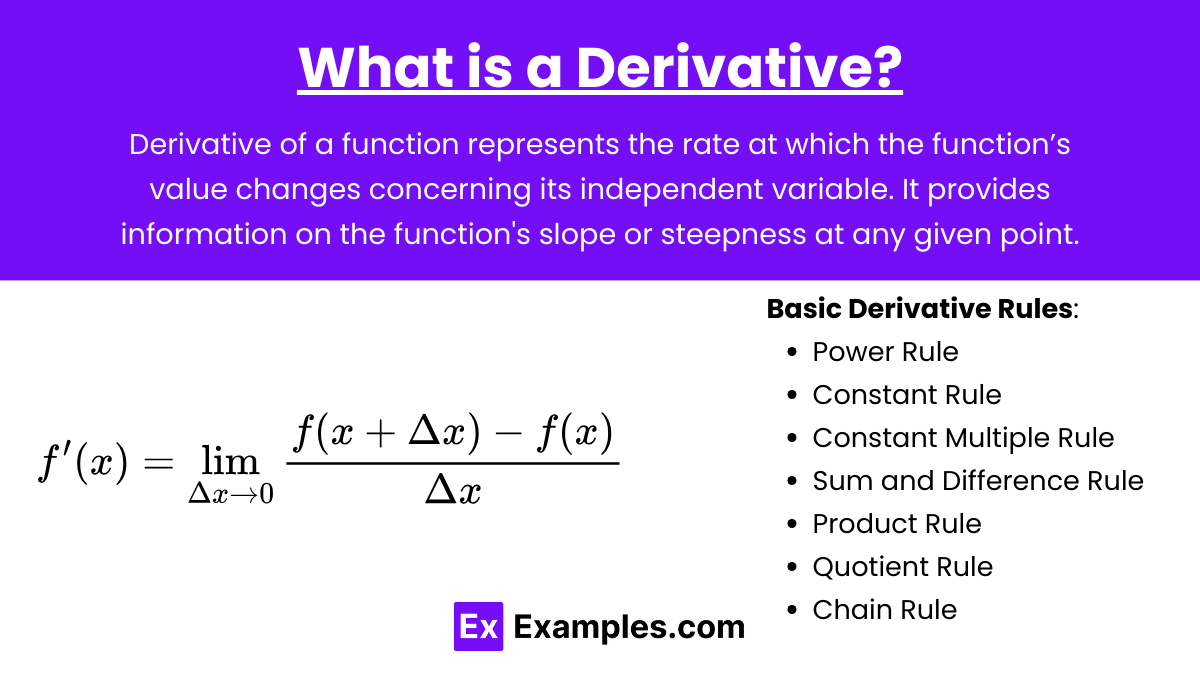
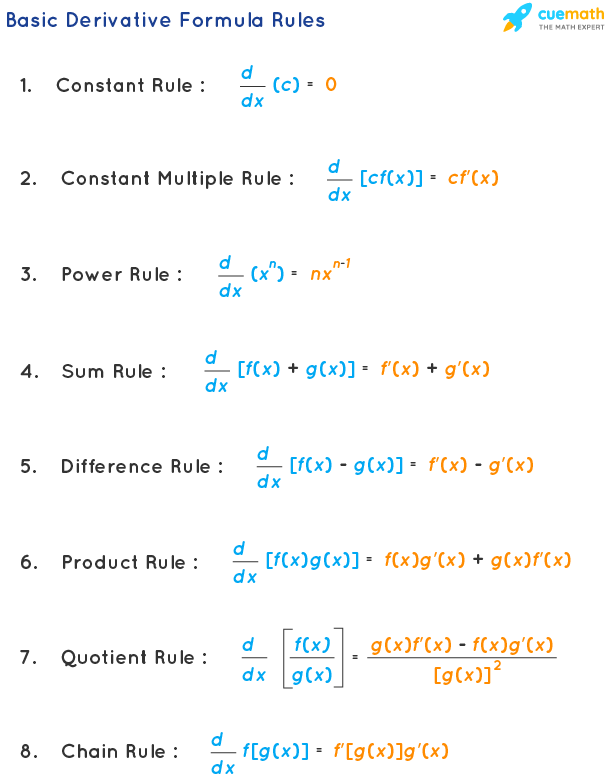
Deriving these is straightforward if you remember differentiation rules. For instance, because the derivative of $\sin(x)$ is $\cos(x)$, the integral of $\cos(x)$ must be $\sin(x)$ plus the constant of integration $C$.
Handling Tangent and Secant Integrals
Integrals involving secants and tangents often require a quick algebraic rearrangement. Consider $\int \tan(x) , dx$. Rewrite $\tan(x)$ as $\frac{\sin(x)}{\cos(x)}$ and let $u = \cos(x)$. Because $du = -\sin(x) , dx$, the integral transforms into:
$$\int \frac{1}{u} (-du) = -\ln|\cos(x)| + C = \ln|\sec(x)| + C$$
Recognizing these logarithmic forms saves valuable time during exams and engineering calculations.
Integrating Powers of Sine and Cosine
When sine or cosine appear with exponents greater than one, standard substitution rarely works immediately. Your approach depends entirely on whether the powers are odd or even.
When the Power is Odd
If either the sine or cosine term has an odd positive integer exponent, save one factor of that function and convert the remaining factors using Pythagorean identities.
For example, evaluate $\int \sin^3(x) , dx$:
- Split off one sine factor: $\int \sin^2(x) \sin(x) , dx$.
- Substitute $\sin^2(x) = 1 - \cos^2(x)$: $\int (1 - \cos^2(x)) \sin(x) , dx$.
- Let $u = \cos(x)$, meaning $du = -\sin(x) , dx$.
- Integrate: $-\int (1 - u^2) , du = -u + \frac{u^3}{3} + C$.
- Substitute back: $-\cos(x) + \frac{\cos^3(x)}{3} + C$.
When Both Powers are Even
When both sine and cosine have even powers, half-angle identities are your primary tool. You must reduce the powers until you can integrate term by term.
- $\sin^2(x) = \frac{1 - \cos(2x)}{2}$
- $\cos^2(x) = \frac{1 + \cos(2x)}{2}$
Applying these identities transforms high-degree products into manageable linear cosine terms that integrate directly.
Using Trigonometric Substitutions for Algebraic Integrals
Trigonometric integration isn't just for trigonometric functions. It's also a powerful algebraic technique for clearing out awkward square roots, particularly expressions matching the forms $\sqrt{a^2 - x^2}$, $\sqrt{a^2 + x^2}$, and $\sqrt{x^2 - a^2}$.
By substituting $x = a\sin(\theta)$, $x = a\tan(\theta)$, or $x = a\sec(\theta)$, you eliminate the radical using Pythagorean relationships.
Step-by-Step Substitution Example
Evaluate $\int \frac{1}{\sqrt{4 - x^2}} , dx$:
- Choose the substitution $x = 2\sin(\theta)$, so $dx = 2\cos(\theta) , d\theta$.
- Substitute into the integral: $\int \frac{2\cos(\theta)}{\sqrt{4 - 4\sin^2(\theta)}} , d\theta$.
- Factor out the $4$: $\sqrt{4(1 - \sin^2(\theta))} = 2\cos(\theta)$.
- Simplify the fraction: $\int \frac{2\cos(\theta)}{2\cos(\theta)} , d\theta = \int 1 , d\theta = \theta + C$.
- Convert back to $x$: since $\sin(\theta) = \frac{x}{2}$, the final answer is $\arcsin\left(\frac{x}{2}\right) + C$.
For a deeper dive into foundational calculus concepts, you can explore the Khan Academy Calculus Curriculum for structured practice problems and video breakdowns.
Common Mistakes to Avoid
Even experienced students stumble on specific algebraic traps during trigonometric integration. Keep these pitfalls in mind:
- Forgetting the constant of integration ($C$): Indefinite integrals require $+ C$. Omitting it is a guaranteed point deduction on any test.
- Misapplying half-angle identities: Double-check your signs when expanding $\sin^2(x)$ and $\cos^2(x)$. A misplaced negative sign invalidates the entire remainder of the problem.
- Failing to back-substitute: When using trigonometric substitution, remember to convert your final answer back to the original variable ($x$) using reference triangles, rather than leaving it in terms of $\theta$.
Frequently Asked Questions
What is the integral of $\tan^2(x)$?
You cannot integrate $\tan^2(x)$ directly using simple substitution. Instead, use the Pythagorean identity $\tan^2(x) = \sec^2(x) - 1$. The integral becomes $\int (\sec^2(x) - 1) , dx$, which evaluates to $\tan(x) - x + C$.
Why do we use half-angle identities for even powers?
Odd powers allow you to peel off a single term for $du$ substitution. Even powers leave no odd term to spare, so half-angle formulas lower the exponent and make the expression integrable.
Can all trigonometric integrals be solved analytically?
No. Some combinations, such as $\int \sin(x^2) , dx$ or $\int \frac{\sin(x)}{x} , dx$, cannot be solved using elementary functions. These require series expansions or special functions like the sine integral ($\text{Si}(x)$).
How do I choose between $u$-substitution and trig substitution?
Use standard $u$-substitution when the derivative of an inner function is already present in the integrand. Use trigonometric substitution when you see algebraic radicals like $\sqrt{a^2 - x^2}$ that prevent standard integration methods.