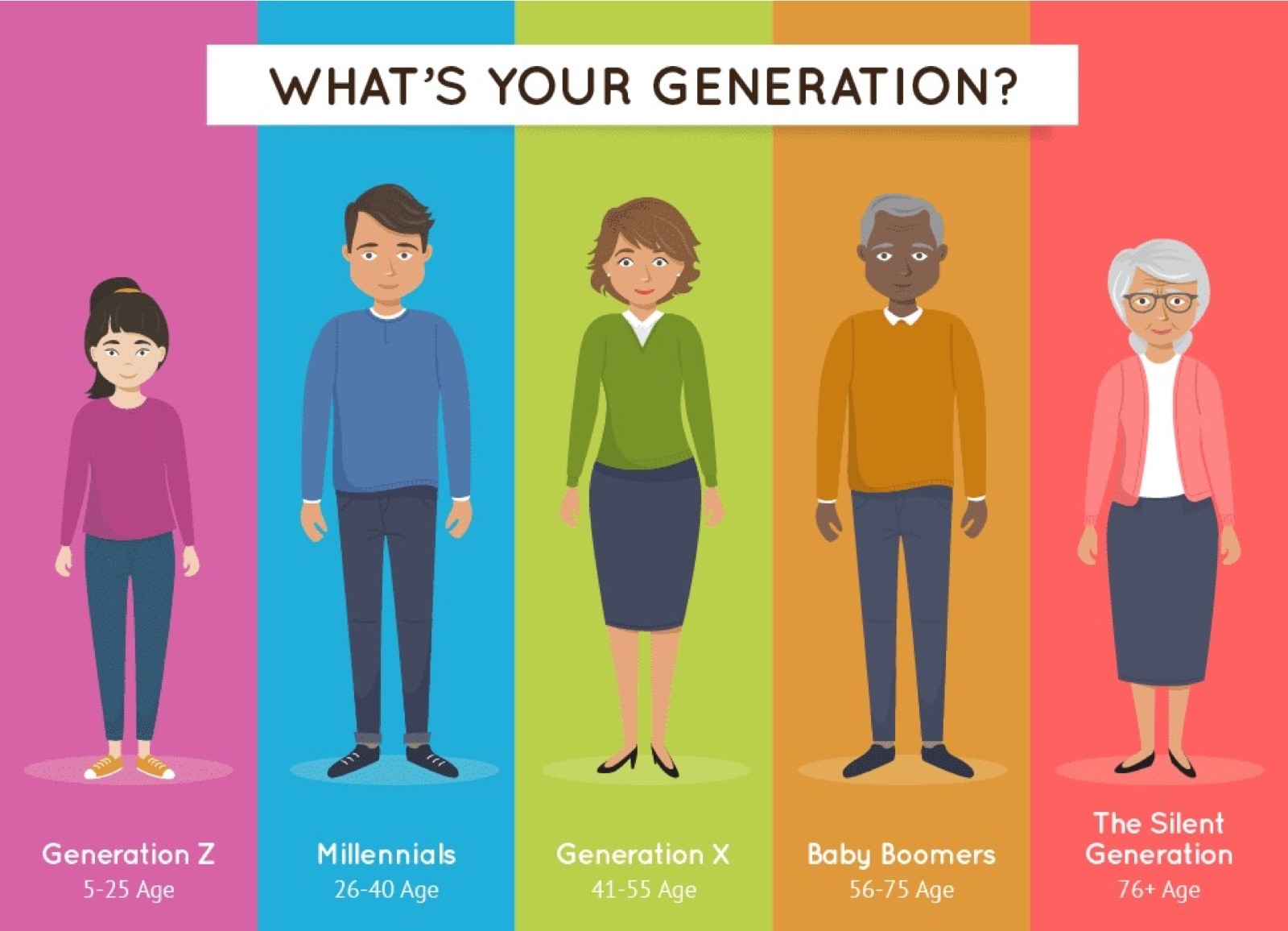
If you were born in 1974, you belong firmly to Generation X. You aren't a Baby Boomer, and you aren't a Millennial, though you share cultural borderlands with both groups. Demographers and social researchers define Generation X as individuals born between 1965 and 1980. This puts 1974 right near the middle of the cohort, making you a quintessential Gen Xer who grew up during a unique technological and cultural transition.
People born in 1974 often feel caught in the crossfire because they remember a fully analog childhood followed by a digital adulthood. You watched television with dials, recorded songs off the radio onto cassette tapes, and rode bikes until streetlights came on without adult supervision. Yet, you also entered the workforce just as desktop computers, email, and the internet became mandatory professional tools. This positioning creates a distinct set of experiences that separate you from older Baby Boomers and younger Millennials.
The Official Definition of Generation X
Generational boundaries aren't laws of physics, but broad agreements established by research organizations like the Pew Research Center and the U.S. Census Bureau. They use these cohorts to track economic shifts, voting habits, and social trends over time.
For Generation X, the standard window spans sixteen years, starting in 1965 and ending in 1980. Because 1974 falls squarely inside this range, there is zero demographic ambiguity about your cohort. You are not a cusper or a "micro-generation" member like those born in the late 1970s or early 1980s who sometimes identify as Xennials. Your formative years unfolded entirely within the classic Gen X timeline.
Why Some Feel Caught Between Generations
Cultural definitions often blur the neat lines drawn by statisticians. Individuals born in 1974 experienced major cultural touchstones that overlap with adjacent generations.
- You were a teenager when grunge music and alternative rock exploded in the early 1990s, defining the youth culture of the decade.
- You graduated from high school in the mid-1990s, right as commercial internet access started spreading to households.
- You entered your twenties when Y2K anxiety dominated the media cycle, shaping your early career moves.
These milestones give 1974 babies a hybrid perspective. You understand the analog patience of older generations alongside the digital adaptability required by younger ones.
Growing Up in 1974: The Cultural Landscape
To understand why 1974 belongs to Generation X, look at the world of your childhood and adolescence. The year 1974 itself featured notable historical events, such as the resignation of U.S. President Richard Nixon, the debut of Dungeons and Dragons, and the launch of UPC barcodes in grocery stores.
Children born that year grew up during the 1970s and 1980s amid economic shifts, rising divorce rates, and changing family dynamics. Many grew up as "latchkey kids," returning from school to empty houses because both parents worked or because of single-parent households. This fostered a high degree of independence and self-reliance that remains a hallmark of the generation.
Media and Technology Milestones
Your media consumption habits differed drastically from today's algorithmic feeds. Saturday morning cartoons were appointment viewing. Rotary phones hung on kitchen walls with long, tangled cords. Encyclopedias served as homework lifesavers before search engines existed.
As teenagers, 1974 births experienced the rise of MTV, arcade culture, and home video game consoles like the Atari 2600 and the Nintendo Entertainment System. You transitioned from vinyl records and cassettes to compact discs during your late teens and early twenties. This continuous adaptation taught you to embrace new technology without the native immersion of Millennials.
Comparing 1974 to Boomers and Millennials
To appreciate where 1974 fits, it helps to contrast Gen X with the generations immediately preceding and following it.
Baby Boomers, born between 1946 and 1964, grew up during the post-World War II economic boom, experienced the civil rights movement as youth or young adults, and largely shaped traditional corporate ladder structures. They view work through a lens of institutional loyalty and long-term tenure.
Millennials, born between 1981 and 1996, grew up with personal computers in their homes, experienced the rollout of social media during their formative years, and entered a disrupted job market marked by economic recessions. They often prioritize work-life balance, digital collaboration, and rapid career mobility.
Gen Xers like those born in 1974 bridged these two worlds. You inherited the skepticism of Boomers regarding authority and combined it with the pragmatic adaptability that helped navigate early digital transformations. You often took on management roles by adopting modern digital workflows while maintaining traditional communication norms.
Common Misconceptions About 1974 Births
Several myths persist regarding mid-1974 demographics and generational alignment. Clearing these up helps explain why confusion arises.
Many assume that anyone who remembers the moon landing in 1969 must be a Boomer. Since 1974 babies were toddlers or not yet born, you missed that historical marker, anchoring your memories firmly in the late 1970s and 1980s.
Another misconception involves digital literacy. People often assume older adults struggle entirely with technology. Because 1974 cohorts entered the workforce during the dawn of desktop computing, you learned software, spreadsheets, and digital communication tools as young adults, making you just as tech-fluent as many younger workers.
You can read more about generational tracking methods through demographic analysis provided by the Pew Research Center. For broader economic context on how generational shifts impact workforce trends, the U.S. Bureau of Labor Statistics offers detailed labor force data.
Frequently Asked Questions
Is 1974 considered a cusper or Xennial year?
No. Xennials typically cover births from roughly 1977 to 1983, sitting on the border between Generation X and Millennials. Being born in 1974 places you firmly in the core of Generation X, several years ahead of the Xennial transition zone.
Did people born in 1974 experience the analog-to-digital shift?
Yes. You spent your childhood and school years in an analog environment using physical media, printed books, and landline phones. You then encountered the digital revolution as young adults in college or the early stages of your careers.
What are the main traits of someone born in 1974?
Core traits include fierce independence, skepticism toward rigid corporate hierarchies, adaptability to changing technology, and strong self-reliance rooted in growing up during a period of shifting social structures.
Why do people confuse 1974 with Baby Boomers?
Confusion usually stems from loose definitions where older adults lump anyone over a certain age into the broad "older generation" category. Demographically and culturally, however, the gap between a 1946 Boomer and a 1974 Gen Xer spans nearly three decades of vastly different formative experiences.


