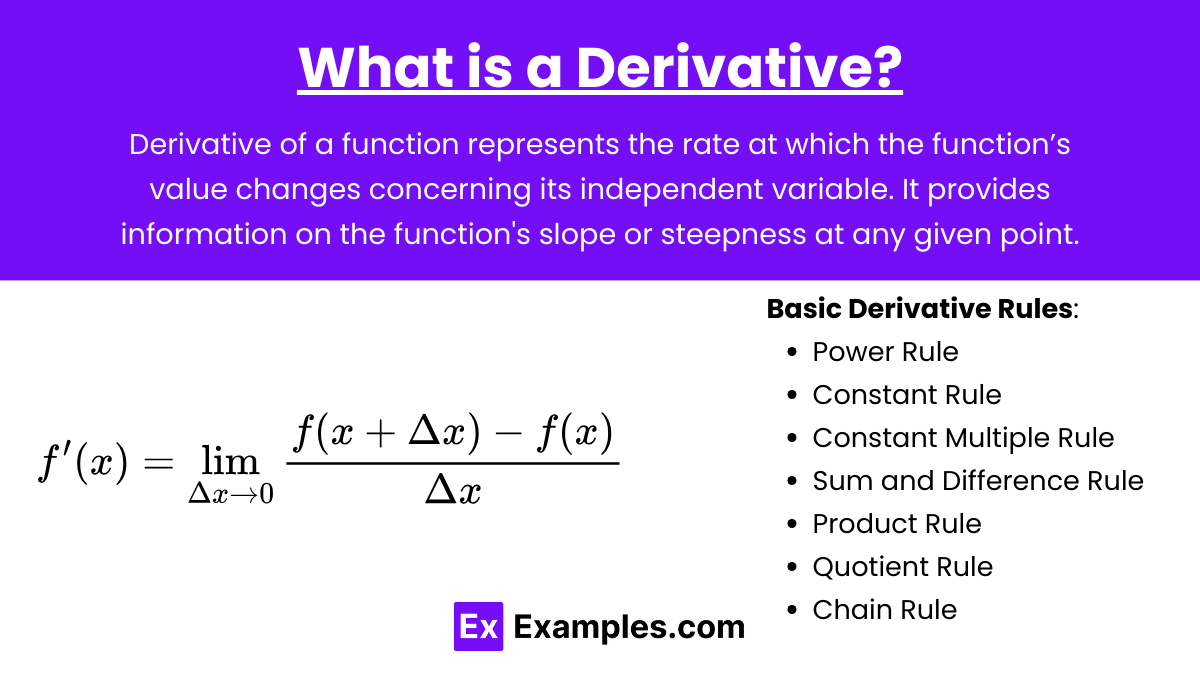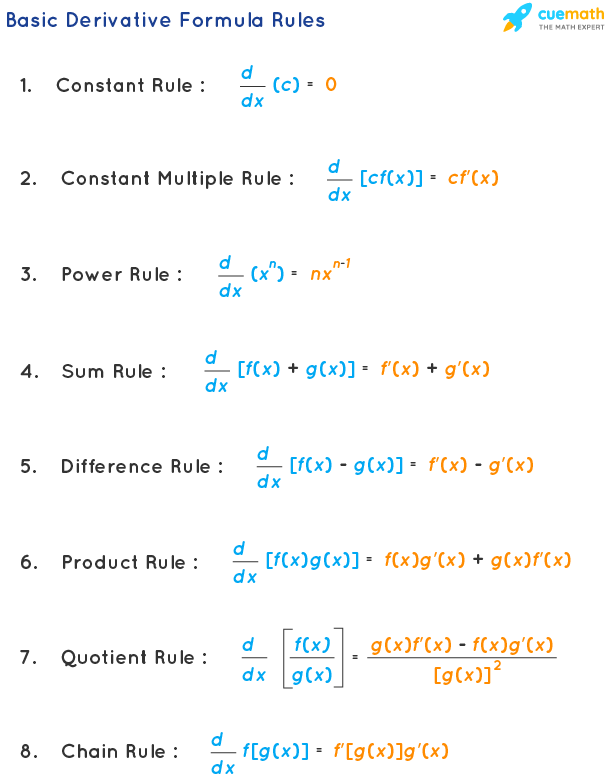
Finding the integral of secant is one of those classic calculus problems that looks deceptively simple on paper. When you first encounter $\int \sec(x) , dx$, it doesn't yield to basic $u$-substitution or standard trigonometric identities right away. Instead, it requires a classic algebraic trick that catches many students off guard.
Mastering this integral unlocks broader techniques in calculus, particularly when dealing with trigonometric substitutions and complex rational functions. Let's break down the exact derivation, look at practical examples, and clear up the common pitfalls that trip people up along the way.
Understanding the Core Problem
Before diving into the mechanics, let's establish what we're trying to solve. The integral of secant is written as:
$$\int \sec(x) , dx$$
The standard result you'll see in formula sheets is:
$$\ln|\sec(x) + \tan(x)| + C$$
Where does this strange logarithmic expression come from? It doesn't appear by accident. It comes from a clever multiplication by a well-chosen form of $1$.
The Classic Derivation: Multiplying by One
Since standard substitution doesn't work, we need to transform the integrand into a form where substitution does work. The trick is to multiply the numerator and the denominator by $\sec(x) + \tan(x)$.
Here is how the algebra unfolds:
$$\int \sec(x) \cdot \frac{\sec(x) + \tan(x)}{\sec(x) + \tan(x)} , dx$$
Distribute the secant term in the numerator:
$$\int \frac{\sec^2(x) + \sec(x)\tan(x)}{\sec(x) + \tan(x)} , dx$$
Now, look closely at this new fraction. Let's apply $u$-substitution by setting:
$$u = \sec(x) + \tan(x)$$
Now find the derivative, $du$:
$$du = (\sec(x)\tan(x) + \sec^2(x)) , dx$$
Notice that the entire numerator of our fraction matches $du$ perfectly. Substituting $u$ and $du$ into the integral gives us a very simple expression:
$$\int \frac{1}{u} , du$$
The integral of $\frac{1}{u}$ is a standard natural logarithm:
$$\ln|u| + C$$
Substitute back our original expression for $u$:
$$\ln|\sec(x) + \tan(x)| + C$$
That's the entire derivation. It's short, but it relies entirely on recognizing that clever multiplier. For a deeper look at standard antiderivatives and integration tables, you can explore resources like MathWorld.
Alternative Derivation Using Tangent Half-Angle Substitution
If multiplying by $\sec(x) + \tan(x)$ feels like magic, there's a more systematic (though longer) way to solve it using the Weierstrass substitution, also known as the tangent half-angle substitution.
Let $t = \tan\left(\frac{x}{2}\right)$. Using standard trigonometric identities:
- $\sin(x) = \frac{2t}{1 + t^2}$
- $\cos(x) = \frac{1 - t^2}{1 + t^2}$
- $\sec(x) = \frac{1 + t^2}{1 - t^2}$
- $dx = \frac{2}{1 + t^2} , dt$
Substitute these into the integral:
$$\int \frac{1 + t^2}{1 - t^2} \cdot \frac{2}{1 + t^2} , dt = \int \frac{2}{1 - t^2} , dt$$
Using partial fraction decomposition:
$$\frac{2}{1 - t^2} = \frac{1}{1 + t} + \frac{1}{1 - t}$$
Integrating each term with respect to $t$:
$$\int \left( \frac{1}{1 + t} + \frac{1}{1 - t} \right) dt = \ln|1 + t| - \ln|1 - t| + C = \ln\left|\frac{1 + t}{1 - t}\right| + C$$
Converting back to $x$ using trigonometric identities yields the exact same logarithmic result, proving the consistency of calculus. If you want to check your work or practice more complex substitutions, you can use online problem-solving platforms like Wolfram Alpha to verify intermediate steps.
Practical Examples
Let's look at how this integral appears in actual problems.
Example 1: Definite Integral Evaluation
Evaluate the definite integral from $0$ to $\frac{\pi}{4}$:
$$\int_{0}^{\frac{\pi}{4}} \sec(x) , dx$$
- Find the antiderivative: $[\ln|\sec(x) + \tan(x)|]_{0}^{\frac{\pi}{4}}$
- Evaluate at the upper limit ($\frac{\pi}{4}$):
- $\sec\left(\frac{\pi}{4}\right) = \sqrt{2}$
- $\tan\left(\frac{\pi}{4}\right) = 1$
- $\ln|\sqrt{2} + 1|$
- Evaluate at the lower limit ($0$):
- $\sec(0) = 1$
- $\tan(0) = 0$
- $\ln|1 + 0| = \ln(1) = 0$
- Subtract lower from upper:
- $\ln(\sqrt{2} + 1) - 0 = \ln(\sqrt{2} + 1)$
Example 2: Using Trig Substitution in Calculus
Sometimes $\sec(x)$ pops up when you aren't expecting it. Consider an arc length problem or an integral involving $\sqrt{x^2 + a^2}$. If you make the substitution $x = a \tan(\theta)$, your differential becomes $dx = a \sec^2(\theta) , d\theta$, and terms often simplify directly into powers of secant that require this exact integration formula to finish.
Common Mistakes to Avoid
Students often make a few predictable errors when working with secant integrals. Watch out for these traps:
- Forgetting the absolute value bars: The argument inside the logarithm must be inside absolute value bars: $\ln|\sec(x) + \tan(x)|$. Secant and tangent can take negative values depending on the quadrant, and the logarithm of a negative number is undefined in real numbers.
- Confusing secant with tangent: Remember that $\int \sec^2(x) , dx = \tan(x) + C$, which is completely different from the integral of plain $\sec(x)$. Don't mix up your power rules.
- Dropping the constant of integration: Always include $+C$ for indefinite integrals.
Frequently Asked Questions
What is the integral of secant cubed?
The integral $\int \sec^3(x) , dx$ cannot be solved with simple substitution. Instead, it requires integration by parts. The standard result is $\frac{1}{2}\sec(x)\tan(x) + \frac{1}{2}\ln|\sec(x) + \tan(x)| + C$.
Why does the secant integral use a logarithm?
The logarithmic result emerges because the derivative of the denominator $\sec(x) + \tan(x)$ happens to equal the numerator $\sec(x)\tan(x) + \sec^2(x)$ after our algebraic trick. This creates the classic $\frac{du}{u}$ pattern.
Can I use cosecant formulas interchangeably?
No. The integral of cosecant $\int \csc(x) , dx$ follows a very similar derivation, but the result has a negative sign: $-\ln|\csc(x) + \cot(x)| + C$. Pay close attention to your signs.
How do I evaluate secant raised to higher powers?
For higher even powers like $\sec^4(x)$, you save a $\sec^2(x)$ factor for $du$ and convert the rest to tangents using $\sec^2(x) = 1 + \tan^2(x)$. For odd powers, integration by parts is usually required.