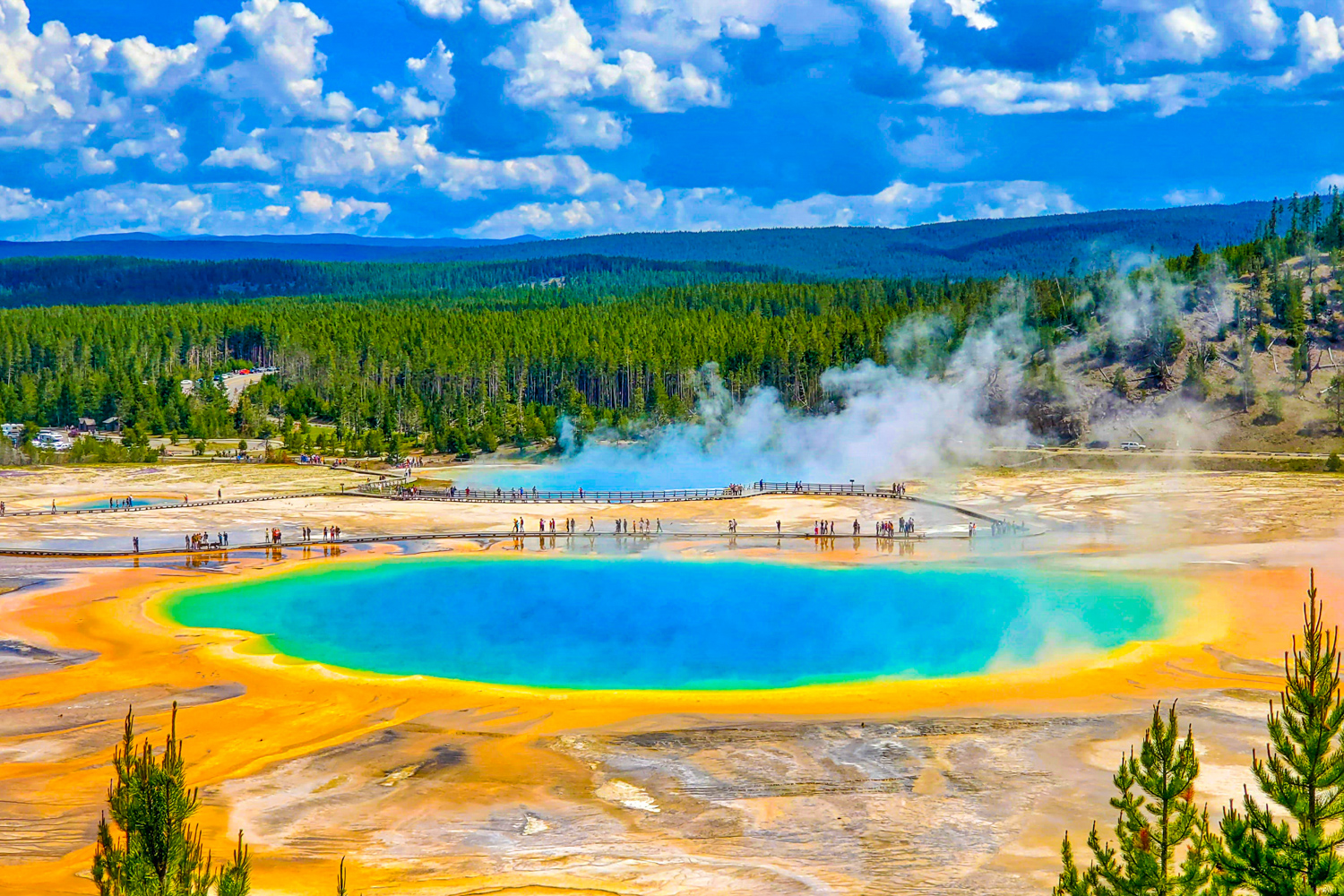
When people talk about the Yellowstone Caldera, they usually picture a sudden, apocalyptic explosion that could wipe out half the North American continent. Pop culture and clickbait headlines love to frame this underground thermal engine as an overdue ticking time bomb. Geological reality, however, looks entirely different. Scientists monitor the region continuously, and the actual data reveals that a catastrophic supereruption isn't happening anytime soon. Understanding what is actually going on beneath the surface helps separate panic from science.
The Yellowstone volcanic system is very much active, which is precisely why it powers famous geysers like Old Faithful and thousands of hot springs. That activity doesn't mean an eruption is imminent. The vast majority of volcanic hazards in the area involve routine earthquakes, minor ground movements, or localized hydrothermal explosions rather than catastrophic magma flows. To grasp the true risk, we need to look at how the volcano operates, what monitoring networks actually measure, and which scenarios are scientifically plausible.
What is the Yellowstone Caldera?
A caldera is not a traditional mountain cone with a peak. It's a massive depression formed when a volcano empties its magma chamber during a colossal eruption, causing the ground above it to collapse. The Yellowstone Caldera measures roughly 30 by 45 miles across, spanning parts of Wyoming, Montana, and Idaho.
The region owes its existence to a deep mantle plume—often called the Yellowstone hotspot. As the North American tectonic plate slowly drifts southwest over this stationary hotspot, it leaves a trail of past volcanic activity. Over the last 2.1 million years, Yellowstone has experienced three major caldera-forming eruptions:
- Huckleberry Ridge Eruption: Roughly 2.1 million years ago, producing massive ash deposits across North America.
- Mesa Falls Eruption: About 1.3 million years ago, forming the Henry's Fork Caldera in Idaho.
- Lava Creek Eruption: Around 640,000 years ago, which created the current Yellowstone Caldera.
Between these monumental events, dozens of smaller, non-explosive or mildly explosive eruptions occurred. The last major volcanic activity at Yellowstone was a series of viscous rhyolite lava flows that ended roughly 70,000 years ago. Since then, the region has been entirely in a state of dormancy.
Assessing the True Eruption Risk
The most common myth surrounding Yellowstone is that it runs on a strict 600,000-year cycle, meaning it's "overdue" for another catastrophic blast. Geologists point out that you can't establish a statistical cycle based on only two intervals. Volcanoes don't operate like clockwork.
According to research compiled by the U.S. Geological Survey, the annual probability of another caldera-forming supereruption is exceedingly low—roughly 1 in 730,000 in any given year. To put that in perspective, you are far more likely to experience natural hazards like severe floods, severe weather, or major earthquakes elsewhere in your daily life.
When scientists talk about volcanic hazards at Yellowstone, they rank them by probability:
- Hydrothermal Explosions: These are steam-driven explosions that happen when superheated underground water flashes to steam. They occur every few decades or centuries on a small scale, leaving behind craters like those in the Norris Geyser Basin.
- Lava Flows: If an eruption ever did occur, it would most likely consist of slow-moving rhyolite or basalt lava. These flows would cover areas within the park but wouldn't spread across the entire continent.
- Ash Fall: Minor explosive phases during a lava eruption could create regional ash deposits, though nothing on the scale of the ancient supereruptions.
- Caldera-Forming Eruption: This is the least likely scenario. The sheer amount of heat and magma required for such an event simply isn't present in the shallow crust right now.
How Scientists Monitor Yellowstone 24/7
You don't have to guess whether Yellowstone is waking up. The Yellowstone Volcano Observatory tracks the region constantly using a dense network of instruments. This monitoring grid includes:
- Seismometers: Tracking thousands of small earthquakes every year. Most of these tremors are caused by regional tectonic faulting or shifting hydrothermal fluids rather than moving magma.
- GPS and Tiltmeters: Measuring ground deformation down to the millimeter. The ground inside the caldera naturally goes through cycles of uplift and subsidence as fluids shift underneath.
- Satellite Radar: Using interferometric radar to spot broad surface elevation changes from space.
- Gas Sensors: Measuring carbon dioxide and sulfur dioxide emissions escaping from thermal areas to check for deep-seated magmatic changes.
This rigorous oversight ensures that any genuine precursors to an eruption—such as intense, localized swarms of earthquakes combined with rapid, permanent ground deformation—would be detected months or years in advance. Volcanoes of this scale do not erupt without warning signs.
Frequently Asked Questions
Is it safe to visit Yellowstone National Park?
Yes. Millions of tourists visit the park every year without incident. The geothermal features that make Yellowstone famous are powered by the underlying heat source, but there is no scientific evidence that an eruption is going to occur during your lifetime.
What would happen if Yellowstone actually erupted?
A true supereruption would expel vast amounts of volcanic ash, disrupting air travel and agriculture across North America while temporarily altering global climate patterns. However, because the probability of this happening in any given millennium is extremely low, emergency planners focus instead on real, recurring hazards like forest fires, severe weather, and small earthquakes.
Why do people keep saying the supervolcano is overdue?
Media outlets and online articles often misinterpret geological timelines. Because past major eruptions were spaced roughly 600,000 to 800,000 years apart, casual observers assumed a rigid schedule. Geologists emphasize that three data points aren't enough to calculate a reliable average.
Can scientists drill into the magma chamber to relieve pressure?
No. Drilling into Yellowstone's magma chamber is technologically impossible due to extreme heat and pressure. More importantly, attempting to alter or cool the system could inadvertently trigger the very hydrothermal explosions or seismic events scientists work hard to monitor and avoid.