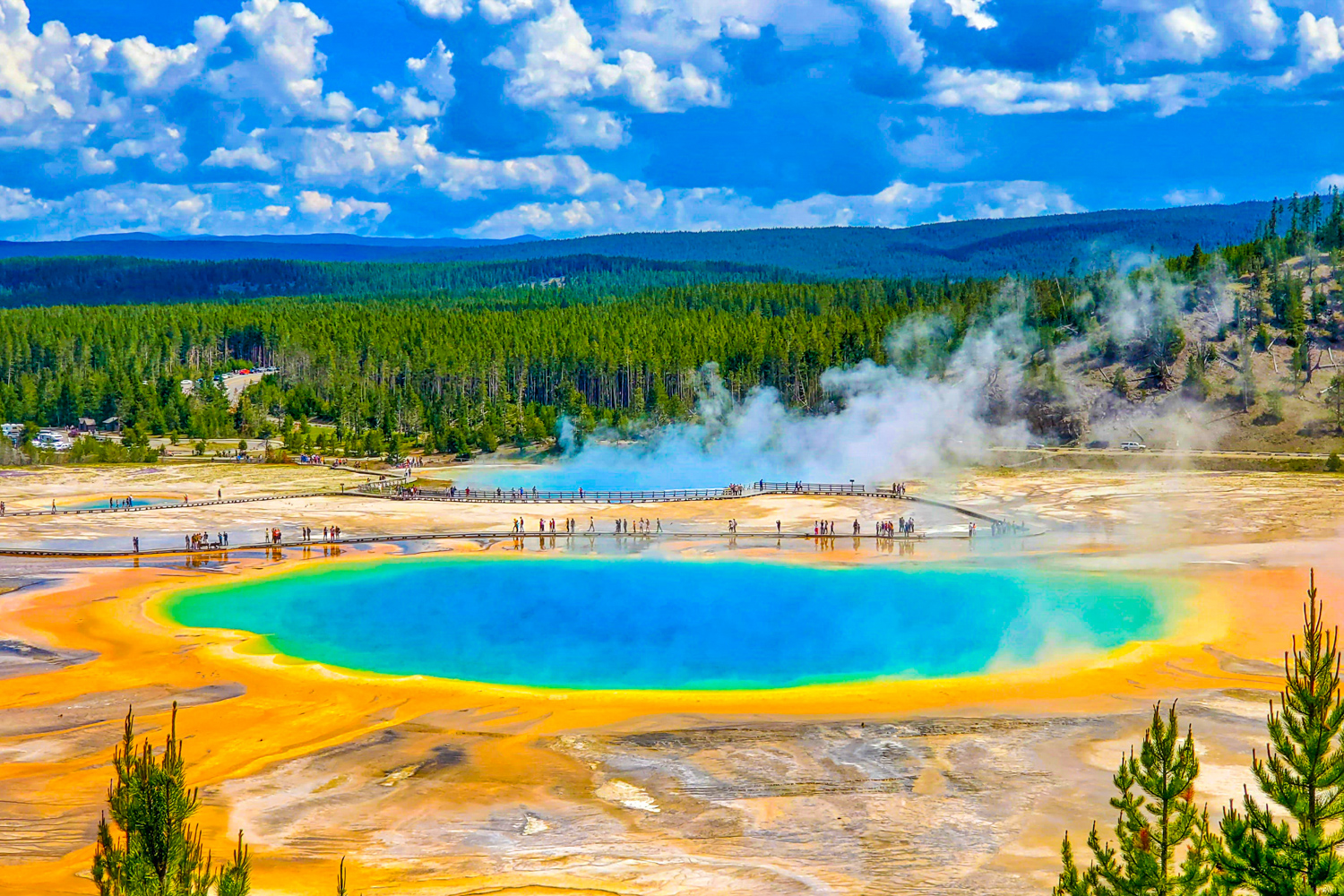
Yellowstone isn't primed to wipe out North America tomorrow. Headlines love to label it a ticking time bomb, yet real geological tracking reveals a very different story. Beneath Wyoming's surface lies an active magmatic system, but current monitoring shows no sign of an impending catastrophic blast.
Scientists at the USGS Yellowstone Volcano Observatory track ground deformation, seismic data, and thermal output around the clock. Their findings indicate that the magma reservoir is mostly solid crystal mush rather than a vast pool of liquid fire ready to erupt. Let's break down what's actually happening beneath the park, what scientists worry about instead of a supereruption, and how modern monitoring keeps tabs on the giant.
Decoding the Yellowstone Magma System
People often picture a massive cavern filled with bubbling liquid magma. The reality is far more complex and much less dramatic. Decades of seismic imaging show that the magma chamber is roughly five to fifteen percent molten. The rest consists of solid, crystallized rock.
Magma needs to reach a melt fraction of roughly fifty percent or higher before it can erupt to the surface. Because the system sits well below that threshold, geologists do not consider the system eruptible right now.
Past Eruptions and Their Timelines
To understand the current state, we look at the history of the Yellowstone Caldera. Over the last 2.1 million years, the region has produced three massive explosive cycles:
- The Huckleberry Ridge Eruption: Roughly 2.1 million years ago, releasing about 2,500 cubic kilometers of material.
- The Mesa Falls Eruption: Roughly 1.3 million years ago, producing about 280 cubic kilometers of material.
- The Lava Creek Eruption: Roughly 631,000 years ago, releasing about 1,000 cubic kilometers of material.
Between these monumental events, smaller non-explosive or mildly explosive lava flows occurred. The last major lava flow happened about 70,000 years ago. Since then, glacial activity and minor hydrothermal shifts have shaped the landscape we see today.
Real Hazards: Earthquakes and Hydrothermal Blasts
While a supervolcano explosion grabs media attention, geologists focus on everyday hazards that actually pose risks to visitors and infrastructure.
Ground Shaking and Seismic Swarms
Yellowstone is one of the most seismically active areas in the United States. The park experiences between 1,500 and 2,500 earthquakes every year. Most are too small to feel, but occasional moderate shakes rattle the region. These quakes result from regional tectonic stretching and shifting faults around the caldera rim, rather than the movement of liquid magma.
Hydrothermal Explosions
A more immediate threat comes from the park's famous geyser basins. Underground water systems reach extreme temperatures under high pressure. When pressure drops suddenly, water flashes into steam instantly. This triggers localized hydrothermal explosions, leaving behind craters like Biscuit Basin or Porkchop Geyser. These events happen unpredictably on a human timescale, requiring careful monitoring by park rangers and scientists.
How Scientists Monitor the Supervolcano
The National Park Service and partner institutions maintain dozens of seismic stations, GPS receivers, and satellite radar tracks across the plateau.
- Seismometers: Detect micro-earthquakes to map faults and fluid movements underground.
- GPS and Tiltmeters: Measure ground deformation, showing whether the caldera floor is rising or subsiding.
- Geochemical Sensors: Track gas emissions like carbon dioxide and helium escaping from thermal vents.
This dense network ensures that any unusual shifts in the volcanic system are detected months or years before an eruption could ever materialize.
Frequently Asked Questions
Is Yellowstone overdue for an eruption?
Geologically speaking, volcanoes don't run on strict schedules. Looking at three past cycles doesn't provide enough data points to calculate an average interval. A massive eruption isn't overdue because nature doesn't keep a calendar.
Would an eruption destroy the entire United States?
A full caldera-forming eruption would cause severe regional devastation and heavy ash fall across parts of North America. However, it wouldn't wipe out the entire continent or end human civilization, despite what disaster movies suggest.
Why do some news reports claim it will blow soon?
Sensationalized headlines generate clicks. Writers often misinterpret normal seismic swarms or ground uplift as signs of an imminent disaster, ignoring official USGS updates that report background activity levels.
Can visitors safely travel to Yellowstone National Park?
Yes. Millions of tourists visit every year without incident. Scientists closely watch the region, and park authorities have clear emergency response plans for non-volcanic hazards like weather and localized thermal activity.