Evaluating limits in terms of constants is a foundational skill in calculus, bridging basic algebra and advanced analysis. When you encounter a limit expression where variables approach a specific value, constants often dictate the behavior of the entire function. Mastering this technique means looking past intimidating variables to isolate how fixed numbers dictate rates of change, asymptotic behavior, and indeterminate forms.
At its core, this process requires you to substitute values, factor algebraic expressions, and apply limit laws while treating parameters as fixed values rather than active variables. When a limit depends on an unspecified constant, your final answer won't be a single numeric value like 5 or -2. Instead, your solution will be an expression involving that constant, revealing how the function's output scales or shifts relative to fixed parameters.
Understanding the Role of Constants in Limits
In standard calculus problems, you typically substitute a number for $x$ and evaluate the arithmetic. However, when working with parametric functions, constants like $c$, $k$, or $a$ remain in the expression throughout the evaluation. These constants alter the geometry of the curve, shifting vertices, stretching graphs, or scaling slopes.
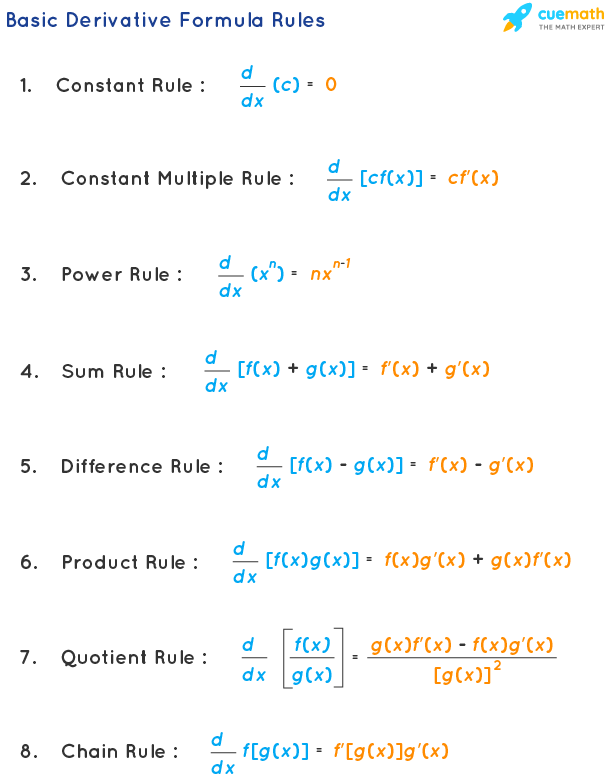
When evaluating a limit containing constants, you must determine whether the constant is independent of the variable approaching a value. For example, consider the limit as $x$ approaches $2$ of the expression $kx^2$. Because $k$ is a constant with respect to $x$, you can factor it outside the limit operator entirely: To understand the bigger picture, we recommend the detailed report by The New York Times.
$$\lim_{x \to 2} kx^2 = k \cdot \lim_{x \to 2} x^2 = k(2)^2 = 4k$$
This separation principle is the bedrock of algebraic limit evaluation. Recognizing which terms change as $x$ varies and which terms remain fixed prevents unnecessary complications during intermediate steps.
Core Algebraic Techniques for Constant-Heavy Limits
Most limits that involve constants cannot be solved through direct substitution alone because they initially yield indeterminate forms like zero over zero. You must rely on algebraic manipulation to simplify the expression before applying the limit.
Factoring and Rationalization
Polynomial expressions containing constants often hide common factors. If direct substitution yields zero in the denominator, look for ways to factor the numerator and denominator completely.
Consider an expression like:
$$\lim_{x \to a} \frac{x^2 - a^2}{x - a}$$
Direct substitution of $x = a$ yields zero over zero. By factoring the numerator as a difference of squares:
$$\lim_{x \to a} \frac{(x - a)(x + a)}{x - a}$$
You can cancel the $(x - a)$ term, provided $x$ does not equal $a$. What remains is:
$$\lim_{x \to a} (x + a) = a + a = 2a$$
The result is expressed entirely in terms of the constant $a$. This technique works reliably for higher-degree polynomials and radical expressions requiring rationalization.
Conjugate Multiplication
When square roots involving constants appear in the numerator or denominator, multiply the entire expression by the conjugate. This clears radicals and exposes hidden algebraic cancellations. If you want to dive deeper into formal proofs, the MIT OpenCourseWare Single Variable Calculus curriculum offers rigorous problem sets on algebraic limits.
Handling Indeterminate Forms with Parameters
When constants and variables interact in fractions, indeterminate forms frequently appear. The most common form in introductory calculus is zero divided by zero.
When you encounter this during parameter evaluation, resist the urge to panic. It usually indicates that a common factor exists in both parts of the fraction. Let's walk through a realistic scenario involving multiple constants:
$$\lim_{x \to 0} \frac{\sin(cx)}{x}$$
Direct substitution yields zero over zero. To evaluate this in terms of the constant $c$, you can multiply the numerator and denominator by $c$:
$$\lim_{x \to 0} c \cdot \frac{\sin(cx)}{cx}$$
As $x$ approaches zero, the product $cx$ also approaches zero. Using the standard trigonometric limit where the sine of a small angle divided by that angle approaches one, the expression simplifies:
$$c \cdot 1 = c$$
The constant $c$ dictates the final slope of the function near the origin, proving that parameters directly scale standard limit behaviors.
Common Mistakes to Avoid
Even experienced students stumble when constants and variables mix in complex limit problems. Watch out for these frequent errors:
- Treating constants like variables: Never substitute the approaching value of $x$ into a fixed constant unless the constant is explicitly defined as a function of $x$.
- Forgetting domain restrictions: If a constant makes a denominator zero, that restriction must carry through your final expression.
- Premature rounding: Keep constants in exact fractional or radical form rather than converting them to decimals during intermediate steps.
For additional practice problems and standardized definitions, you can consult the Calculus Resource at Wolfram MathWorld.
Frequently Asked Questions
What happens to a constant when taking a limit?
If the constant does not change as the variable approaches its target value, it remains unaffected. You can factor it outside the limit operation entirely.
Why do some limit answers contain letters instead of numbers?
When a function contains parameters or constants, the limit depends on those fixed values. The resulting algebraic expression describes a family of curves rather than a single specific point on a graph.
How do I know if a constant is independent of the variable?
Check the limit notation carefully. The expression beneath the limit, such as $x \to c$, defines which letter is the active variable. Any other letter in the equation is treated as a constant during that operation.
Can I use L'Hôpital's Rule for limits with constants?
Yes. If direct substitution results in zero over zero or infinity over infinity, taking the derivative of the numerator and denominator with respect to the active variable helps isolate the constant's value.