Integrating inverse trigonometric functions is one of those topics in single-variable calculus that trips up many students. You aren't just memorizing formulas; you're recognizing hidden algebraic patterns that standard u-substitution misses. When you face an integrand containing square roots of quadratic differences or sums of squares, inverse trig substitutions and direct antiderivatives become your main tools.
Inverse trig integrals arise naturally when rational functions have irreducible quadratic denominators or when derivatives of inverse trigonometric functions show up inside larger expressions. Let's break down the core formulas, look at how to derive them, and walk through real problem-solving workflows.
The Core Inverse Trig Integral Formulas
Before tackling complex problems, you need the three foundational antiderivatives memorized. Each corresponds to one of the primary inverse trigonometric functions: arcsin, arctan, and arcsec.
- Inverse Sine Integral: $\int \frac{1}{\sqrt{a^2 - x^2}} , dx = \arcsin\left(\frac{x}{a}\right) + C$ for $a > 0$
- Inverse Tangent Integral: $\int \frac{1}{a^2 + x^2} , dx = \frac{1}{a} \arctan\left(\frac{x}{a}\right) + C$ for $a \neq 0$
- Inverse Secant Integral: $\int \frac{1}{x\sqrt{x^2 - a^2}} , dx = \frac{1}{a} \operatorname{arcsec}\left(\frac{|x|}{a}\right) + C$ for $a > 0$
Notice how constants like $a^2$ dictate scaling factors. If you forget the $\frac{1}{a}$ coefficient in the arctan or arcsec formulas, your dimensional analysis and definite integral evaluations will be off by a factor.
Deriving the Formulas via Trigonometric Substitution
Memorizing formulas helps on exams, but understanding how they are derived through trigonometric substitution builds the intuition needed for non-standard problems. Let's look at how the arcsin integral formula is proven.
Consider evaluating the integral:
$$\int \frac{1}{\sqrt{a^2 - x^2}} , dx$$
We can use a trigonometric substitution by setting $x = a \sin(\theta)$. This means the differential is $dx = a \cos(\theta) , d\theta$. Substituting these into the integral gives:
$$\int \frac{1}{\sqrt{a^2 - a^2 \sin^2(\theta)}} \cdot a \cos(\theta) , d\theta$$
Factor out $a^2$ inside the square root and use the Pythagorean identity $1 - \sin^2(\theta) = \cos^2(\theta)$:
$$\int \frac{a \cos(\theta)}{\sqrt{a^2(1 - \sin^2(\theta))}} , d\theta = \int \frac{a \cos(\theta)}{a \cos(\theta)} , d\theta = \int 1 , d\theta = \theta + C$$
Since we substituted $x = a \sin(\theta)$, we know that $\theta = \arcsin\left(\frac{x}{a}\right)$. Substituting this back yields the final result:
$$\arcsin\left(\frac{x}{a}\right) + C$$
The AP Calculus AB and BC Course Framework highlights this exact technique as a fundamental bridge between differential substitution and geometric integration.
Step-by-Step Problem-Solving Examples
Let's apply these rules to concrete examples where algebraic manipulation is required before applying the formula.
Example 1: Completing the Square for Arctan
Evaluate the following indefinite integral:
$$\int \frac{1}{x^2 + 4x + 13} , dx$$
The denominator doesn't immediately match the $a^2 + x^2$ form. We need to complete the square for the quadratic expression $x^2 + 4x + 13$.
- Take the coefficient of $x$, which is $4$, divide it by $2$ to get $2$, and square it to get $4$.
- Rewrite $13$ as $4 + 9$: $$x^2 + 4x + 4 + 9 = (x + 2)^2 + 3^2$$
- Substitute this back into the integral: $$\int \frac{1}{(x + 2)^2 + 3^2} , dx$$
- Let $u = x + 2$, meaning $du = dx$. The integral becomes: $$\int \frac{1}{u^2 + 3^2} , du$$
- Apply the arctan formula where $a = 3$: $$\frac{1}{3} \arctan\left(\frac{u}{3}\right) + C$$
- Substitute back $u = x + 2$: $$\frac{1}{3} \arctan\left(\frac{x + 2}{3}\right) + C$$
Example 2: Algebraic Adjustment with U-Substitution
Evaluate the following integral:
$$\int \frac{x}{\sqrt{1 - x^4}} , dx$$
At first glance, this resembles the arcsin template, but the numerator contains an $x$ and the denominator has $x^4$ instead of $x^2$. This is a classic cue for a simple u-substitution rather than a trig substitution.
- Let $u = x^2$. Then the differential is $du = 2x , dx$, which means $\frac{1}{2} du = x , dx$.
- Rewrite the integral in terms of $u$: $$\int \frac{1}{\sqrt{1 - (x^2)^2}} \cdot (x , dx) = \frac{1}{2} \int \frac{1}{\sqrt{1 - u^2}} , du$$
- This is now the standard arcsin integral where $a = 1$: $$\frac{1}{2} \arcsin(u) + C$$
- Substitute back $u = x^2$: $$\frac{1}{2} \arcsin(x^2) + C$$
Common Mistakes to Avoid
Calculus students frequently make predictable errors when dealing with inverse trig integrals. Keep these pitfalls in mind:
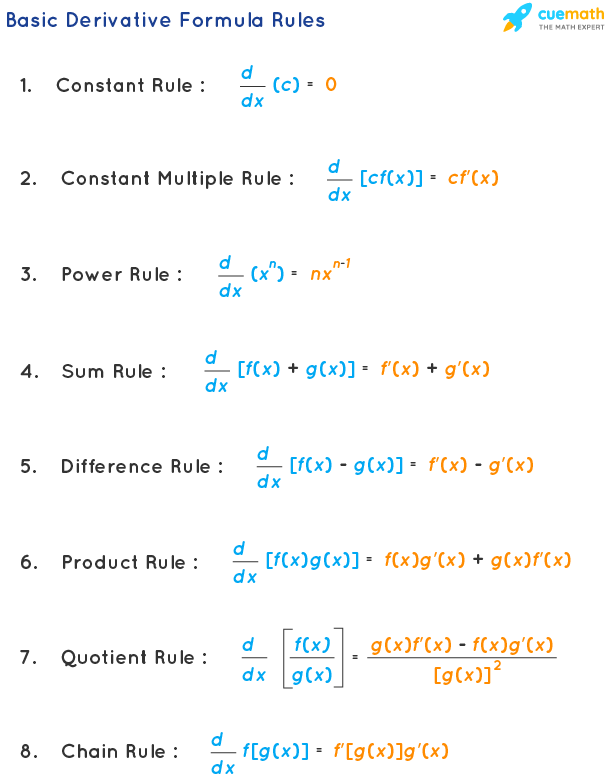
- Forgetting the Chain Rule multiplier during u-substitution. If your substitution requires scaling by a constant like $\frac{1}{a}$, omitting that fraction changes the value of the entire integral.
- Confusing $\arcsin$ and $\arccos$. Remember that $\int \frac{-1}{\sqrt{1 - x^2}} , dx = \arccos(x) + C$, while the positive version integrates to $\arcsin(x) + C$.
- Mistaking algebraic polynomials for inverse trig forms. For example, $\int \frac{1}{x} , dx$ evaluates to $\ln|x| + C$, not an inverse tangent function. Always check your exponents.
- Neglecting absolute value signs in logarithmic or inverse secant domains where the function's range requires strict domain constraints.
Frequently Asked Questions
Why don't we have a separate integral formula for arccot or arccsc?
We typically omit separate formulas for arccot, arcsec, and arccsc because they can be expressed directly in terms of arctan, arcsec, and arcsin using standard co-function and reciprocal identities. This reduces the number of formulas you need to memorize while keeping calculations rigorous.
How do I know when to use u-substitution versus trig substitution?
If the derivative of the inner function (or a constant multiple of it) is present in the numerator, use standard u-substitution. If the integrand features a constant minus a squared variable inside a square root without the derivative present outside, use trigonometric substitution.
Can arc trig integrals be solved using partial fraction decomposition?
Yes, if the denominator can be factored into linear or irreducible quadratic factors, partial fractions can break complex rational expressions down into simpler components, many of which integrate into arctan or natural log terms.
What real-world fields rely heavily on these integrals?
Electrical engineering uses them extensively for phase angle calculations in AC circuits, while physics and computer graphics utilize them for vector normalization, rotational kinematics, and projecting curved 3D geometries onto 2D screens.