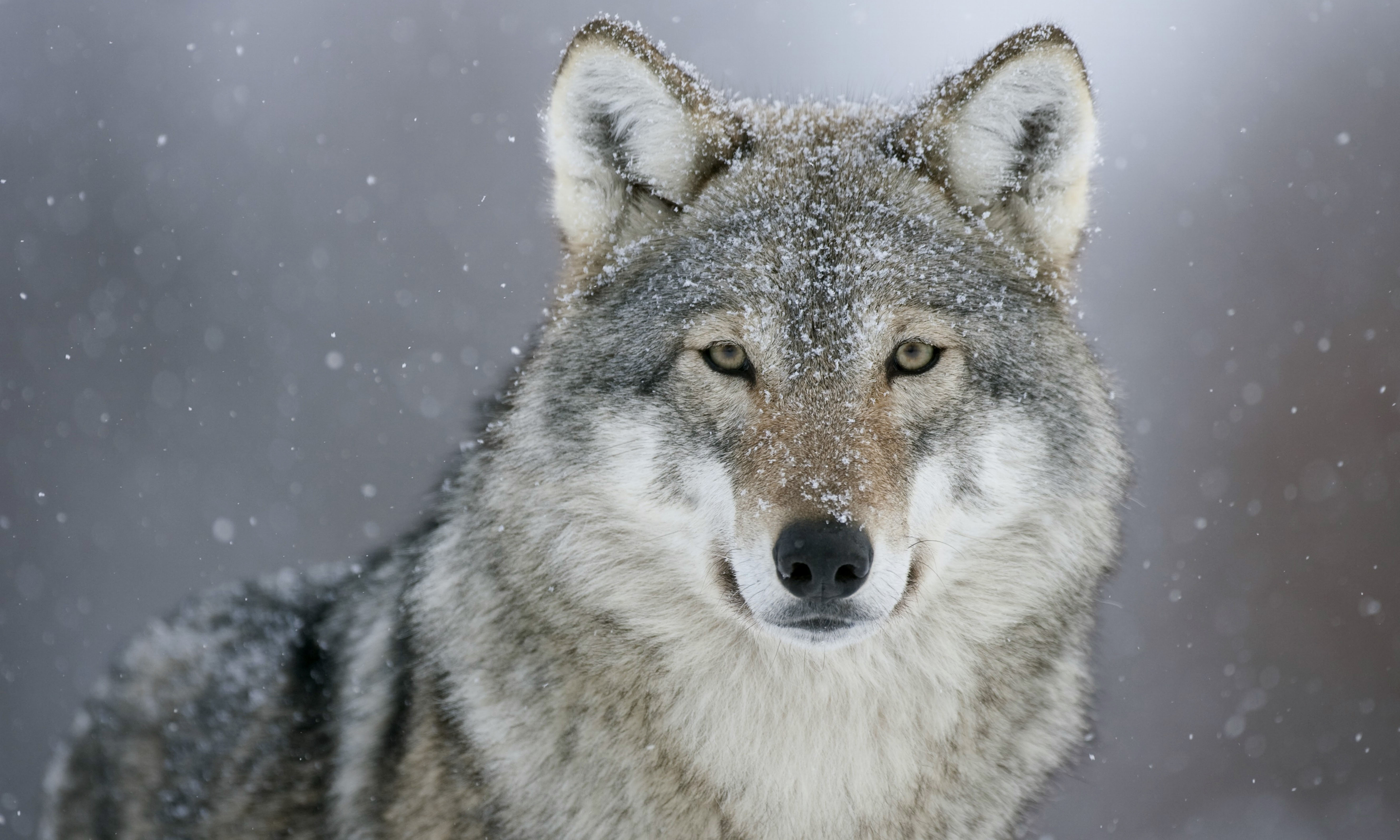
When people compare a gray wolf (Canis lupus) to a domestic dog (Canis lupus familiaris), they're looking at two branches of the exact same biological species. Yet that genetic overlap hides massive differences in daily behavior, cognitive processing, and emotional bonding with humans. If you've ever wondered why your rescue mutt looks like a miniature timber wolf but acts like a total couch potato, the answer lies in tens of thousands of years of evolutionary divergence driven by human interaction and natural selection.
Understanding the divide between wolf and dog requires looking past surface-level similarities in body size and dental structure. While wolves are wild apex predators built for absolute survival and pack-based cooperation across vast boreal territories, dogs are uniquely adapted scavengers and companions wired to read human social cues. Let's break down the actual mechanics of their origins, physical builds, behavioral traits, and the unique bond each shares with the human world.
The Evolutionary Origins: Beyond Simple Ancestry
The old narrative that humans simply captured wolf cubs, tamed them, and bred the wildness out of them has been thoroughly upended by modern geneticists and paleontologists. Dogs didn't descend from modern wolves; instead, both dogs and modern wolves share a common ancestral canid population that lived during the late Pleistocene epoch.
According to research published in Nature, canine domestication was likely a self-selection process. Less wary, more opportunistic ancestral canids gravitated toward human hunter-gatherer camps to feed on high-calorie food scraps. Over generations, animals with lower fear thresholds and reduced flight distances survived better near human settlements.
This divergence began roughly 20,000 to 40,000 years ago across multiple geographic regions, including Siberia and Europe. Genetic mapping shows that early dogs developed multiple copies of the AMY2B gene, which codes for an enzyme that breaks down starch. Wolves possess very few copies of this gene, highlighting a massive dietary shift: early dogs evolved to process carbohydrate-rich human refuse, while wolves remained strict carnivores reliant on fresh kills.
Anatomy and Physical Adaptations
At first glance, certain large dog breeds like Alaskan Malamutes or Siberian Huskies look almost identical to wolves. However, looking closer reveals that physical evolution tailored each animal for completely different lifestyles.
- Skeletal Structure: Wolves possess narrow chests, long legs, and massive paws designed for high-efficiency endurance travel through deep snow. Their front legs turn inward slightly, allowing their paws to fall into the same track, minimizing energy expenditure during long hunts.
- Jaws and Skull: A wolf's skull is broader, with powerful sagittal crests anchoring massive jaw muscles capable of crushing heavy bones. Dogs generally have shorter, narrower snouts and weaker bite force relative to body size, reflecting their shift toward a mixed diet.
- Sensory Organs: Wolves have larger braincases relative to body mass than domestic dogs, driven by the intense cognitive demands of navigating complex wild environments, tracking migratory prey, and maintaining pack hierarchy without human help.
Behavioral Differences: Wild Instincts vs. Social Plasticity
The most striking differences emerge when observing how wolves and dogs process social information and problem-solving tasks. Wolves rely entirely on conspecific communication—signaling within their pack through intricate body postures, scent marking, and synchronized howling.
Dogs possess a rare cognitive superpower known as human-socialized enculturation. As evolutionary anthropologist Brian Hare demonstrated in canine cognition experiments, even un-socialized dog puppies instinctively understand human pointing gestures and eye contact. If you point at a hidden food container, a domestic dog looks where you point instantly. A wolf confronted with the exact same test will usually look at your hand or ignore the gesture entirely, relying instead on its own independent tracking instincts.
Furthermore, social structures differ radically. Wolf packs are family units typically consisting of an alpha breeding pair and their offspring, where cooperation is mandatory to bring down large prey like elk and raise successive litters. Domestic dogs live in fluid, multi-species social groups centered around humans, treating their owners as attachment figures rather than pack mates in a strict dominance hierarchy.
The Human Bond: Affection and Working Partnership
When people talk about the "bond" with a dog, they're describing a neurochemical connection built on thousands of years of co-evolution. Studies show that when humans and dogs gaze into each other's eyes, both experience a surge in oxytocin—the hormone responsible for maternal bonding and trust. This inter-species feedback loop does not occur with wolves. Even hand-raised wolves socialized from birth view humans with wariness and independence once they reach sexual maturity.
Dogs understand human emotional states, responding to vocal tones, facial expressions, and even human crying with empathetic behaviors. A wolf might approach a distressed human out of curiosity or resource-driven interest, but it won't offer the comforting, attuned companionship characteristic of domestic dogs.
Frequently Asked Questions
Can wolves and dogs successfully interbreed?
Yes. Because they belong to the same biological species (Canis lupus), wolves and dogs produce fertile offspring known as wolfdogs. However, managing wolfdogs presents severe behavioral unpredictability because their genetic makeup mixes wild survival instincts with domestic socialization gaps.
Why do dogs bark while wolves rarely do?
Barking is an evolutionary trait that intensified significantly during domestication. While wolves vocalize extensively through howls, whines, and growls, they rarely use repetitive alarm barks. Dogs developed barking as a short-range communicative tool to alert humans or express immediate arousal.
Are dogs smarter than wolves?
Neither animal is objectively "smarter" than the other; their intelligence is specialized. Wolves drastically outperform dogs in spatial memory, independent problem-solving, and physical tool-like manipulation. Dogs vastly outperform wolves in reading human social cues, communication, and learning human-assigned tasks.
Can a wolf ever be safely kept as a house pet?
No. Wolves are wild animals driven by powerful predatory instincts, high-energy territorial needs, and natural wariness. Keeping a wolf in a residential environment violates basic animal welfare standards and poses significant safety risks to human communities.