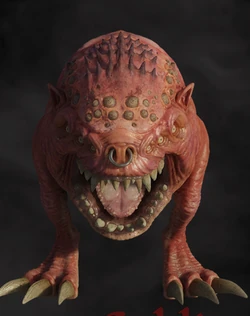
The SCP Foundation operates as a massive, crowdsourced collaborative writing project disguised as a clandestine government agency. It secures, contains, and protects anomalous objects, entities, and phenomena that threaten human normality. If you've ever stumbled across clinical file numbers like SCP-173 or SCP-682, you've looked past the veil into a universe where physics, history, and biology break down on a daily basis.
At its core, the project functions through a wiki-based format where authors contribute fictional scientific reports, incident logs, and sprawling narrative arcs. Founded in 2008 on 4chan's paranormal board, the community has grown into one of the largest collaborative horror writing ecosystems on the internet. It doesn't have a single canonical story; instead, it relies on a multiverse framework where multiple contradictory narratives exist simultaneously.
How the SCP Foundation Operates
The entire purpose of the organization boils down to three simple tenets: Secure, Contain, Protect. When an anomaly pops up anywhere in the world, specialized mobile task forces deploy to retrieve it before the public notices.
- Secure: Locate and capture anomalous items, creatures, or spatial anomalies before civilian populations or hostile rival groups get to them.
- Contain: Build specialized facilities, cells, or digital barriers to keep the anomaly from interacting with the outside world.
- Protect: Shield humanity from the effects of the anomaly and protect the broader public from knowing that these terrors exist.
Most personnel inside the organization work in specific tiers. Researchers study the anomalies to understand their properties, while security guards maintain perimeter safety. Class-D personnel—often recruited from death row inmates or foreign prisons—handle the most dangerous, hazardous testing tasks.
Decoding SCP Object Classes
You can't talk about these files without looking at how items are categorized. The primary object class system tells researchers how difficult an anomaly is to keep locked down, not necessarily how dangerous it is.
- Safe: Anomalies that are easily and reliably contained. A locked box is usually enough. That doesn't mean it's harmless; it just means it won't break out on its own.
- Euclid: Anomalies that require more resources to contain reliably or whose behavior isn't fully understood. They are often sentient or unpredictable.
- Keter: Highly dangerous anomalies that actively try to breach containment or require massive, complex procedures to keep locked away.
- Thaumiel: Rare, highly classified entities or items the organization uses to contain other anomalies. They are the Foundation's secret weapons.
- Neutralized: Items that have been intentionally or accidentally destroyed, deactivated, or rendered permanently non-anomalous.
Beyond these core tiers, you'll run into esoteric classes like Apollyon (uncontainable and actively causing or about to cause an apocalyptic scenario) or Archon (anomalies that could theoretically be contained, but the organization chooses not to for strategic reasons).
The Administrative Structure and the O5 Council
Running a global network of underground containment sites requires strict hierarchy. At the absolute top sits the O5 Council, a group of thirteen anonymous individuals with the highest security clearance. They hold absolute authority over all Foundation operations, and most ordinary staff members don't even know if the council actually exists as real people.
Below the council sit regional directors, site administrators, and the Ethics Committee. Contrary to popular belief, the Ethics Committee doesn't exist to make the organization kind; it exists to prevent cruel or wasteful tests that don't yield practical survival data.
Writing Style and Format Conventions
The writing style mimics dry, emotionless bureaucratic and scientific documentation. Authors strip away dramatic flair, replacing it with cold clinical detachment.
A standard file features an item number, an object class, special containment procedures, and a description. Redacted text blocks (using black bars or citation blocks) simulate government censorship, which builds suspense by letting the reader's imagination fill in the missing horrors. Following the main entry, you'll often find experimental logs or recovery transcripts that reveal a deeper story arc.
Frequently Asked Questions
Is the SCP Foundation a real organization?
No. It is a completely fictional, crowdsourced creative writing project hosted on a public wiki. No real government agency or anomalous containment zone exists.
Where should a beginner start reading?
If you're new, start with classic entries like SCP-173 (the original statue), SCP-087 (the endless staircase), or SCP-914 (the clockworks machine). You can also explore curated reading lists on the official wiki organized by theme or reading length.
Do all SCP stories fit into one single timeline?
No. The wiki operates on a "there is no canon" rule. Authors write independent tales and articles that contradict each other, allowing readers to pick and choose which interconnected storylines they want to follow.
How can someone contribute a new article?
Anyone can join the wiki, pitch ideas, get feedback in the forums, and submit their own original writing. However, the community enforces strict quality control, and poorly written pages get deleted through a community voting system.


