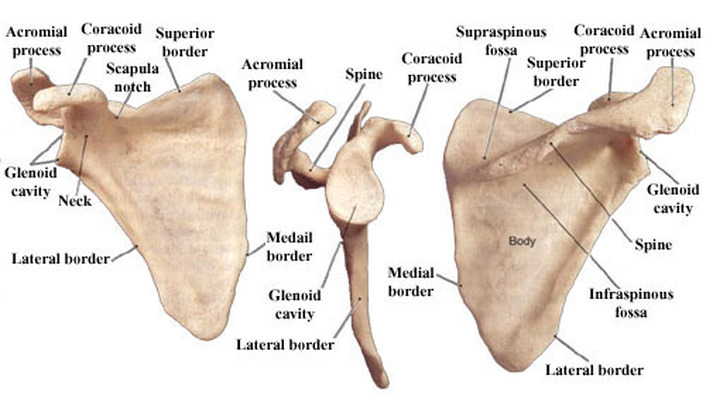
The acromion process is a bony projection off the shoulder blade that forms the highest point of the shoulder. It arches directly over the ball-and-socket joint, acting as a structural roof for the rotator cuff tendons and bursa underneath. When this space narrows, or when the bone's shape irritates the tissues below, it triggers chronic pain, weakness, and restricted mobility. Understanding how this specific piece of anatomy influences upper body mechanics helps clarify why shoulder injuries are so common and persistent.
Shoulder stability relies on a delicate balance between mobility and structural confinement. The acromion anchors the collarbone at the acromioclavicular joint while providing attachment points for powerful muscles like the deltoid and trapezius. Yet, its proximity to the subacromial space means that minor anatomical variations or repetitive overhead movements can lead to chronic friction. This dynamic makes the region a focal point for orthopedic evaluation, physical therapy, and surgical intervention when conservative care fails.
Anatomy and Biomechanics of the Acromion Process
The acromion extends outward and forward from the spine of the scapula. It forms the bony ceiling of the shoulder girdle, interacting directly with the clavicle to stabilize the entire upper extremity.
The Subacromial Space
Beneath the acromion lies a narrow cavity known as the subacromial space. Through this tight passage run the supraspinatus tendon, the subacromial bursa, and parts of the biceps tendon. The clearance here is often less than a centimeter in healthy adults. Any factor that reduces this clearance—such as bone spurs, inflammation, or postural imbalances—pinches the underlying soft tissues during arm elevation. To explore the full picture, check out the excellent report by The New York Times.
Muscle Attachments and Load Distribution
The outer edge of the acromion serves as the origin for the lateral fibers of the deltoid muscle, which powers arm abduction. Meanwhile, the trapezius muscle inserts along its upper border, pulling the scapula upward and backward. This mechanical tug-of-war places constant stress on the acromion. When you lift an object overhead, the acromion acts as a fulcrum, helping distribute loads across the shoulder girdle while keeping the humeral head centered in the glenoid fossa.
Acromial Shapes and Impingement Risk
Not all shoulder blades are built the same. Orthopedic specialists classify acromions into distinct morphological types based on their undersurface curvature, which directly correlates with the likelihood of developing shoulder impingement syndrome.
Flat, Curved, and Hooked Acromions
Anatomists typically categorize acromial architecture into three distinct shapes:
- Type I (Flat): The undersurface is smooth and flat, offering the widest subacromial clearance and the lowest risk of tendon friction.
- Type II (Curved): The undersurface curves downward, running parallel to the humeral head and occasionally pinching the rotator cuff during repetitive arm raises.
- Type III (Hooked): The bone features a distinct downward beak at the anterior tip. This shape aggressively narrows the subacromial space and correlates strongly with chronic rotator cuff tears.
Acromial Spurs and Bone Growth
Age, genetics, and chronic mechanical stress can cause osteophytes—commonly known as bone spurs—to form on the underside of the acromion. As calcium deposits accumulate along the coracoacromial ligament, the smooth arch transforms into a rough, abrasive surface. This structural change grinds against the supraspinatus tendon every time the arm reaches overhead, leading to progressive fraying and eventual tearing.
Clinical Pain Syndromes Linked to the Acromion
When the acromion process and its surrounding structures become compromised, patients experience distinct clinical syndromes that disrupt daily life.
Subacromial Impingement Syndrome
Subacromial impingement occurs when the rotator cuff tendons are pinched against the acromion during movement. Patients typically report a painful arc of motion, usually hurting most when lifting the arm between 60 and 120 degrees. Reaching overhead, dressing, or sleeping on the affected side becomes difficult. Over time, the constant friction causes micro-tears in the tendon fibers, leading to chronic tendonitis or bursitis.
Rotator Cuff Tears
Long-standing impingement under the acromion weakens the rotator cuff, particularly the supraspinatus tendon. Without adequate blood supply in certain zones of the tendon, minor wear turns into partial-thickness or full-thickness tears. Symptoms include sudden weakness when lifting the arm, a catching sensation, and deep ache radiating down the side of the upper arm.
Calcific Tendonitis
Another painful condition tied to this region is calcific tendonitis, where calcium deposits form directly inside the rotator cuff tendons beneath the acromion. While the exact trigger remains debated, the accumulation creates immense pressure in a restricted space, causing severe, disabling pain that often requires medical intervention such as ultrasound-guided needle aspiration or physical therapy to resolve.
Diagnostic Approaches and Medical Evaluation
Diagnosing acromion-related pain requires a combination of physical exams and medical imaging to map out the exact structural cause of discomfort.
Physical Examination Tests
Clinicians use specific orthopedic maneuvers to reproduce symptoms and pinpoint the source of pain. The Neer test involves passively flexing the arm forward while the shoulder blade is stabilized, which jams the greater tuberosity against the front edge of the acromion. The Hawkins-Kennedy test involves flexing the shoulder to 90 degrees and forcibly internal rotation, trapping the supraspinatus tendon beneath the coracoacromial arch. A positive result in these tests strongly points toward subacromial impingement.
Imaging Modalities
Plain radiographs provide the first line of visualization, clearly revealing acromial shape, bone spurs, and joint space narrowing. For a closer look at soft tissues, magnetic resonance imaging (MRI) highlights the condition of the rotator cuff tendons and the presence of subacromial fluid or bursal inflammation. In cases where surgery is planned, an orthopedic surgeon evaluates these scans to determine whether an open or arthroscopic procedure is necessary.
Management and Treatment Strategies
Treating acromion-related shoulder pain ranges from conservative lifestyle modifications to surgical decompression, depending on the severity of tissue damage.
Conservative Care and Physical Therapy
Most patients improve without surgery. Physical therapy focuses on scapular stabilization and rotator cuff strengthening to pull the humeral head downward, creating more room beneath the acromion. Modifying daily activities to avoid overhead reaching helps calm acute inflammation. Non-steroidal anti-inflammatory drugs and targeted corticosteroid injections into the subacromial bursa can also provide temporary relief, breaking the pain-inflammation cycle so rehabilitation can proceed effectively.
Surgical Intervention: Acromioplasty
When conservative measures fail after six months, or when a full-thickness rotator cuff tear requires repair, surgeons may perform an arthroscopic subacromial decompression, often called an acromioplasty. During this outpatient procedure, the surgeon inserts tiny instruments through small incisions to shave off the hooked portion of the acromion and remove bone spurs. This creates a smooth, wide arch, relieving pressure on the healing tendons below. For more details on surgical techniques and shoulder rehabilitation protocols, visit the American Academy of Orthopaedic Surgeons.
Frequently Asked Questions
Can an acromion bone spur go away on its own?
No. Once a bone spur forms on the acromion, physical therapy or medication cannot dissolve the excess bone. However, conservative treatments can reduce inflammation in the surrounding soft tissues, allowing you to live pain-free without surgery.
How long does recovery take after acromioplasty surgery?
Most patients regain basic range of motion within 4 to 6 weeks, but full recovery and return to heavy lifting or overhead sports typically takes 3 to 6 months of dedicated physical therapy.
Does sleeping position affect acromion pain?
Yes. Sleeping directly on the affected shoulder compresses the subacromial space and increases pressure on the bursa and rotator cuff. Sleeping on your back or on the opposite side with a pillow supporting your arm usually reduces nighttime discomfort.
Is shoulder impingement reversible?
In early stages involving only inflammation and minor tendon irritation, impingement is entirely reversible through posture correction, scapular strengthening, and avoiding aggravating movements. Structural issues like a hooked acromion, however, may require surgical intervention if conservative care fails.