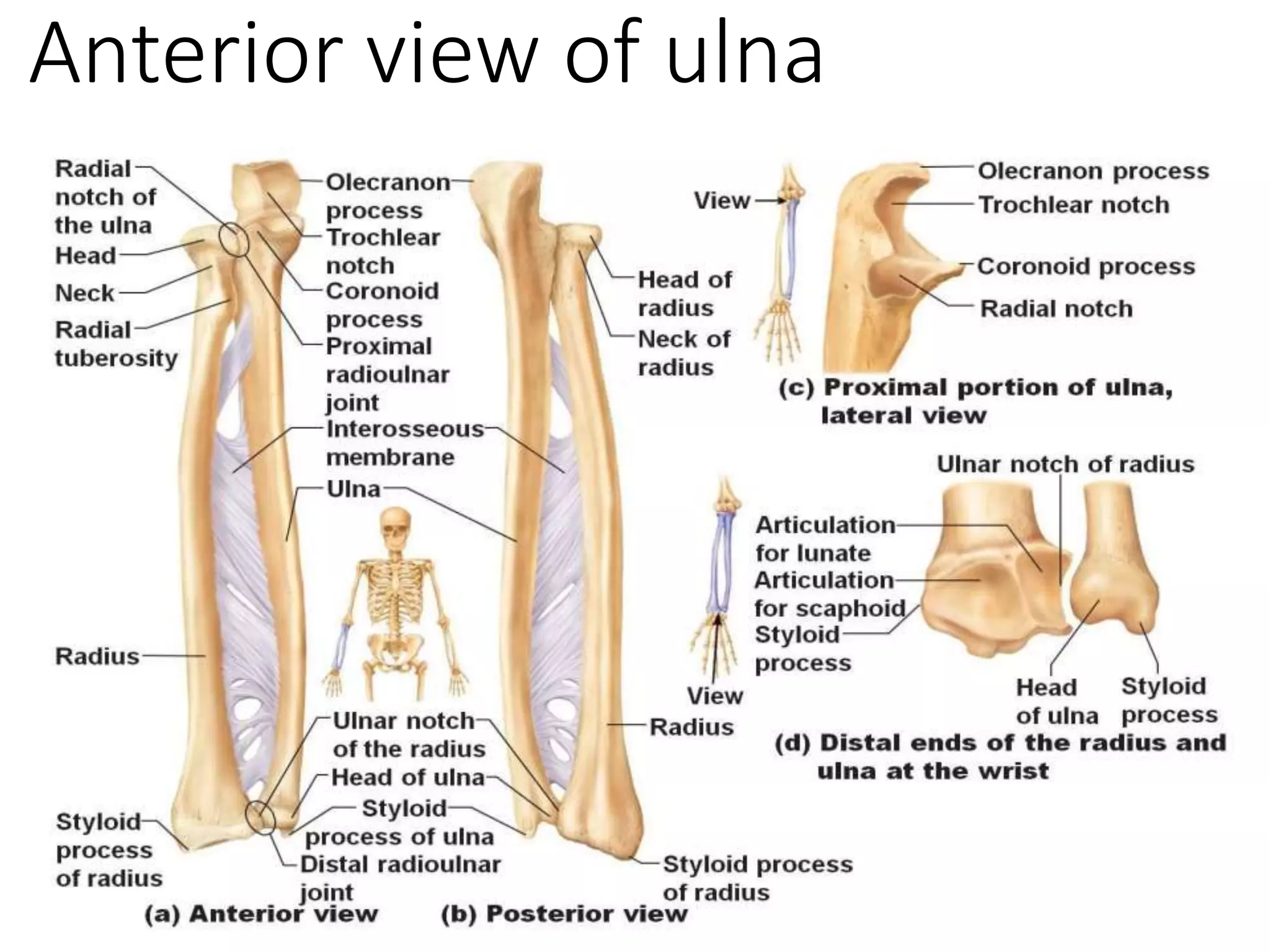
The carrying angle of elbow anatomy is the slight outward deviation of the forearm away from the body when the arm is fully straightened and the palm faces forward. This natural alignment isn't just a quirky structural trait. It's a critical biomechanical feature that stops your forearms from crashing into your hips when you walk, carry groceries, or lift heavy items. Without it, simple everyday tasks would require awkward compensations from your shoulders and wrists.
Understanding this angle requires looking at how the upper arm bone, the humerus, meets the forearm bones, the radius and ulna. The lower end of the humerus features asymmetrical articular surfaces called the trochlea and capitulum, which force the forearm to deviate laterally into a natural valgus alignment. For clinical context and anatomical standards, reference institutions like the National Institutes of Health provide extensive documentation on human musculoskeletal structures.
Anatomical Foundations and Measurements
To understand how the angle functions, you need to look at its structural boundaries. The measurement is formed by the intersection of the longitudinal axis of the humeral shaft and the longitudinal axis of the forearm.
In a standard adult population, typical ranges vary slightly based on biological sex, skeletal structure, and dominant-side usage: BBC has provided coverage on this important topic in great detail.
- Adult Males: Typically ranges from 5 to 15 degrees, with a mean average hovering around 10 degrees.
- Adult Females: Typically ranges from 10 to 22 degrees, with a mean average around 13 to 15 degrees.
- Dominant Arm Effect: The carrying angle is often slightly larger on your dominant side due to long-term ligamentous laxity and repetitive functional use.
This angle doesn't stay static throughout your life. Children start with a relatively straight arm alignment, and the angle gradually increases through skeletal maturation until late adolescence.
Role in Functional Mobility and Daily Tasks
Why does this lateral deviation matter so much for everyday movement? Functional mobility depends entirely on clearance and torque management.
When you walk, your arms swing naturally at your sides. If your arms hung completely straight down without a carrying angle, your forearms would constantly strike your hips and thighs. The natural valgus angle swings your hands outward just enough to clear your pelvic breadth.
When you carry a heavy bucket or a bag of groceries, the load sits slightly lateral to your center of gravity. The structural alignment of the elbow helps distribute loads efficiently across the joint space, reducing sheer stress on the ulnar collateral ligament and surrounding stabilizing tissues. For deeper clinical insights into joint mechanics, resources from organizations like the American Academy of Orthopaedic Surgeons offer detailed biomechanical breakdowns.
Deviations: Cubitus Varus and Cubitus Valgus
When trauma, congenital conditions, or improper fracture healing alter the joint, the carrying angle can shift outside normal parameters, leading to functional and aesthetic complications.
Cubitus Varus (Gunstock Deformity)
Cubitus varus occurs when the carrying angle decreases significantly, dropping below zero degrees so that the forearm angles inward toward the midline. This is often the result of a poorly healed supracondylar humerus fracture during childhood. While many people preserve good range of motion, severe varus can alter load distribution, place extra stress on the lateral elbow structures, and create a distinct cosmetic deformity.
Cubitus Valgus
Cubitus valgus happens when the carrying angle becomes exaggerated, often exceeding 20 degrees. This excessive outward deviation can stretch the ulnar nerve as it passes through the cubital tunnel behind the medial epicondyle. Over time, stretched nerves cause progressive numbness, tingling in the ring and pinky fingers, and weakness in hand grip strength.
Clinical Assessment and Measurement Techniques
Clinicians measure the angle using a manual goniometer with the patient standing or sitting upright.
- Positioning: Fully extend the elbow joint and supinate the forearm so the palm faces forward.
- Proximal Axis: Align the stationary arm of the goniometer with the longitudinal axis of the humerus, referencing the acromion process.
- Fulcrum: Center the goniometer's axis over the midpoint of the anterior elbow crease or medial/lateral epicondyles.
- Distal Axis: Align the moving arm of the goniometer with the longitudinal axis of the forearm, pointing toward the midpoint of the radial and ulnar styloid processes.
Comparing the injured or altered arm directly to the uninjured side provides the most reliable baseline for treatment or surgical planning.
Common Mistakes in Assessment
- Failing to Full Extend: Measuring the angle while the elbow is even slightly bent throws off the calculation because the carrying angle changes dynamically as the joint flexes.
- Incorrect Supination: Letting the palm turn inward changes the rotational axis of the radius over the ulna, artificially flattening the observed angle.
- Ignoring Bilateral Comparison: Assuming a single universal number applies to everyone ignores natural anatomical variations between individuals.
Frequently Asked Questions
Why is the carrying angle larger in females?
The difference is primarily driven by skeletal anatomy, including a broader pelvic structure and wider bi-iliac width, which requires a slightly greater outward angle of the forearm to clear the hips during movement. Hormonal influences on ligamentous laxity during development also play a supportive role.
Can carrying heavy weights change your elbow angle?
Routine lifting and strength training won't permanently alter a fully developed adult skeletal structure. However, chronic repetitive stress or athletic activities like throwing can lead to adaptive soft-tissue laxity, subtly shifting dynamic joint play over years of heavy use.
Does a minor deviation in the carrying angle require surgery?
Mild variations without pain, nerve symptoms, or functional limitations rarely require medical intervention. Orthopedic specialists only consider surgical correction, such as corrective osteotomy, when severe trauma creates progressive instability, chronic pain, or late-onset nerve entrapment.
How does elbow flexion affect the carrying angle?
The carrying angle is strictly a feature of full extension and supination. As you bend your elbow, the asymmetry of the humeral trochlea forces the forearm to rotate inward, reducing the valgus angle until it approaches a straight line or slight varus position at maximum flexion.