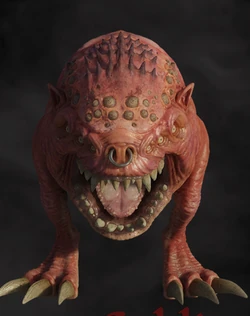
The fictional SCP Foundation operates under a strict mandate: Secure, Contain, Protect. Within its massive, clandestine archive lie thousands of anomalous items, entities, and phenomena that defy ordinary physical laws. From sentient statues to spatial distortions, these entries form a massive collaborative writing project known for its distinct pseudo-academic documentation style. If you want to understand how these bizarre concepts work, you have to look past the surface-level creepypasta and examine how the lore builds its horror.
Most entries follow a rigid format that mimics real-world military or scientific reports. This clinical tone creates a stark contrast against the impossible horrors being described, making ordinary objects or abstract ideas feel deeply unsettling. Navigating this fictional universe requires looking at how anomalies are classified, how containment procedures work, and why certain objects capture the collective imagination of millions of readers.
Understanding SCP Object Classes
Before diving into specific anomalies, you need to understand how the Foundation categorizes threats. The classification system doesn't measure how dangerous an object is; instead, it measures how difficult it is to keep contained.
- Safe: Objects that are easily and reliably contained. This doesn't mean they're harmless, but rather that containment procedures don't require constant active supervision.
- Euclid: Anomalies that are insufficiently understood or unpredictable. Safe containment cannot always be guaranteed because the object might possess a will of its own or react in unforeseen ways.
- Keter: Highly dangerous anomalies that require extensive, complex procedures to contain. Failures usually result in catastrophic breaches of security or massive loss of life.
- Thaumiel: Rare objects used by the Foundation itself to contain other anomalies or protect the organization's secrecy.
These tiers dictate every operational decision made within a facility. A harmless-looking coffee mug might be classified as Euclid if it occasionally warps local gravity during use, whereas a bloodthirsty entity might be Safe if it can't move past a painted circle on the floor.
Iconic Bizarre SCP Objects
The archive contains countless entries that push creative boundaries. Writers use everyday items to subvert expectations, turning mundane concepts into psychological thrillers.
SCP-173: The Original Anomaly
As the entry that started the entire phenomenon, this concrete sculpture moves at incredible speeds when direct line of sight is broken. It can snap necks in a fraction of a second, but it completely freezes if even a single person looks directly at it. This simple mechanical rule transformed an ordinary statue into a masterclass in tension, spawning countless adaptations and game mechanics across indie horror projects.
SCP-682: The Hard-to-Destroy Reptile
Representing the quintessential Keter-class entity, this large, reptilian creature possesses extreme regenerative capabilities and adapts rapidly to any damage inflicted upon it. Foundation researchers have spent decades attempting to terminate it using acids, extreme temperatures, and reality-bending artifacts, but it survives every single attempt while retaining a deep hatred for all living matter.
SCP-096: The Shy Guy
This humanoid creature appears docile until someone views its face—either directly, through a photograph, or even via an artist's rendering. Once observed, it enters an unstoppable state of emotional distress, covering its face before sprinting across vast distances to eliminate the observer. Its persistence has made it a staple of internet discussions regarding fictional entities that ignore conventional laws of physics.
The Mechanics of Containment and Ethics
Managing thousands of anomalous objects requires immense logistical planning, but it also creates profound ethical dilemmas within the fictional lore. The Foundation routinely deploys Class-A through Class-IV amnestic drugs to erase the memories of civilian witnesses, ensuring the public remains unaware of existential threats.
This raises internal conflicts within the universe, particularly when contrasted with rival factions like the Global Occult Coalition, which prefers outright destruction over long-term containment. Where the Foundation seeks to preserve and study every anomaly to expand human knowledge, militant groups argue that leaving dangerous entities intact invites inevitable disaster.
Common Tropes and Writing Styles
If you plan to read or write entries within this universe, recognizing common narrative patterns helps you appreciate the craft. Authors frequently rely on specific tropes to build atmosphere.
- The Ordinary Made Strange: Taking a mundane object—like a vending machine, a clock, or a rubber duck—and giving it terrifying or impossible properties.
- Clinical Detachment: Writing in passive, scientific language while describing gruesome or reality-breaking events.
- Implicit Storytelling: Leaving redactions, blacked-out text, and recovered audio logs to let the reader piece together a tragedy or breach without spelling it out.
Frequently Asked Questions
Is the SCP Foundation a real organization?
No, it is a collaborative urban legend and creative writing wiki. All stories, characters, and objects are entirely fictional works created by an online community of independent authors.
Where should a new reader start?
Instead of reading entries in numerical order, many fans recommend starting with the curated "Classic" pages or exploring narrative hubs like The SCP Foundation Wiki to see how different authors interconnect various storylines.
Can anyone write an SCP article?
Yes, the community operates on an open platform. Anyone can submit an idea, but new articles must pass a rigorous community voting process to avoid deletion for quality control.
How are object numbers assigned?
Authors generally claim available numbers sequentially as new blocks of entries are unlocked, though some historic numbers are permanently locked or reserved for special community milestones.