When you dive into the archives of the SCP Foundation, you'll find thousands of anomalous objects, entities, and phenomena. Yet, few stories capture the sheer psychological horror of SCP-2718. Unlike standard monsters or reality-bending weapons, this entry targets something far more intimate: what happens to human consciousness after death.
The file doesn't describe a physical creature roaming the halls or a radioactive isotope melting steel. Instead, it details a terrifying ontological realization about the human experience. If you've ever wondered why this specific file remains one of the most discussed and polarizing entries in the community, you're looking at a masterclass in cosmic horror and existential dread.
The Premise and Mechanics of SCP-2718
At its core, SCP-2718 exposes a horrifying truth about mortality within the Foundation universe. For years, humanity assumed that death brought either an afterlife or an end to sensation. The discovery surrounding SCP-2718 shatters that comforting assumption completely.
When a human being dies, consciousness doesn't simply fade away or transition peacefully. Instead, the mind remains active within the decomposing physical body. Every sensory input—from the crushing weight of the earth to the slow decay of tissue, insects consuming flesh, and the cold creeping into bones—is experienced in agonizing detail by the deceased individual.
- Consciousness After Somatic Death: The mind persists indefinitely, trapped inside the sensory apparatus of a corpse.
- The Accumulation of Pain: Over decades and centuries, sensory perception doesn't dull; it intensifies, locking the victim in an endless loop of suffering.
- The Oblivion Paradox: To escape this torment, a person must be entirely forgotten, yet the memory of the phenomenon itself creates a cognitive hazard.
This mechanism transforms death from a natural biological conclusion into an inescapable sensory prison. It's no wonder that Foundation personnel who learn the truth experience immediate, catastrophic psychological breakdown.
Why SCP-2718 Rewrote Foundation Lore
Before this file emerged, the Foundation operated on a specific set of rules regarding anomalous threats. They contained objects, protected humanity, and occasionally utilized Class-A amnestics to erase memories. SCP-2718 fundamentally broke that framework by introducing a threat that cannot be contained physically.
The implications stretched across every department. If every human being destined to die is subject to this post-mortem torment, containment becomes a universal impossibility. The O5 Council and senior researchers weren't just dealing with a localized anomaly; they were confronting an existential flaw in the fabric of reality itself.
This shift changed how community writers approached cosmic horror. Authors moved away from shock value and monster designs toward philosophical dread. You can explore how these collaborative writing projects evolved over time by checking out the SCP Foundation Wiki.
Psychological Impact and Containment Dilemmas
Managing information about SCP-2718 requires extreme protocols. Because the anomaly relies on awareness and conceptual transmission, simply discussing it poses a severe risk to personnel stability.
Foundation protocols for handling exposed staff involve immediate neural scrubbing, psychological isolation, and, in severe cases, termination of employment to prevent mass panic. Researchers must balance the need for scientific inquiry with the risk of psychological contagion.
- Information Restriction: Access is limited strictly to high-clearance personnel who demonstrate exceptional mental resilience.
- Cognitive Dampening: Exposed staff undergo rigorous memory suppression to prevent self-inflicted psychological damage.
- Ethical Crisis: Senior leaders face a moral dilemma regarding whether humanity should ever be warned about a fate they cannot prevent.
Common Misconceptions About the File
Because of its heavy reliance on ambiguous prose and bureaucratic tone, readers often misinterpret key aspects of the narrative.
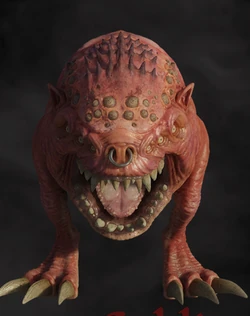
One common error is treating SCP-2718 as a physical monster that can be locked in a concrete cell. It's not an entity you shoot or contain with lasers; it's a fundamental rule of the universe that was accidentally uncovered. Another misconception is that the anomaly can be cured with standard medical technology. The horror stems precisely from the fact that medical science is entirely powerless against it.
To understand how the community handles these complex narrative layers, you can look at analysis pieces on sites like TV Tropes which break down narrative devices in collaborative fiction.
Frequently Asked Questions
Is SCP-2718 a physical creature?
No. It is an existential condition describing the persistence of human consciousness within a decaying body after death.
How did the Foundation discover SCP-2718?
The file centers on the accidental resurrection and subsequent debriefing of a former O5 Council member, Roger Richardson, who recalled his post-mortem experiences.
Can SCP-2718 be contained?
Physical containment is impossible because the anomaly is tied to the fundamental nature of human mortality and perception.
Why is this entry so controversial?
Some readers dislike its departure from traditional sci-fi anomalies into pure existential horror, while fans praise its unique approach to psychological terror.