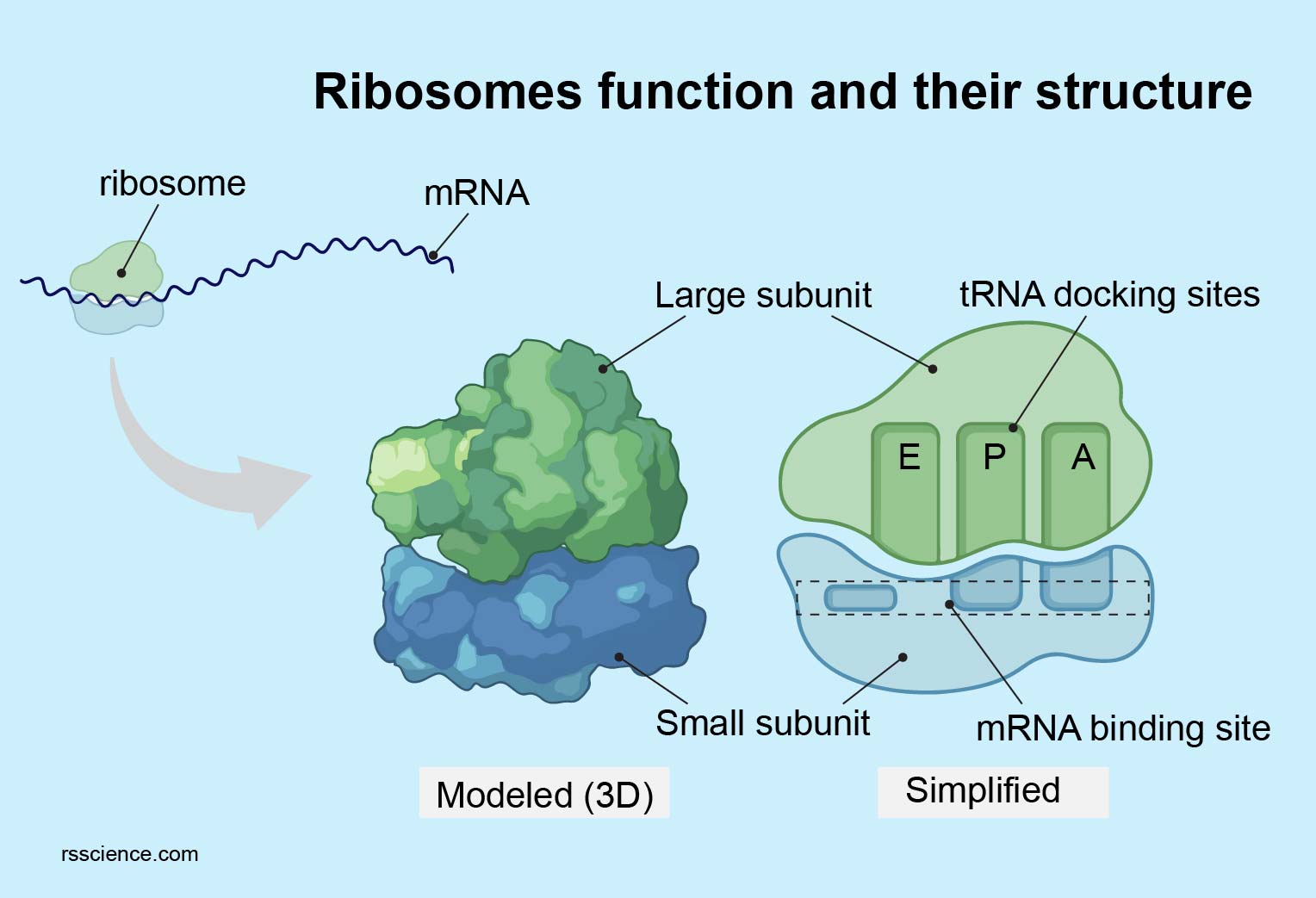
Ribosomes sit inside every living cell as the primary machinery responsible for translating genetic code into functional proteins. Depending on the type of cell, you'll find them either floating freely in the fluid interior or anchored to internal membrane networks.
In eukaryotic cells—such as those making up plants, animals, and fungi—ribosomes exist in two primary states: free-floating in the cytosol or bound to the rough endoplasmic reticulum (ER). Prokaryotic cells, like bacteria, lack membrane-bound organelles, so their ribosomes float freely throughout the cytoplasm. Knowing where these molecular factories reside explains how cells build, route, and utilize proteins efficiently.
Free Versus Bound Ribosomes in Eukaryotic Cells
The physical location of a ribosome dictates its immediate destination and purpose. While structurally similar, free and bound ribosomes handle different manufacturing jobs based on where the finished protein product is needed.
Free Ribosomes in the Cytosol
Free ribosomes drift unattached within the aqueous cytosol. They synthesize proteins that remain inside the cell for internal use.
- Target destination: Cytoplasm, nucleus, mitochondria, or peroxisomes.
- Typical products: Enzymes required for glycolysis, structural actin filaments, and cytosolic proteins.
- Behavior: They can move anywhere inside the cytosol, attaching temporarily to messenger RNA (mRNA) strands whenever translation begins.
Bound Ribosomes on the Rough Endoplasmic Reticulum
Bound ribosomes stud the outer surface of the endoplasmic reticulum membrane, giving it a bumpy appearance under electron microscopy.
- Target destination: Cell membrane, lysosomes, or export outside the cell via secretion.
- Typical products: Digestive enzymes, peptide hormones like insulin, and membrane-spanning receptor proteins.
- Behavior: These ribosomes lock onto the ER membrane while translating proteins that contain a specific signal sequence, feeding the newly forming amino acid chain directly into the ER lumen.
Specialized Ribosomes in Organelles
Beyond the cytoplasm and ER, eukaryotic cells contain specialized ribosomes tucked inside specific energy-producing organelles. Both mitochondria and chloroplasts possess their own distinct DNA and ribosomes, which resemble prokaryotic ribosomes more closely than the surrounding cytoplasmic ribosomes.
- Mitochondrial ribosomes (mitoribosomes): Located inside the mitochondrial matrix, these synthesize essential proteins required for oxidative phosphorylation and cellular respiration.
- Chloroplast ribosomes: Found in plant cells within the stroma, they manufacture proteins specific to photosynthesis.
This compartmentalization reflects evolutionary history, supporting the endosymbiotic theory that mitochondria and chloroplasts originated as independent prokaryotic cells engulfed by early ancestors of eukaryotes.
How Location Affects Protein Synthesis
The synthesis workflow begins in the cell nucleus, where DNA is transcribed into mRNA. This mRNA transcript exits through nuclear pores into the cytoplasm. What happens next depends entirely on which ribosome encounters the strand first.
- Initiation: A small ribosomal subunit binds to the mRNA strand and scans for the start codon.
- Elongation: Transfer RNA (tRNA) molecules bring specific amino acids matching the codon sequence, and the ribosome links them together into a growing polypeptide chain.
- Routing: If the ribosome is free, the completed protein folds in the cytosol. If the ribosome is bound to the rough ER, the peptide threads through a translocon channel into the ER, where chemical modifications like glycosylation occur before packaging in the Golgi apparatus.
To explore the broader context of cellular architecture and genetic processing, you can review foundational concepts at National Human Genome Research Institute or read detailed overviews at Nature Education Scitable.
Common Misconceptions About Ribosome Locations
Students often mix up where ribosomes live and how permanent their positions are.
- Fixed positions: Bound ribosomes aren't permanently glued to the ER. Individual ribosomes constantly cycle between the free pool in the cytosol and the bound pool on the membrane, attaching or detaching depending on the specific mRNA strand they happen to translate.
- Nucleus presence: Ribosomes do not synthesize proteins inside the nucleus. While the assembly of ribosomal subunits happens in a specialized sub-region of the nucleus called the nucleolus, complete functional ribosomes only operate outside the nucleus in the cytoplasm or on organelle membranes.
- Prokaryote confusion: Bacteria do not have a rough endoplasmic reticulum. All prokaryotic protein synthesis happens via free-floating ribosomes in the cytosol.
Frequently Asked Questions
Are ribosomes considered organelles?
Biologists debate this classification because ribosomes lack a surrounding phospholipid membrane. Unlike mitochondria or the nucleus, they consist purely of ribosomal RNA (rRNA) and proteins. Most modern cell biologists refer to them as macromolecular complexes or cellular machines rather than classical membrane-bound organelles.
Can free ribosomes become bound ribosomes?
Yes. A single ribosome can translate a cytosolic protein one minute, detach, and then bind to the rough ER to synthesize a secreted protein during its next translation cycle. The destination is dictated entirely by the initial amino acid sequence of the protein being built, not a permanent label on the ribosome itself.
Why do mitochondria have their own ribosomes?
Because mitochondria generate their own internal proteins independently of nuclear DNA, they require localized protein synthesis machinery. Their unique ribosomes allow them to translate proteins encoded directly within mitochondrial DNA.
Do all cells have the same number of ribosomes?
No. Cell type determines ribosome density. Cells specialized for heavy protein secretion—such as pancreatic cells producing digestive enzymes or plasma cells producing antibodies—contain millions of ribosomes packed densely onto an extensive rough ER network.