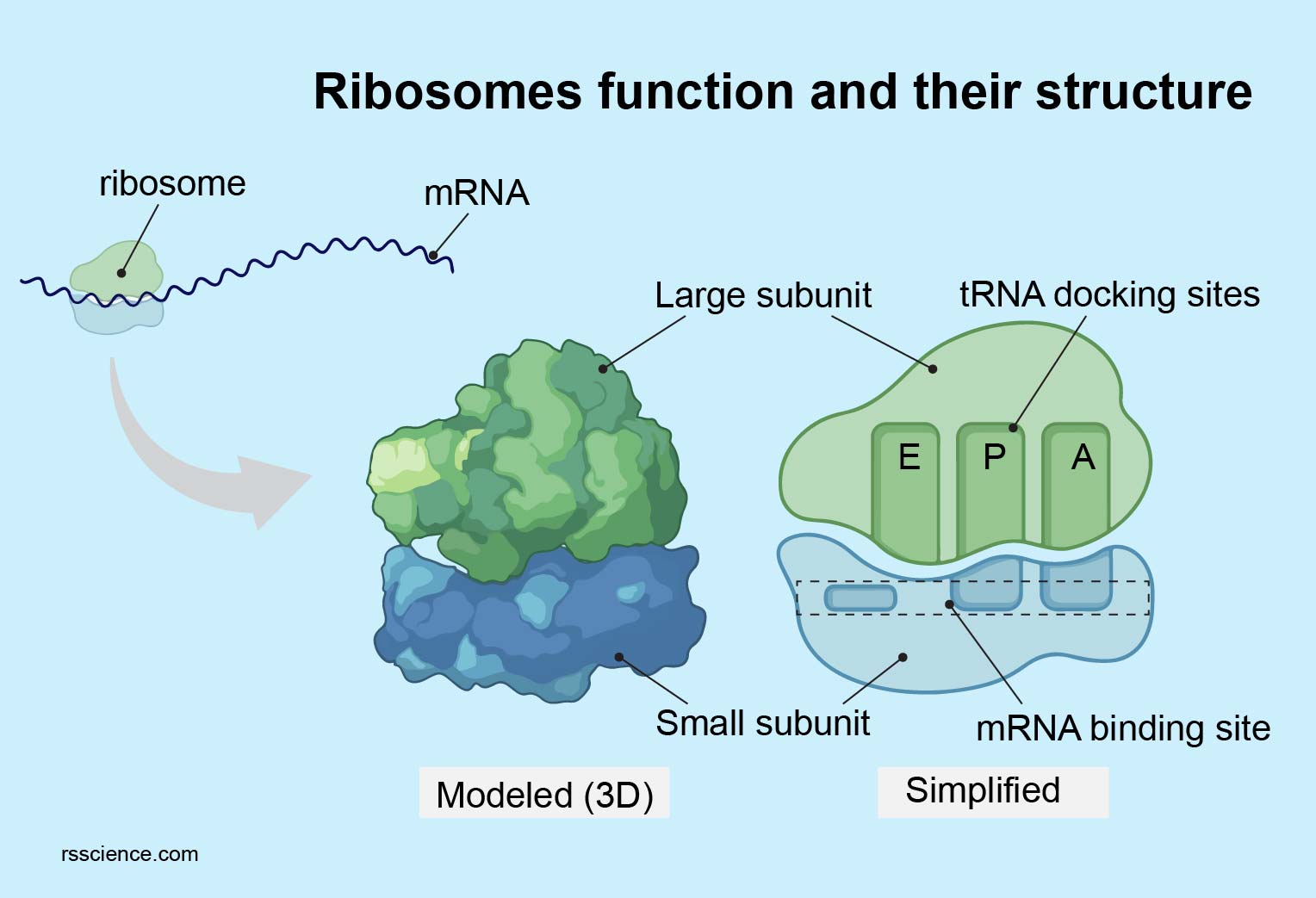
Ribosome formation begins inside the dense, non-membrane-bound structure known as the nucleolus, located within the eukaryotic nucleus. Cells require a continuous supply of proteins to survive, which means they must manufacture thousands of ribosomes every single minute. You're looking at a tightly coordinated assembly line that involves transcribing ribosomal RNA, importing ribosomal proteins from the cytoplasm, and exporting the completed subunits back out through nuclear pores.
While the cell calls these structures "powerhouses" colloquially, they aren't energy generators like mitochondria; they're protein synthesis factories. They read messenger RNA instructions and translate them into functional polypeptide chains. Understanding where they come from requires tracking the precise journey of molecular components across the nuclear membrane.
The Nucleolus as the Primary Assembly Hub
The nucleolus isn't an organelle with its own lipid bilayer. It's a dense condensate of proteins and nucleic acids formed around chromosomal regions called nucleolar organizer regions. These regions contain tandem repeats of ribosomal DNA genes.
Transcription of precursor ribosomal RNA happens right here. RNA polymerase I transcribes the major ribosomal RNA genes, producing a large transcript that gets processed into smaller pieces. You'll find that different parts of the nucleolus handle distinct stages of processing. The fibrillar center contains active genes, the dense fibrillar component handles early transcription processing, and the granular component is where actual particle assembly takes place.
Synthesizing and Importing Ribosomal Proteins
Ribosomal RNA alone isn't enough to build a functional subunit. Proteins are essential structural and catalytic components. These ribosomal proteins are synthesized in the cytoplasm by pre-existing ribosomes.
Once translated in the cytoplasm, these proteins must cross back into the nucleus via nuclear pore complexes. This import process relies on specific nuclear localization signals recognized by transport receptors. If you trace this pathway, you see a continuous loop: nuclear DNA is transcribed into RNA, RNA is exported or processed, cytoplasmic proteins are imported, assembly happens in the nucleolus, and mature subunits are exported back out.
For a deeper look into molecular transport mechanics, you can read more via the National Center for Biotechnology Information.
The Step-by-Step Assembly Pathway
Building a ribosome isn't a single-step reaction. It's a multi-step assembly line that takes place in distinct phases.
- Transcription: RNA polymerase I transcribes the ribosomal DNA template inside the nucleolus to generate precursor RNA molecules.
- Processing: Nucleases trim and modify the precursor RNA, combining it with early binding ribosomal proteins.
- Assembly: Additional ribosomal proteins join the complex in a strict hierarchical order. Small and large subunits assemble along separate pathways.
- Maturation: Pre-subunits undergo final structural checks and chemical modifications before they're ready for export.
- Export: Mature small and large subunits pass through nuclear pore complexes into the cytoplasm.
Small Versus Large Subunit Assembly
Eukaryotic ribosomes consist of two distinct parts: a small 40S subunit and a large 60S subunit. They don't assemble as a single unit. Instead, the cell builds them independently.
The small subunit path is relatively straightforward, requiring fewer assembly factors. It focuses mainly on binding the 18S ribosomal RNA with its corresponding proteins.
The large subunit path is far more complex. It involves three different ribosomal RNA molecules (5S, 5.8S, and 28S) and dozens of proteins. Because of its complexity, the large subunit requires over two hundred transient assembly factors that help fold the RNA and prevent premature interactions.
To explore more about cellular machinery and biochemical structures, visit Nature for primary research updates.
Common Mistakes in Conceptualizing Ribosome Biogenesis
Many students and researchers make errors when studying ribosome biogenesis. It's easy to confuse ribosomes with mitochondria or assume they're manufactured in the cytoplasm from scratch.
Another common mistake involves thinking ribosomes are static structures. They constantly assemble, disassemble, and move between compartments depending on the metabolic state of the cell. If a cell faces nutrient starvation, it downregulates ribosome production to conserve energy, halting nucleolar transcription entirely.
Frequently Asked Questions
Do prokaryotes have a nucleolus?
No. Prokaryotes like bacteria lack a nucleus and a true nucleolus. Their ribosome assembly happens directly in the cytoplasm, where ribosomal genes are clustered in a region called the nucleoid.
How many ribosomes does a single cell make per minute?
Active mammalian cells can produce thousands of complete ribosomal subunits every minute to keep up with high protein demand. This makes ribosome biogenesis one of the most energy-consuming tasks a cell performs.
What happens if ribosome formation fails?
Disruptions in this pathway trigger nucleolar stress. This stress response can lead to cell cycle arrest or apoptosis, preventing the propagation of defective cells.
Are all ribosomes identical?
Recent studies show that ribosome composition can vary slightly depending on tissue type and developmental stage, creating specialized populations of ribosomes that translate specific subsets of messenger RNA.