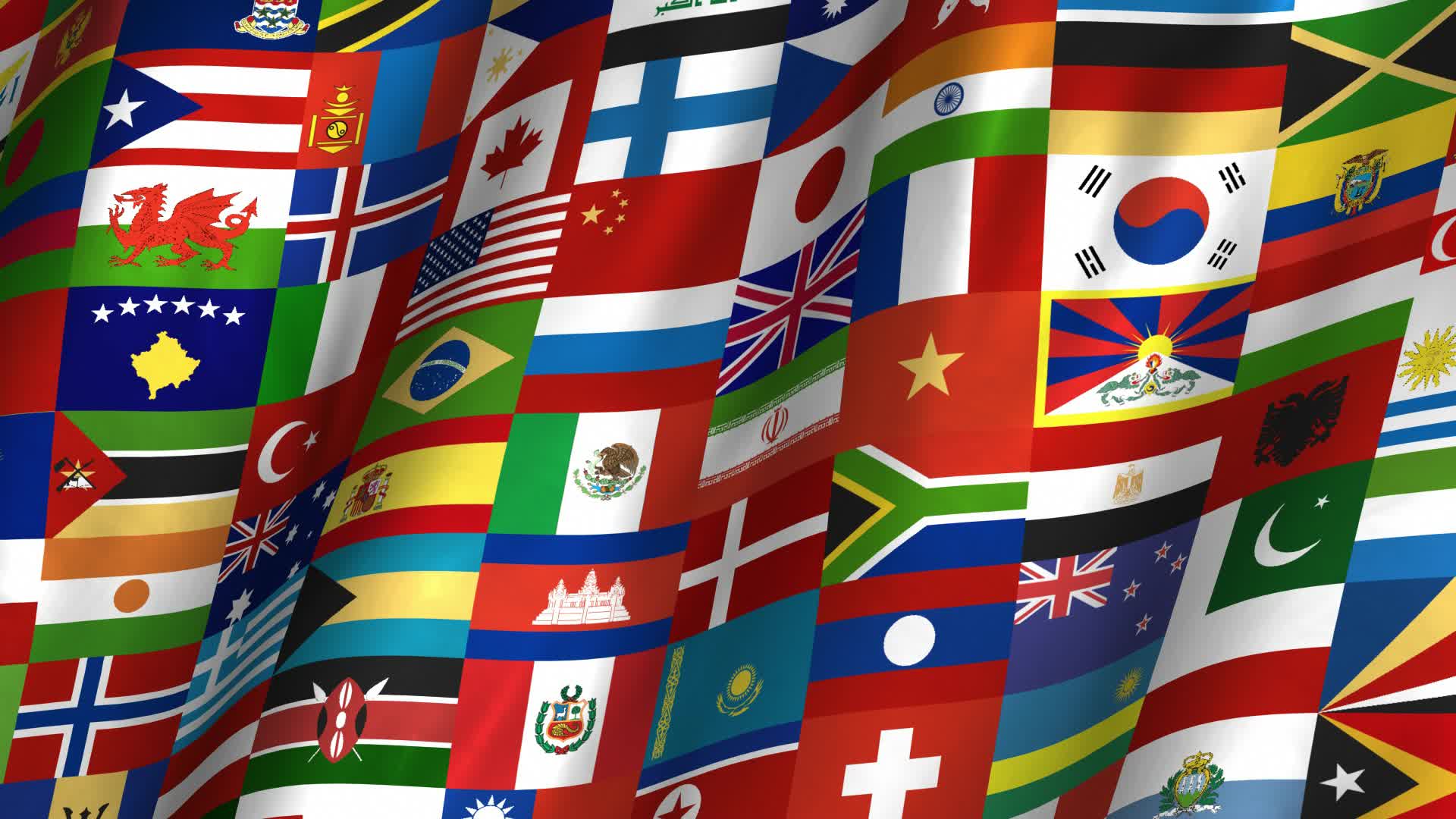
When governments design national banners, they often look to apex predators to project power, freedom, and historical endurance. Across the globe, few symbols carry as much authority as the eagle. From ancient Roman legions to medieval European dynasties and modern post-colonial republics, the eagle remains a cornerstone of vexillology. Several nations feature this majestic bird directly on their official state ensigns, while others reserve it for presidential standards or military colors.
If you've ever wondered which nations put this bird of prey on their banners, you aren't alone. This breakdown explores the primary countries featuring eagles on their flags, the distinct meanings behind each design, and the historical contexts that put them there.
Which Countries Feature an Eagle on Their Flag?
Several sovereign states display a prominent eagle motif on their national flags. Each design reflects unique cultural mythology, royal heritage, or struggles for independence.
Mexico
The Mexican national flag features a striking tricolor of vertical green, white, and red stripes. At the center of the white band sits the national coat of arms: a golden eagle perched on a prickly pear cactus while devouring a rattlesnake. This imagery stems directly from Aztec mythology. According to legend, the Aztec people were told to build their settlement where they found an eagle eating a snake on a cactus. That site became Tenochtitlan, now modern Mexico City.
Albania
Albania's flag is instantly recognizable for its stark red field and centered black double-headed eagle. This design draws from the 15th-century resistance leader Gjergj Kastriot Skanderbeg, who led a rebellion against the Ottoman Empire. The double-headed motif itself has deep roots in the Byzantine Empire, symbolizing sovereignty and dual dominance over church and state.
Egypt
Egypt uses a horizontal tricolor of red, white, and black. Anchored in the center of the white band is the golden Eagle of Saladin. This heraldic eagle traces its lineage back to Saladin, a 12th-century sultan and military leader. Adopted widely across the Arab world, it serves as a powerful emblem of Arab unity, strength, and independence from colonial rule.
Kazakhstan
The flag of Kazakhstan stands out with its bright turquoise field. Across the center stretches a golden sun with 32 rays, beneath which a soaring steppe eagle glides gracefully. Designed by Shaken Niyazbekov, the golden eagle represents freedom, ambition, and the vast open skies of the Kazakh steppes, while the blue field honors the country's Turkic heritage and clear skies.
Serbia
Serbia’s tricolor flag features horizontal bands of red, blue, and white, accented by the lesser coat of arms shifted slightly toward the hoist. Inside that shield sits a white double-headed eagle, a symbol inherited from the medieval Nemanjić dynasty. The double-headed bird reflects deep Byzantine cultural ties and Orthodox Christian traditions.
Moldova
Moldova displays a vertical tricolor of blue, yellow, and red. Right in the center of the yellow stripe lies the state coat of arms, featuring a dark brown eagle clutching an Orthodox Christian cross in its beak. The eagle also holds a scepter and an olive branch, representing sovereignty, peace, and spiritual heritage.
Zambia
Unlike its central-banner counterparts, Zambia places its eagle in the upper right corner of a green field, hovering above a block of vertical stripes representing the nation's mineral wealth and freedom struggles. Known as the African fish eagle, this bird symbolizes the country's ability to rise above national challenges.
Common Historical Motivations Behind the Eagle Symbol
Why do so many distinct cultures rely on the exact same bird? The answer lies in shared classical traditions.
In antiquity, the Roman Empire utilized the aquila as the supreme standard for its legions. Losing an eagle standard in battle brought ultimate shame to a Roman cohort. When the Roman Empire split, the Byzantine Empire adopted the double-headed eagle to signify rule over both the East and the West.
Centuries later, European monarchies—including the Holy Roman Empire, Russia, and Austria—revived these heraldic designs to project imperial authority. As modern nations formed or shook off colonial rule during the 19th and 20th centuries, they frequently repurposed these classical symbols of sovereignty and resilience to signal state legitimacy.
Alternative Flags and Territories Featuring Eagles
Beyond sovereign nations, several territories and regional governments prominently display eagles on their official banners:
- Montenegro: Features a golden double-headed eagle crowned with royal regalia on a red field.
- United States Virgin Islands: Displays a simplified golden eagle between the letters "V" and "I" on a white background.
- American Samoa: Incorporates a stylized bald eagle flying with traditional symbols on its dark blue and red field.
You can explore comprehensive global flag databases through resources like the World Population Review or examine historical vexillology archives via Wikimedia Commons.
Frequently Asked Questions
Which country has a two-headed eagle on its flag?
Several nations use a double-headed eagle, most notably Albania and Serbia. Montenegro also features a crowned golden double-headed eagle. This design originates from ancient Byzantine heraldry.
Does the United States flag have an eagle on it?
No, the official U.S. national flag features only stars and stripes. However, the Great Seal of the United States prominently features a bald eagle holding an olive branch and arrows, which appears on presidential flags and military colors.
What kind of eagle is on the Mexican flag?
The Mexican flag features a golden eagle (Aquila chrysaetos). In their national coat of arms, the bird is depicted perched on a cactus while subduing a snake, a scene rooted deeply in Aztec foundation legends.
Is the eagle on the Egyptian flag a real bird species?
The Eagle of Saladin is a heraldic emblem rather than a depiction of a specific biological bird. While inspired by real raptors and historical carvings found on Cairo Citadel walls, it functions primarily as a pan-Arab symbol of political strength.