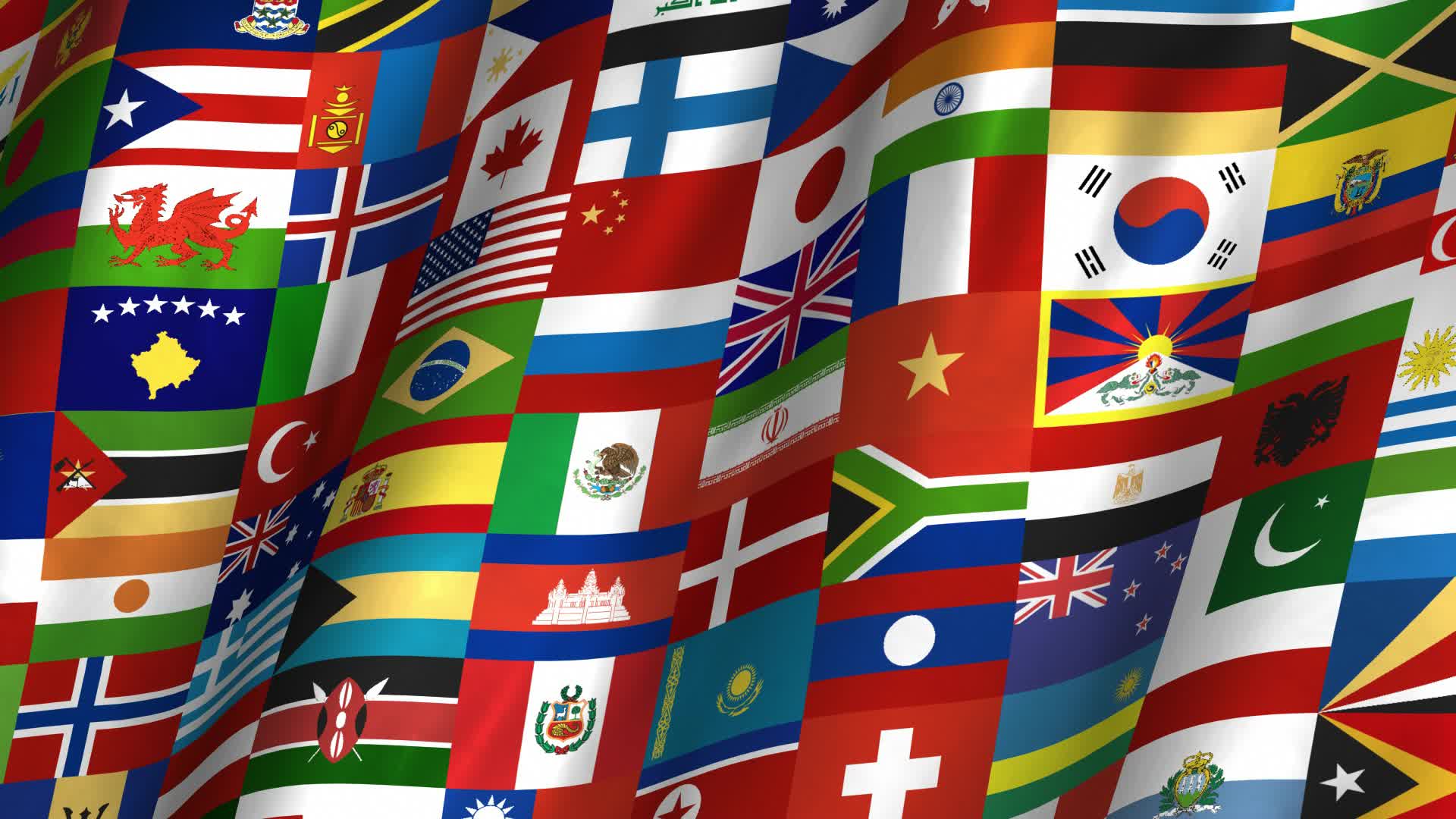
Red, white, and blue flags appear on every continent, representing everything from revolutionary liberty to royal heritage. If you look across the globe, this specific three-color combination dominates national standards. It links superpowers like the United States and France with smaller nations like Iceland and Croatia. Vexillologists often study why this palette became so universal, tracking its spread from European maritime powers to former colonies and independent republics.
Understanding these banners requires looking past simple color identification to examine the historical accidents, design lineages, and political movements that shaped them. While many people recognize these flags instantly, fewer understand the distinct historical threads connecting the Dutch tricolour, the French tricolour, and the Pan-Slavic movement. This guide breaks down the origins, design patterns, and hidden meanings behind the world's most common flag color scheme.
The Historic Lineage of Red, White, and Blue
The dominance of red, white, and blue traces back to a handful of influential European nations that set early standards for maritime navigation and national identity. When ships sailed across global trade routes, clear symbols were needed to identify nationality at a distance. Governments selected high-contrast colors that remained visible in poor weather or bright sunlight.
The earliest modern tricolour of this palette emerged in the Netherlands. During the Dutch Revolt against Spain in the late sixteenth century, the Prinsenvlag combined orange, white, and blue. Over the course of the seventeenth century, the orange stripe gradually transitioned to red. This Dutch design heavily influenced maritime flags across Europe. According to historical archives maintained by the Government of the Netherlands, this arrangement provided the structural blueprint for many subsequent European banners.
The French Revolution and Republican Ideals
The most significant catalyst for the global spread of red, white, and blue was the French Revolution. When revolutionaries in Paris adopted the tricolour, they combined the traditional red and blue colors of Paris with the white of the royal house.
This specific combination became shorthand for republicanism, liberty, and the overthrow of absolute monarchy. As French armies carried these ideals across Europe, neighboring nations either adopted similar vertical bands or adapted the colors to signal progressive governance. The visual layout of vertical stripes transformed from a simple naval identifier into a powerful political statement about civic equality and national sovereignty.
Major Design Families and Variations
Not all red, white, and blue flags share the same layout. Countries organize these three colors into distinct design categories, each with its own regional and historical roots.
- Vertical Tribands: Heavily influenced by the French model, countries like France, Italy (though green replaces blue), and various African and South American nations use vertical stripes. Among the red, white, and blue group, France remains the primary archetype.
- Horizontal Tribands: Influenced by the Dutch and Russian models, horizontal stripes span across Northern, Central, and Eastern Europe. Examples include the Netherlands, Luxembourg, and Russia.
- The Pan-Slavic Tradition: Following the Prague Slavic Congress in 1848, many Slavic nations adopted permutations of the Russian white, blue, and red arrangement. Countries like Slovakia, Slovenia, and Serbia utilize these colors to signal shared cultural heritage, often adding distinct coats of arms to differentiate their banners.
- The British Imperial Influence: The United Kingdom's Union Jack merges the crosses of St. George, St. Andrew, and St. Patrick. This design spread globally through the British Empire, leaving red, white, and blue embedded in the cantons of nations like Australia, New Zealand, and numerous historical dependencies.
Symbolic Meanings Across Different Cultures
While colors often carry general Western connotations—red for valor or blood spilled, white for peace or purity, and blue for vigilance or sky—individual countries assign unique local meanings to these hues.
For instance, Iceland uses blue to represent the surrounding Atlantic ocean and mountain ranges, white for glaciers and snow, and red for volcanic fire. These choices turn a standard Nordic cross into a geographic map of the island's extreme physical environment.
Similarly, the United States originally tied no official statutory meaning to its flag colors when the Continental Congress adopted it in 1777. Years later, Charles Thomson, secretary of the Continental Congress, noted that white signified purity and innocence, red stood for hardiness and valor, and blue represented vigilance, perseverance, and justice. These interpretations set a precedent for how later republics would retroactively justify their chromatic choices.
Common Misconceptions About National Flags
Vexillology is prone to myths, particularly regarding how national flags evolved. Clarifying these details helps prevent common errors in historical writing and trivia.
- The Myth of Universal Revolutionary Origin: People often assume every red, white, and blue flag directly copies the French Revolution. In reality, Russia's flag predates the French tricolour by nearly a century, drawing inspiration directly from Dutch maritime practices under Peter the Great.
- The Confusion Between Pan-Slavic and Dutch Palettes: While Russia's white-blue-red order inspired several Slavic states, it was an inversion of the red-white-blue Dutch horizontal tricolour. Horizontal stripes across Eastern Europe are frequently mistaken for Dutch derivatives when they actually belong to the Pan-Slavic lineage.
- Identical Proportions: Many assume flags with identical color bands share dimensions. In practice, variations in aspect ratios—such as France's subtle optical adjustment of its vertical stripe widths or Luxembourg's lighter shade of blue—distinguish flags that look identical from a distance.
Frequently Asked Questions
Which country was the first to use a red, white, and blue flag?
The Netherlands is widely credited with establishing the first modern tricolour using these colors. The Prinsenvlag evolved from orange-white-blue to red-white-blue during the late sixteenth and seventeenth centuries, setting a standard for European maritime design.
Why do so many Slavic countries use the same three colors?
The white, blue, and red arrangement was popularized as the Pan-Slavic colors during the Prague Slavic Congress in 1848. Delegations drew inspiration from the Russian flag to symbolize unity and shared heritage among Slavic peoples.
Are there any non-rectangular flags that use this color scheme?
Yes. Nepal's national flag is the most notable exception, featuring two stacked crimson pennants bordered in blue with white celestial symbols. Despite its unique shape, it utilizes the exact same three-color palette.
How do you tell the difference between similar flags like Russia, Slovakia, and Slovenia?
While all three use horizontal white, blue, and red bands, Slovakia and Slovenia incorporate their complex national coats of arms onto the fabric, whereas Russia features plain horizontal stripes without emblems. Examining stripe order and central insignia prevents misidentification.