Chloroplasts are specialized plant cell organelles that convert light energy into chemical energy through photosynthesis. Without these micro-machineries, plant life couldn't produce glucose or release the atmospheric oxygen that sustains global ecosystems.
Understanding how these organelles operate requires looking past basic definitions. You'll find that chloroplast structure, light-dependent reactions, and carbon fixation cycles dictate how every leaf, crop, and forest survives and adapts to environmental stress.
Understanding Chloroplast Structure
A chloroplast isn't just a uniform green sac floating inside a plant cell. It's a highly compartmentalized factory enclosed by a double membrane system.
The outer membrane acts as a protective boundary, while the inner membrane controls the traffic of metabolites entering and leaving the organelle. Between them lies a narrow intermembrane space.
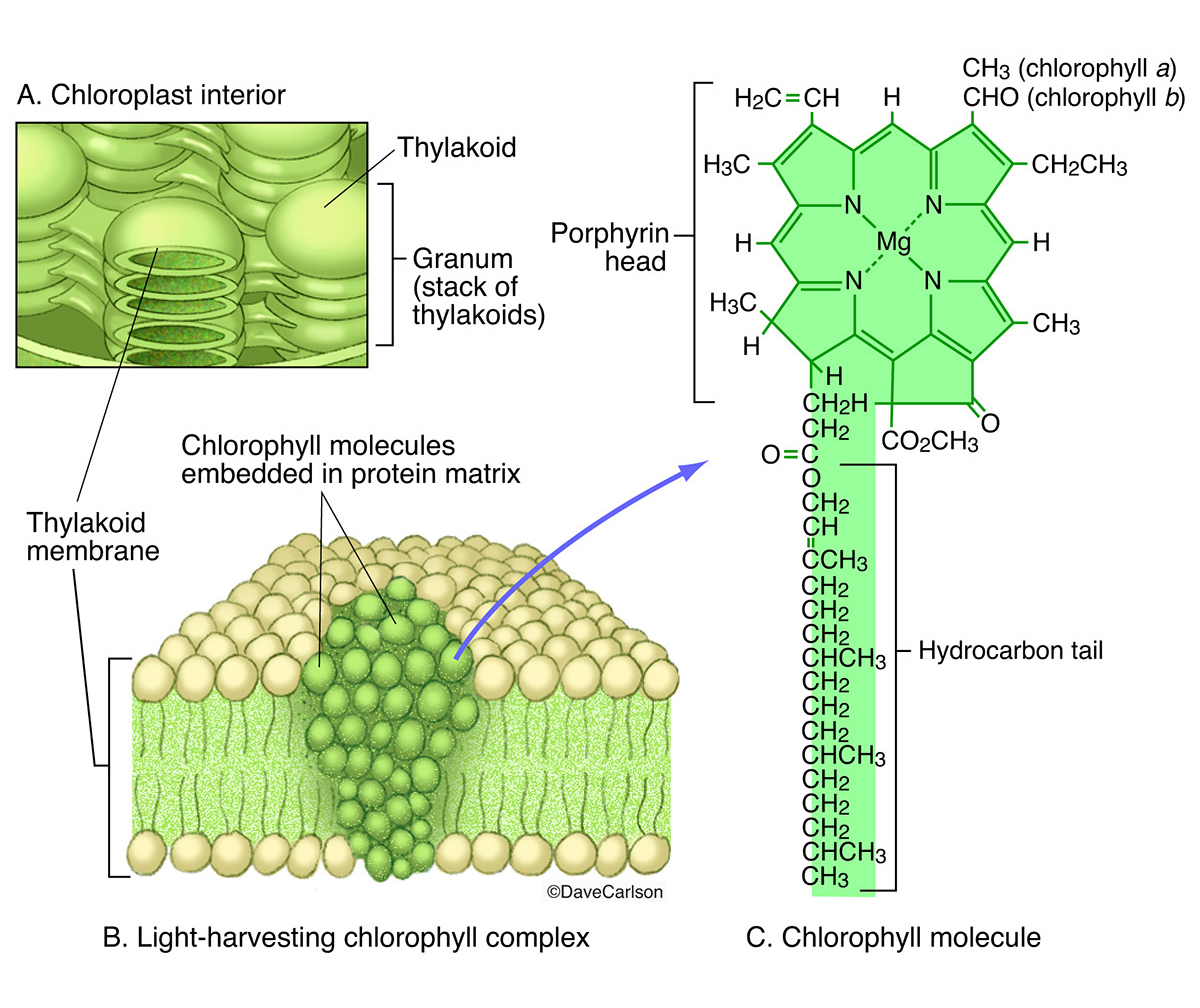
Inside the inner membrane is a dense, protein-rich fluid called the stroma. The stroma contains circular DNA, ribosomes, and the enzymes necessary for sugar synthesis. Floating within this stroma is an intricate network of internal membranes known as thylakoids.
Thylakoids stack into structures called grana, which resemble flattened coins piled on top of each other. These stacks maximize surface area inside a microscopic space, allowing thousands of light-absorbing pigment molecules to pack tightly together.
The Two Stages of Photosynthesis
Energy conversion inside a chloroplast happens in two distinct stages: light-dependent reactions and light-independent reactions.
Light-Dependent Reactions
The light-dependent reactions take place directly on the thylakoid membranes. Chlorophyll and other accessory pigments absorb photons from sunlight. This absorption excites electrons, forcing them through an electron transport chain.
Water molecules split to replace these lost electrons, a process called photolysis. Splitting water releases molecular oxygen as a byproduct, which diffuses out of the plant and into the atmosphere.
As electrons move down the chain, protons pump across the thylakoid membrane, creating an electrochemical gradient. This gradient drives ATP synthase to produce adenosine triphosphate and NADPH. Both molecules serve as cellular energy carriers for the next stage.
The Calvin Cycle
The second stage, known as the Calvin cycle or light-independent reactions, occurs in the stroma. It doesn't require direct sunlight, though it relies heavily on the ATP and NADPH produced during the day.
Enzymes inside the stroma—most notably RuBisCO—fix carbon dioxide from the atmosphere into organic molecules. Through a series of reduction reactions, these molecules convert into glyceraldehyde-3-phosphate, which the plant uses to build glucose, cellulose, and starch.
Evolutionary Origins and Endosymbiosis
Chloroplasts have a unique evolutionary history that separates them from most other cellular organelles. According to the endosymbiotic theory, modern chloroplasts descend from ancient photosynthetic cyanobacteria.
Over a billion years ago, a heterotrophic eukaryotic ancestor engulfed a photosynthetic bacterium without digesting it. Instead, a mutually beneficial relationship formed.
Over evolutionary time, the engulfed bacterium transferred most of its genetic material to the host cell's nucleus. It lost its ability to live independently, evolving into the stable organelle we study today.
Evidence for this origin remains visible inside every plant cell. Chloroplasts retain their own circular DNA molecules, distinct prokaryotic-style ribosomes, and replicate independently through binary fission.
Common Mistakes in Plant Bioenergetics
Studying plant organelles often leads to common misconceptions. Let's clear up a few frequent errors:
- Assuming plants don't respire: People often think plants only perform photosynthesis. In reality, plant cells contain mitochondria and perform cellular respiration 24 hours a day to break down glucose for energy.
- Confusing chlorophyll with all pigments: Chlorophyll a and b dominate green leaves, but carotenoids and anthocyanins also assist with light absorption and photoprotection, especially during autumn changes.
- Believing all plant cells have chloroplasts: Specialized cells in roots, tubers, and deep bark lack chloroplasts because sunlight cannot reach them. They rely on sugars transported from green aerial tissues.
Frequently Asked Questions
Do chloroplasts exist in animal cells?
No. Animal cells lack chloroplasts and cell walls. Animals are heterotrophs, meaning they must consume external organic matter for energy rather than producing it through sunlight.
Why do leaves change color in autumn?
As temperatures drop and daylight shortens, plants break down their green chlorophyll pigments to salvage nitrogen and nutrients. This unmasks accessory pigments like carotenoids, revealing yellows, oranges, and reds.
How many chloroplasts are in a single plant cell?
The number varies widely depending on the species and cell type. A typical leaf mesophyll cell can contain anywhere from 20 to 100 chloroplasts, while specialized algae might contain just a single large chloroplast per cell.
Can chloroplasts move inside the cell?
Yes. Chloroplasts actively reposition themselves along the cytoskeleton in response to light intensity. Under dim light, they spread out to capture maximum photons. Under harsh, direct sunlight, they stack or turn sideways to prevent photodamage from UV radiation.