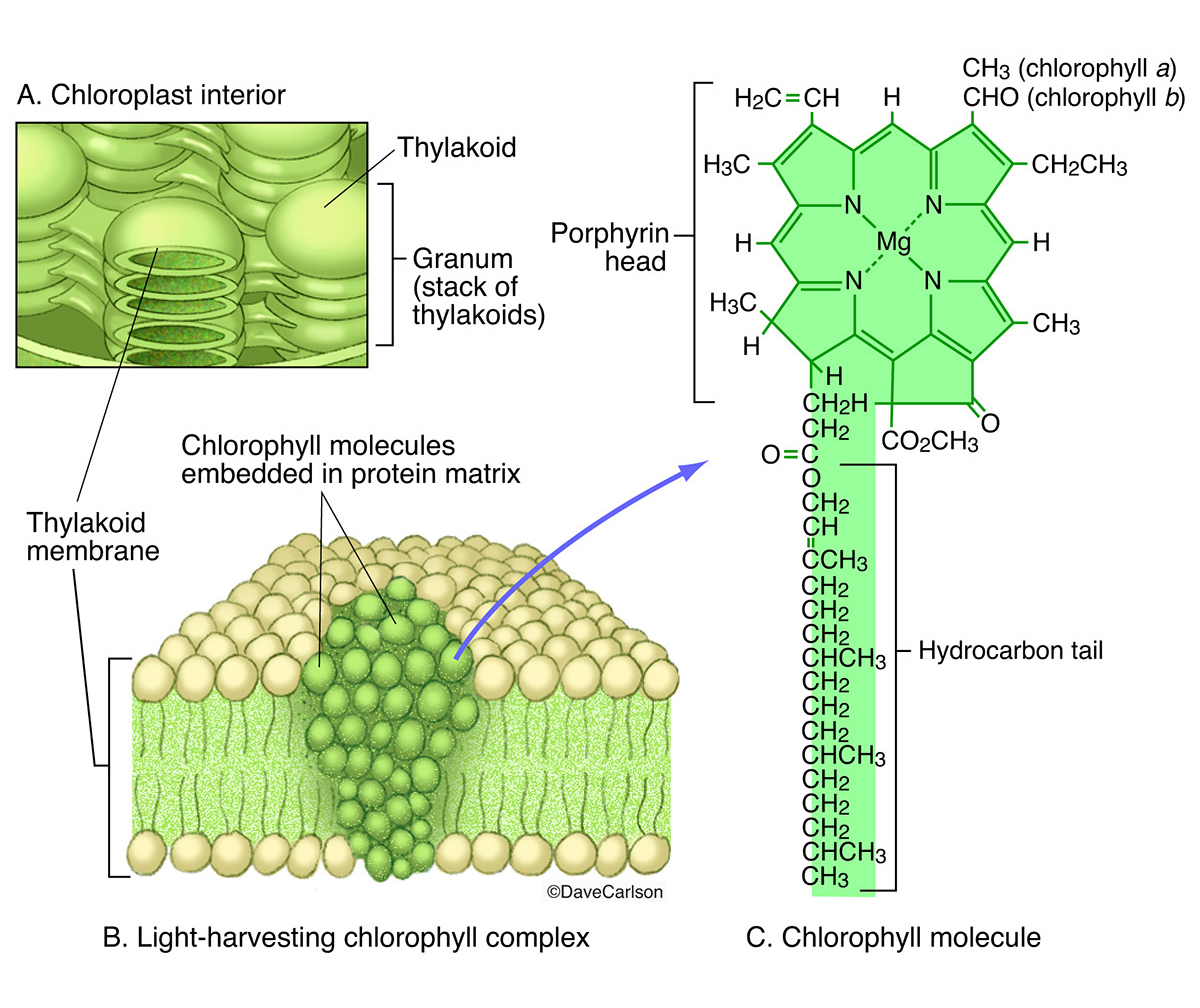
Photosynthesis takes place primarily inside specialized double-membraned organelles called chloroplasts. Within these structures, plant cells, algae, and certain cyanobacteria convert sunlight, water, and carbon dioxide into chemical energy in the form of glucose, while releasing oxygen as a byproduct. Understanding this cellular framework requires looking closely at how sub-organelle compartments work together to capture light and fix carbon.
The process doesn't happen in a single open room inside the cell. Instead, it relies on a highly compartmentalized internal architecture. Membrane systems, specialized pigments, and specific enzymes are localized precisely within the chloroplast to ensure metabolic efficiency. Without this multi-layered spatial organization, the biochemical reactions required to sustain plant life couldn't proceed.
The Primary Site: Structure of the Chloroplast
In plants and algae, chloroplasts serve as the dedicated command centers for photosynthesis. A typical leaf cell contains anywhere from 10 to 100 of these microscopic, lens-shaped structures. Structurally, a chloroplast is isolated from the rest of the cytoplasm by a double-membrane envelope consisting of an outer membrane and an inner membrane, separated by a narrow intermembrane space.
Inside the inner membrane lies a fluid-filled matrix called the stroma. The stroma contains soluble enzymes, chloroplast DNA ribosomes, and starch granules. Suspended within the stroma is a third, highly folded membrane network known as the thylakoid system. This separation of compartments creates distinct chemical environments that are critical for energy conversion.
Thylakoids and Grana
Thylakoids are flattened, sac-like membrane structures. In many regions of the chloroplast, these sacs stack vertically on top of one another like columns of coins. These stacks are called grana (singular: granum).
The thylakoid membrane is where the light-dependent reactions of photosynthesis occur. Embedded directly in these membranes are chlorophyll molecules, accessory pigments, and protein complexes known as Photosystem I and Photosystem II. This placement maximizes photon absorption, allowing the plant to capture solar radiation efficiently.
The Stroma
While grana handle the collection of light energy, the surrounding stroma is the site of the light-independent reactions, often called the Calvin cycle. Carbon dioxide molecules diffuse into the stroma, where enzymes like RuBisCO (Ribulose-1,5-bisphosphate carboxylase-oxygenase) fix the carbon into organic molecules. ATP and NADPH produced in the thylakoids are consumed here to drive these sugar-building reactions.
Compartmentalized Stages of Photosynthesis
The cellular framework divides photosynthesis into two distinct stages, each tied to a specific sub-organelle location. This spatial segregation prevents biochemical interference and optimizes reaction rates.
- Light-Dependent Reactions: Occur across the thylakoid membranes. Chlorophyll absorbs photons, exciting electrons that travel down an electron transport chain. This movement pumps protons into the thylakoid lumen, creating an electrochemical gradient that drives ATP synthesis via ATP synthase. Water molecules are split to replenish electrons, releasing oxygen gas.
- Light-Independent Reactions (Calvin Cycle): Occur within the fluid stroma. Utilizing the ATP and NADPH generated in the first stage, the plant converts inorganic carbon dioxide into glyceraldehyde-3-phosphate (G3P), which is later turned into glucose and other carbohydrates.
Supporting Cellular Structures
While chloroplasts do the heavy lifting, other cellular components are equally essential to the overall framework of photosynthesis.
- Cell Wall: Provides rigid structural support, maintaining cell shape so that leaves can position themselves optimally toward sunlight.
- Vacuoles: Large central vacuoles regulate turgor pressure, keeping plant tissues firm and preventing wilting, which would disrupt light capture.
- Stomata: Microscopic pores on leaf surfaces regulated by guard cells. They control the gas exchange of carbon dioxide entering the leaf and oxygen exiting.
You can read more about plant cell biology through resources provided by Nature Education or the National Science Teaching Association.
Evolutionary Origins: The Endosymbiotic Theory
Chloroplasts aren't just ordinary organelles; they possess their own circular DNA and prokaryotic-style ribosomes. According to the widely accepted endosymbiotic theory, modern chloroplasts evolved from ancient photosynthetic bacteria—specifically cyanobacteria—that were engulfed by early eukaryotic host cells.
Instead of being digested, the engulfed bacterium established a symbiotic relationship with the host. Over millions of years, much of the bacterial DNA transferred to the host cell's nucleus, turning the once-independent organism into a permanent, specialized cellular organelle.
Common Misconceptions About Photosynthetic Organelles
- Misconception: Photosynthesis happens in all plant cells.
- Correction: Photosynthesis only occurs in cells containing chloroplasts, primarily found in the mesophyll tissue of leaves. Underground roots and woody stems lack chloroplasts and rely on sugars transported from photosynthetic tissues.
- Misconception: Chloroplasts are green because of a single pigment.
- Correction: While chlorophyll $a$ and $b$ dominate, chloroplasts also contain carotenoids and xanthophylls that absorb different light wavelengths, protecting the cell from excess light damage.
Frequently Asked Questions
Do all plant cells contain chloroplasts?
No. While most green plant tissues contain chloroplasts, specialized cells like root cells, Xylem vessels, and non-green epidermal cells lack them entirely because they are removed from sunlight exposure.
Where does the oxygen produced during photosynthesis come from?
The oxygen released as a byproduct comes directly from the photolysis (splitting) of water molecules during the light-dependent reactions at the thylakoid membrane, not from carbon dioxide.
Can photosynthesis happen without light?
The light-dependent reactions require direct photons to generate ATP and NADPH. However, the Calvin cycle (light-independent reactions) in the stroma can continue temporarily in the dark until stored chemical energy runs out.
Why do chloroplasts have a double membrane?
The double membrane is a structural relic of their evolutionary past. The inner membrane corresponds to the plasma membrane of the ancient cyanobacterium, while the outer membrane originates from the food vacuole of the eukaryotic host cell that engulfed it.