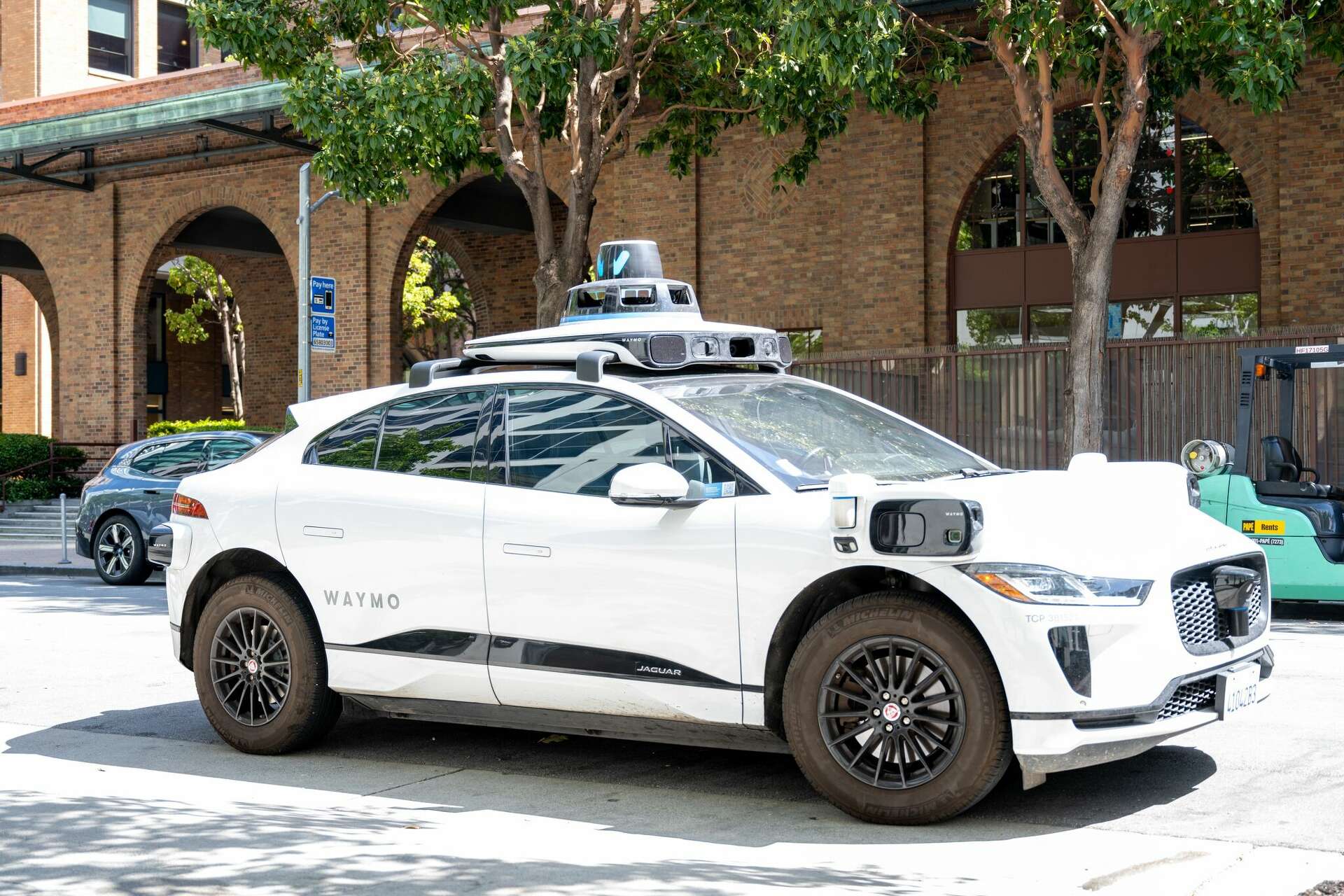
Autonomous vehicles don't learn to navigate roads by sitting behind a steering wheel. Instead, they digest millions of miles of structured traffic rules, sensor data, and behavioral scenarios. This compiled data framework is often referred to as the AI driver's manual. It acts as the core instruction set for neural networks, translating conventional human traffic laws and physical driving heuristics into machine-readable parameters.
Traditional human driver handbooks rely on written text and static illustrations to teach people how to yield at four-way stops or merge onto highways. For machine learning pipelines, this concept scales into massive structured datasets and simulation rulesets. Companies build these systems to govern how autonomous driving software reacts to edge cases, unpredictable pedestrian behavior, and sudden weather shifts. Without this structured approach to machine instruction, training autonomous software safely would remain an unmanageable engineering challenge.
How Machine-Readable Traffic Rules Function
Translating human laws into code requires breaking down subjective rules into exact mathematical conditions. A human driver understands that you shouldn't tailgate, but an AI system needs an explicit algorithm governing following distance based on speed, road friction, and sensor latency.
The process starts by converting standard legal codes into spatial logic grids.
- State Machines: Traffic signals and right-of-way rules map directly into finite state machines, dictating valid vehicle states based on sensor inputs.
- Vector Maps: High-definition maps provide centimeter-level lane geometry, stop-line coordinates, and crosswalk boundaries.
- Reward Functions: Reinforcement learning models use penalty weights for traffic violations, encouraging the software to prioritize safe maneuvers over speed.
When engineers train autonomous software, they feed these rules alongside vast sensor inputs from sources like the Waymo Open Dataset or the nuScenes dataset. This combination allows the neural network to correlate raw perception data with legal navigation constraints.
Overcoming Edge Cases in Simulated Environments
Real-world driving data alone isn't enough to achieve safety parity. Rare hazards—such as a pedestrian wearing a costume running across a dark highway—happen too infrequently to capture efficiently through physical fleet testing. Developers solve this bottleneck by using simulation engines like CARLA to generate synthetic training scenarios.
Simulations let engineers run millions of virtual miles overnight. They test how the AI driver's manual handles extreme conditions like blinding glare, black ice, and erratic drivers.
- Scenario Variation: Simulators inject random variables into standard scenarios, changing vehicle speeds, wind resistance, and pedestrian trajectories.
- Adversarial Testing: Automated scripts intentionally place obstacles in blind spots to test the resilience of the vehicle's perception systems.
- Deterministic Replay: When a vehicle makes an error in testing, engineers replay the exact simulation frame-by-frame to isolate the logic failure.
This iterative feedback loop ensures that unexpected scenarios encountered in physical tests get converted into new rules and test cases within the simulation library.
Training Pipelines and Data Quality
The performance of an autonomous system depends heavily on the cleanliness of its training data. Feeding low-quality video or poorly annotated sensor logs into a neural network results in erratic vehicle behavior. Modern training pipelines rely on rigorous preprocessing steps before any model training begins.
Raw Sensor Capture -> Automated Annotation -> Scene Classification -> Reinforcement Learning Loop
Engineers use automated labeling tools to process millions of frames, tagging objects with 3D bounding boxes, velocity vectors, and semantic class labels. If a dataset contains biased driving patterns—such as highways with worn lane markings—the training pipeline applies data augmentation techniques to balance the inputs. This step prevents the autonomous agent from developing brittle dependencies on specific geographical features.
Common Pitfalls in Autonomous Training Design
Building an effective machine learning model for navigation comes with distinct engineering traps. Teams often run into specific failure modes that stall development:
- Overfitting to Test Tracks: Training exclusively on clean, predictable test tracks leaves the vehicle vulnerable to urban clutter and faded signage.
- Sensor Occlusion Blind Spots: Relying too heavily on a single sensor modality creates safety gaps when cameras get blinded by rain or LiDAR gets blocked by snow.
- Reward Hacking: In reinforcement learning setups, models sometimes find unintended shortcuts to maximize their reward score safely on paper while driving dangerously in practice.
Addressing these issues requires a multi-layered validation process that tests software modules independently before combining them into a full vehicle stack.
Frequently Asked Questions
How does an AI driver differ from a human driver manual?
A human manual relies on conceptual text and intuition to guide decisions. An AI manual translates those concepts into mathematical boundaries, probability thresholds, and deterministic state logic that a computer can process instantly.
Why can't autonomous systems learn purely from human driving videos?
Watching human drivers teaches correlation, but it doesn't teach intent or physical constraints. Without explicit reward structures and sensor data, video models struggle to understand physics, weight transfer, and rare emergency maneuvers.
What role do HD maps play in autonomous training?
High-definition maps provide ground truth data for lane boundaries, traffic signs, and intersection geometry, helping the vehicle localize itself accurately while executing the rules defined in its training manual.
How do developers know when an AI driver is ready for public roads?
Teams validate models through billions of miles of simulation testing, closed-course trials, and incremental deployment phases where human safety drivers remain ready to take over at any moment.