Houston operates on Central Time, shifting between Central Standard Time and Central Daylight Time depending on the time of year. If you're coordinating meetings, traveling, or tracking live events in the region, knowing the exact current offset prevents scheduling errors. The city follows standard United States practices for seasonal time changes, keeping its clocks aligned with major economic hubs across the central corridor.
Understanding how this schedule functions requires looking at the specific offsets, transition dates, and regional quirks that affect daily operations. Whether you're dealing with international clients or scheduling cross-country logistics, getting the hour right is essential.
Current Time Zone and Offsets
The region sits in the Central Time Zone (CT), designated by the IANA identifier America/Chicago. Depending on the month, local clocks observe one of two distinct offsets from Coordinated Universal Time (UTC):
- Central Standard Time (CST): Active during standard winter months, operating at UTC-6.
- Central Daylight Time (CDT): Active during spring and summer months, operating at UTC-5.
This shift means the region moves one hour ahead when spring arrives and falls back one hour as winter approaches. For official timekeeping standards across the country, you can consult the National Institute of Standards and Technology.
Daylight Saving Time Schedule
Daylight Saving Time (DST) dictates when the local clock shifts. In the United States, these transitions happen on fixed federal schedules regulated by the Department of Transportation.
- Spring Forward: Clocks move ahead one hour at 2:00 AM on the second Sunday of March, transitioning the city from CST to CDT.
- Fall Back: Clocks move back one hour at 2:00 AM on the first Sunday of November, transitioning the city back from CDT to CST.
These changes happen uniformly across Texas, meaning Houston shares an identical clock with cities like Chicago, Dallas, New Orleans, and Minneapolis year-round.
Comparing Houston to Other Major US Zones
Managing schedules across multiple states means accounting for standard gaps between American time zones. Because the country spans multiple longitudinal slices, shifts are predictable:
- Eastern Time (ET): Cities like New York and Atlanta sit one hour ahead of Houston. When it is 10:00 AM in Houston, it is 11:00 AM in New York.
- Mountain Time (MT): Cities like Denver and Phoenix sit one hour behind Houston. When it is 10:00 AM in Houston, it is 9:00 AM in Denver.
- Pacific Time (PT): Cities like Los Angeles and Seattle sit two hours behind Houston. When it is 10:00 AM in Houston, it is 8:00 AM in Los Angeles.
For global business synchronization, standard world clock tools like Time and Date help map exact hour differences across international borders.
Common Scheduling Mistakes
Failing to account for seasonal adjustments causes frequent errors in remote work and travel planning. Here are the most common pitfalls:
- Ignoring transition weekends: Arizona and Hawaii do not observe Daylight Saving Time, which temporarily alters their normal time gap with Texas during spring and autumn weeks.
- Confusing UTC signs: Remember that a negative UTC offset means local time is behind Coordinated Universal Time. UTC-5 is ahead of UTC-6 by one hour.
- Assuming fixed international gaps: Countries in the Southern Hemisphere observe opposite seasons, meaning shifts in March and November alter your usual hour difference with places like Sydney or Buenos Aires.
Frequently Asked Questions
Does all of Texas use the same time zone?
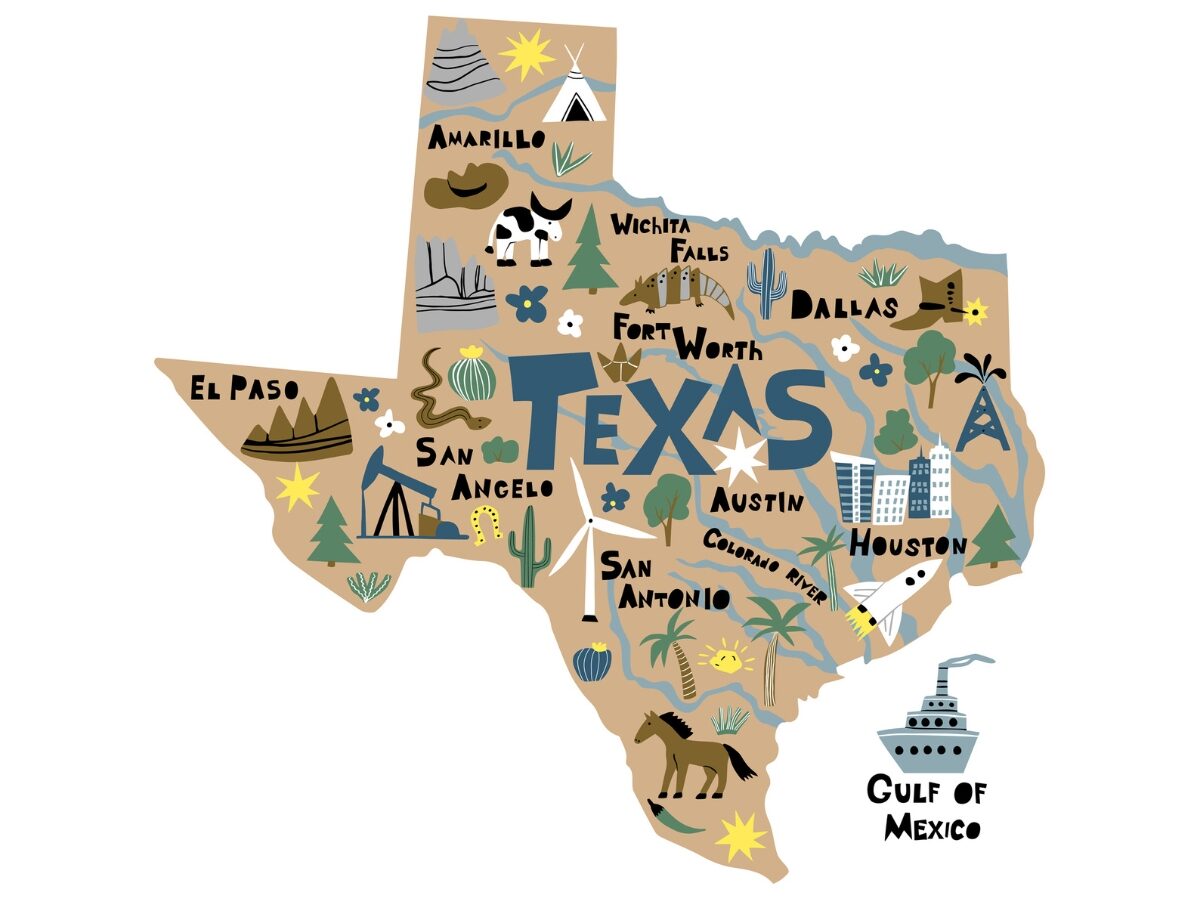
No. While the vast majority of the state, including Houston, Dallas, Austin, and San Antonio, uses Central Time, the westernmost part of the state around El Paso observes Mountain Time.
When do clocks change in Houston?
Clocks move forward on the second Sunday of March and backward on the first Sunday of November. The transition always occurs officially at 2:00 AM local time.
How many hours behind UTC is Houston right now?
Houston is UTC-6 during standard winter months (CST) and UTC-5 during summer months when Daylight Saving Time is active (CDT).
Is Houston on the same time as Mexico City?
Most of the year, yes. However, differences in when Mexico observes seasonal time changes can create brief windows where the two cities fall out of sync by an hour.



