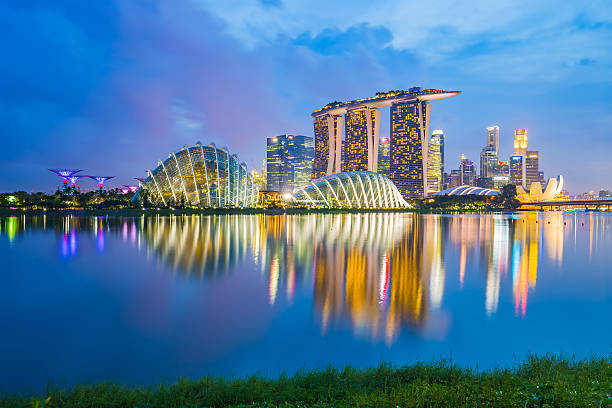
Singapore operates on Singapore Standard Time, maintaining a fixed offset of UTC+8 without daylight saving time. This stability makes the city-state a crucial anchor for international finance, logistics, and technical infrastructure across Southeast Asia.
When you coordinate across borders, understanding how Singapore Standard Time interacts with other major financial hubs prevents costly scheduling errors. Let's look at the mechanics, operational realities, and coordination strategies required for working across this zone.
The Mechanics of Singapore Standard Time
Singapore Standard Time is formally defined as 8 hours ahead of Coordinated Universal Time. Because the nation sits near the equator, day length remains virtually identical year-round, eliminating any practical need for seasonal clock changes.
- Fixed UTC Offset: SGT stays at UTC+8 all year, offering absolute predictability for software and logistics.
- No Seasonal Shifts: Clocks don't spring forward or fall back, meaning offset calculations with DST-observing countries shift twice a year.
- IANA Time Zone Database: Systems reference this zone as Asia/Singapore.
This fixed nature removes variables that plague scheduling in regions with daylight saving time. IT systems, database logs, and cron jobs run without interruption or manual adjustments. You don't have to worry about broken scripts or shifted batch windows twice a year.
Historical Context and Regional Trade
Before standardization, local time in Singapore tracked solar positioning, causing minor discrepancies with surrounding territories. British colonial administration established uniform time standards to streamline maritime shipping and railway logistics.
Choosing UTC+8 aligned Singapore with neighboring economic centers, creating a shared temporal zone across vital shipping lanes. This alignment supports the Port of Singapore, one of the busiest transshipment hubs globally. Supply chain managers rely on this consistent baseline to track cargo movements, customs clearances, and vessel berthing schedules without time-offset confusion.
Financial Markets and Trading Windows
Global finance runs on overlapping liquidity windows. Singapore Standard Time anchors the Asian trading day, bridging the gap between Asian markets and European openings.
The Singapore Exchange opens its securities market at 9:00 SGT. This timing allows market participants in Hong Kong, Sydney, and Tokyo to execute cross-border trades while European desks are still waking up.
When New York closes its previous trading day, Asian markets operating on SGT are already midway through their morning session. Institutional investors use this continuous cycle to rebalance portfolios, manage foreign exchange risk, and execute algorithmic trades without market gaps.
Global Coordination Challenges
Working with teams in Singapore from North America or Europe requires navigating significant time gaps. For example, a 9:00 AM meeting in Singapore lands at 9:00 PM Eastern Standard Time the previous evening in New York, or 2:00 AM in London during standard time months.
- The Overlap Window: North American teams typically have a narrow morning window (their morning) to connect with Singapore's late afternoon.
- DST Shifts: When the United States or Europe transitions to daylight saving time, your offset with Singapore shifts by one hour, catching recurring calendar invites off guard.
- Asynchronous Operations: Direct real-time communication is often impractical, forcing teams to rely on structured documentation, pull requests, and recorded updates.
To manage these gaps, high-performing distributed teams establish strict communication protocols. They define core hours where responses are expected immediately, leaving the rest of the day for asynchronous focus work.
Best Practices for Scheduling Across SGT
Eliminating scheduling confusion starts with explicit formatting and reliable tooling. Vague references like "let's meet at three" lead to missed calls and frustrated colleagues.
- Use Explicit Offsets: Always communicate meeting times using standard identifiers like SGT or UTC+8 alongside local times.
- Audit Recurring Invites: Check calendar series twice a year when North America or Europe shifts clocks, ensuring the meeting slot hasn't drifted into an unusable hour.
- Leverage System Converters: Integrate scheduling tools that automatically detect participant time zones and display local equivalents on calendar invites.
For more details on global time standards and official reference clocks, check the Time and Date portal or review international standards maintained by the International Bureau of Weights and Measures.
Frequently Asked Questions
Does Singapore observe daylight saving time?
No, Singapore does not observe daylight saving time. Its proximity to the equator means daylight hours remain consistent throughout the year, so clocks never change.
What is the time difference between Singapore and New York?
Singapore is 13 hours ahead of New York during US Eastern Standard Time (winter). When the US observes Daylight Saving Time (summer), the difference narrows to 12 hours.
How does SGT impact software engineering and server logs?
Because SGT maintains a constant UTC+8 offset year-round, software engineers can store database timestamps in UTC or SGT without writing complex conditional logic for seasonal time shifts.
What is the best time of day to schedule a call between London and Singapore?
During London's standard time, a morning call in London (around 8:00 AM to 9:00 AM) corresponds to late afternoon in Singapore (4:00 PM to 5:00 PM), providing a brief overlap for live discussions.



