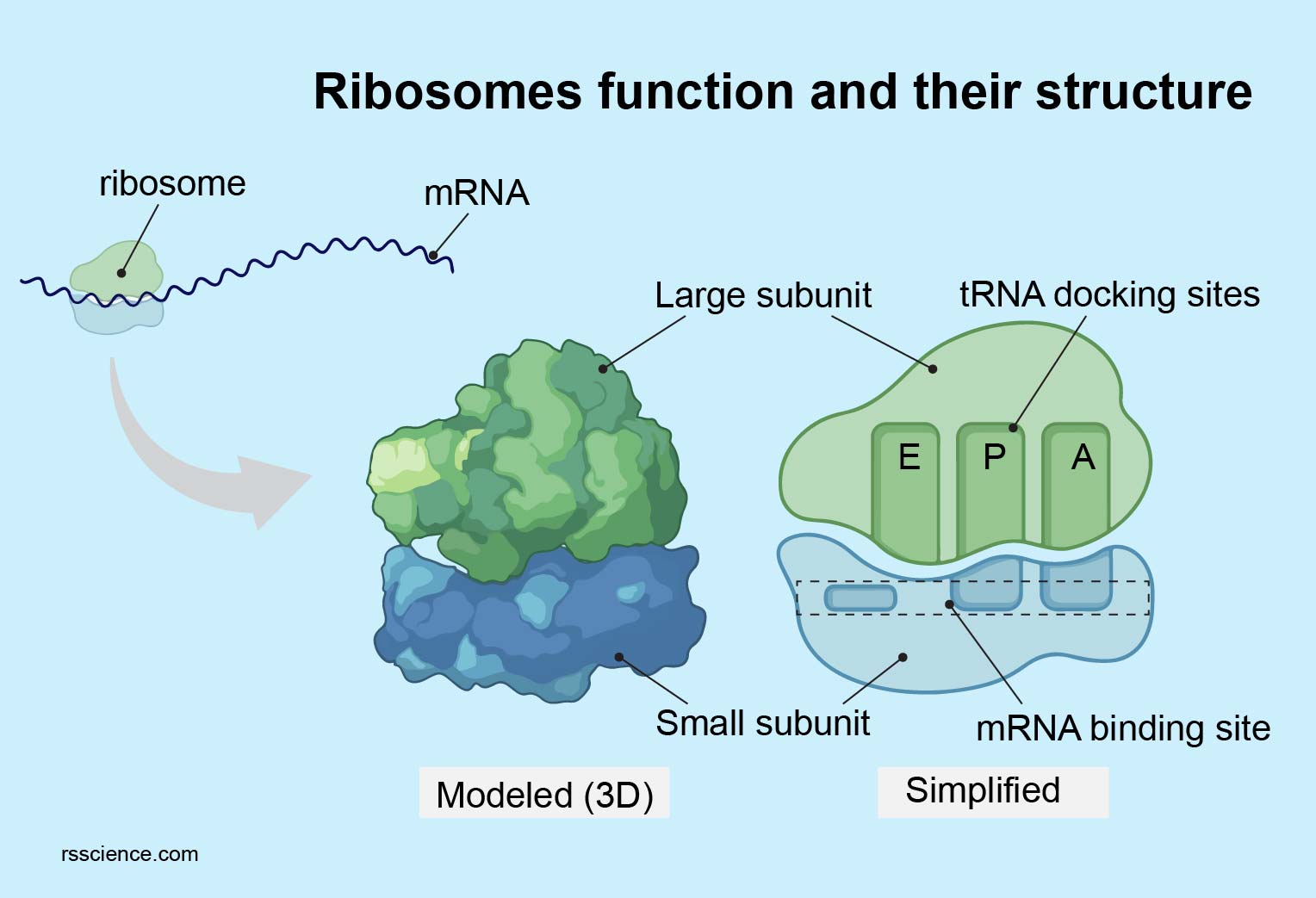
Protein synthesis happens primarily at the ribosome, the microscopic macromolecular machine responsible for translating genetic instructions into functional proteins. You'll find these molecular factories floating freely in the cytoplasm or bound tightly to the rough endoplasmic reticulum, depending on where the finished protein needs to go.
Cellular life depends entirely on this continuous manufacturing process. Without ribosomes building structural components, enzymes, and hormones, cells can't repair themselves, signal neighbors, or sustain metabolism. This article breaks down how the site of protein synthesis operates, from nuclear transcription to final ribosomal assembly.
The Dual Locations of Protein Synthesis
Where a protein is made inside a cell dictates its final destination and function. Cells utilize two main pools of ribosomes, and they don't mix their finished products.
- Free ribosomes float within the cytosol. They synthesize proteins that stay inside the cell's cytoplasm, nucleus, or mitochondria.
- Bound ribosomes attach to the outer membrane of the rough endoplasmic reticulum. They produce proteins destined for cell membranes, lysosomes, or export out of the cell entirely via secretion.
If you examine a pancreatic cell, which churns out massive amounts of digestive enzymes, you'll see a heavily packed rough endoplasmic reticulum. Conversely, a simple skin cell relies more heavily on free ribosomes to construct structural keratins.
Step One: Transcription in the Nucleus
Before translation can happen at the ribosome, the cell must copy the master blueprint. DNA stays securely inside the nucleus because damage to it threatens the entire organism.
- Initiation: RNA polymerase binds to a specific gene promoter region on the DNA strand.
- Elongation: The enzyme unwinds the double helix and builds a single-stranded messenger RNA (mRNA) transcript by matching complementary nucleotides.
- Processing: The raw mRNA undergoes capping, splicing to remove non-coding introns, and polyadenylation before leaving the nucleus through nuclear pores.
Once processed, the mRNA travels out into the cytoplasm to find a ribosome. You can learn more about how genetic data converts into transcripts via the National Human Genome Research Institute.
Step Two: Translation at the Ribosome
Translation represents the core of protein synthesis. It turns a nucleotide sequence into an amino acid chain. A ribosome consists of a small and a large subunit that clamp down onto the mRNA strand.
- Initiation: The small ribosomal subunit identifies the start codon (AUG) on the mRNA. An initiator transfer RNA (tRNA) carrying methionine locks into place.
- Elongation: Transfer RNA molecules bring specific amino acids to the ribosome, matching their anticodons to the mRNA codons. The ribosome forms peptide bonds between adjacent amino acids, lengthening the chain.
- Termination: When the ribosome hits a stop codon, it releases the completed polypeptide chain and disassembles.
The process demands significant cellular energy. Each added amino acid requires molecules of ATP and GTP to power movement and bonding. Explore energy dynamics in cells through Nature Education.
Common Mistakes in Cellular Protein Synthesis
Cellular machinery runs efficiently, but errors occur. When they do, they impact cell health significantly.
- Codon mispairing: If a tRNA brings the wrong amino acid, the resulting protein may fold incorrectly and lose its biological function.
- Ribosomal stalling: Ribosomes can jam on damaged mRNA strands, triggering rescue pathways to prevent the accumulation of toxic truncated proteins.
- Energy depletion: Low cellular ATP levels halt elongation, causing incomplete protein synthesis and cellular stress.
Frequently Asked Questions
What is the exact site of protein synthesis in eukaryotic cells?
Ribosomes serve as the primary site. They exist either free in the cytoplasm or attached to the rough endoplasmic reticulum.
Can protein synthesis happen without a nucleus?
Yes. Prokaryotic cells like bacteria lack a true nucleus, so transcription and translation happen simultaneously in the cytoplasm.
What is the role of tRNA during translation?
Transfer RNA acts as an adaptor molecule. It reads the mRNA codons and delivers the correct corresponding amino acid to the growing protein chain.
Do all cells have the same number of ribosomes?
No. Cells with high metabolic demands, such as liver or muscle cells, contain millions of ribosomes, whereas quiescent cells have far fewer.