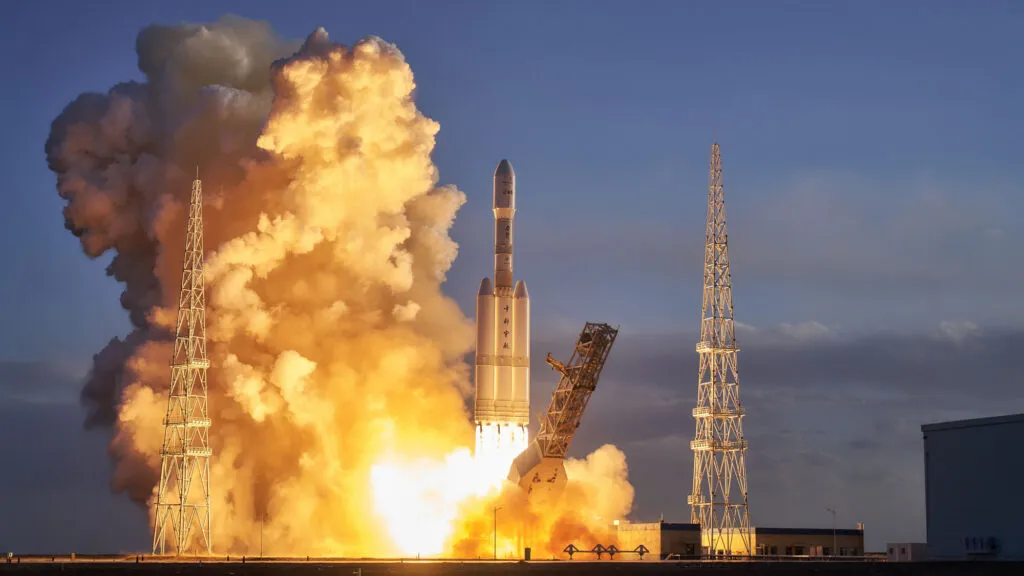
Private space exploration companies have fundamentally shifted the economics of orbit, transforming an arena once dominated by state-run superpowers into a commercial marketplace. For decades, getting a payload off the ground meant relying on government agencies like NASA with massive budgets and single-use hardware that burned up upon re-entry. Today, commercial enterprises build reusable rockets, deploy mega-constellations, and service low-Earth orbit with a cadence that state programs never matched.
This commercialization isn't just about launching satellites; it's a complete structural overhaul of how capital, engineering, and policy intersect beyond Earth's atmosphere. With the global space economy valued at roughly $690 billion, private ventures now control the vast majority of operational assets in orbit. Understanding how this industry reached this point requires looking past the PR headlines and examining the hard metrics of reusability, shifting regulatory frameworks, and emerging commercial bottlenecks.
The Economics of Reusability
The single biggest catalyst behind the modern commercial space boom is the financial shift brought by reusable launch systems. Traditional aerospace models treated rockets like luxury airliners that were scrapped after a single flight. Building a new first-stage booster for every mission kept launch costs artificially high—often exceeding $500 million per flight during the Space Shuttle era.
When companies like SpaceX proved that first-stage boosters could survive atmospheric re-entry, land vertically, and fly again, the cost per kilogram to orbit plummeted. Other providers quickly adapted, forcing a global race toward vertical integration and rapid turnaround times.
- Lower Cost Barriers: Cheaper access to space opened the market to smaller research institutions, universities, and commercial startups that could never afford a dedicated state-sponsored launch.
- Flight Cadence: Reusability allowed operators to fly the same hardware multiple times a month rather than waiting years for a custom build.
- Capital Efficiency: Private firms fund heavy research and development through commercial contracts and private equity, reducing the direct tax burden for initial trial-and-error engineering.
Shifting Focus: From Government Contracts to Commercial Revenue
Historically, aerospace contractors functioned as build-to-print suppliers for government entities. They took specifications from national agencies, built what was asked, and handed over ownership. Modern private space companies retain ownership of their infrastructure, selling services rather than hardware.
Consider the satellite internet and Earth-observation sectors. Instead of selling a weather satellite to a government, private operators launch massive low-Earth orbit constellations to sell broadband, agricultural data, and maritime tracking directly to enterprise customers. This shift means corporate revenue models now dwarf traditional government budgets in specific sectors, creating a self-sustaining financial ecosystem that doesn't rely on shifting political appropriations.
Key Drivers of Commercial Expansion
- Low-Earth Orbit (LEO) Satellites: Accounting for the majority of recent launch volume, LEO networks provide low-latency global communications.
- On-Demand Logistics: Cargo delivery to the International Space Station and private orbital outposts operates on commercial procurement schedules.
- Venture Capital Inflows: Billions in private equity have poured into propulsion, avionics, and in-space manufacturing startups.
Emerging Bottlenecks and Industry Challenges
Despite rapid growth, the commercial space sector faces severe friction points that threaten to slow down expansion.
Orbital congestion is the most pressing operational risk. With tens of thousands of active and inactive objects circling the planet, collision avoidance maneuvers are becoming a routine administrative hurdle for satellite operators. A single major Kessler Syndrome event—where a collision creates a cascading cloud of high-speed debris—could render crucial orbital bands unusable for decades.
Regulatory fragmentation also complicates cross-border operations. Launch licenses, export controls designed for Cold War military technology, and environmental reviews often move at speeds completely out of sync with agile engineering teams. When a company can build a rocket in twelve months but spends twenty-four months waiting for spectrum allocation or launch clearance, capital efficiency drops.
Frequently Asked Questions
How do private space companies make money if launches are so expensive?
Most profitable commercial space firms don't rely on launch services alone. They generate recurring revenue by operating downstream services, such as global broadband data streaming, high-resolution Earth imaging, and commercial cargo logistics contracts.
What is the difference between old space and new space?
"Old space" refers to the traditional procurement model where government agencies directed every engineering detail of a government-owned contractor project. "New space" relies on fixed-price commercial contracts, private capital, reusable hardware, and commercial off-the-shelf components to drive down costs.
How are orbital debris and space traffic managed?
Currently, tracking relies on a mix of radar networks operated by military defense departments and private space situational awareness (SSA) firms. Operators coordinate collision avoidance maneuvers manually or via automated software feeds, though comprehensive international traffic management rules are still lacking.
Will space tourism become a mainstream market?
While suborbital and orbital crewed flights are operating today, high per-seat costs mean space tourism remains restricted to high-net-worth individuals and specialized researchers. Scaling this market depends heavily on achieving aircraft-like safety records and cheaper heavy-lift architectures.