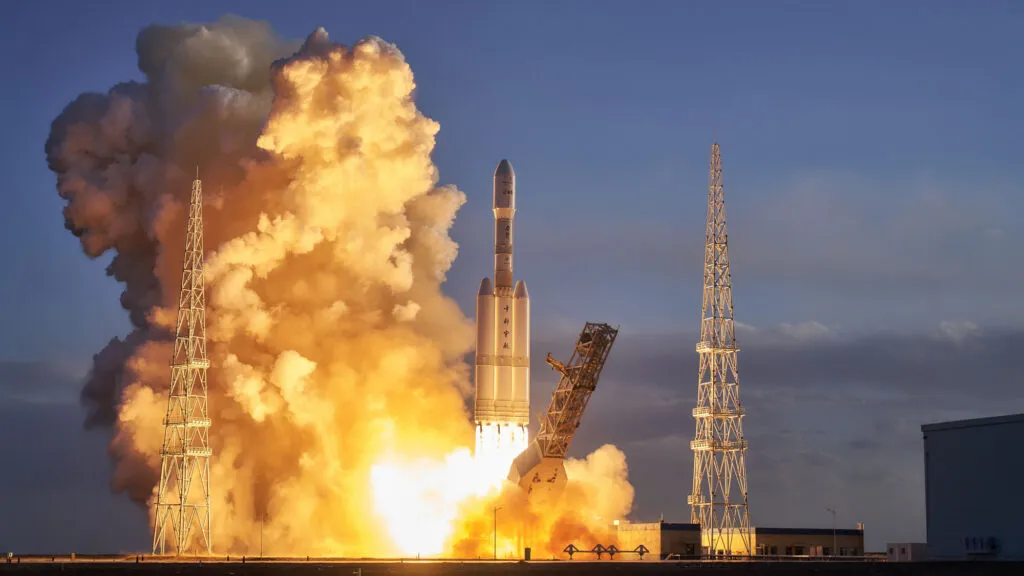
Directional navigation systems are changing how spacecraft travel through the solar system. As mission profiles grow more complex, traditional tracking methods fall short of the precision needed for deep space operations. Engineers now rely on advanced directional alignment to keep probes on track, manage fuel loads, and maintain continuous contact with ground stations on Earth.
Spacecraft must execute maneuvers with exact timing and spatial orientation. A tiny calculation error over millions of kilometers results in a miss by thousands of kilometers. Directional navigation fixes this by combining onboard sensors, automated telemetry adjustments, and stellar positioning data.
The Core Mechanics of Directional Space Navigation
Operating a spacecraft far from Earth requires continuous course correction. Directional navigation relies on a closed-loop system that constantly evaluates position against expected orbital trajectories.
Sensor Integration and Star Trackers
Modern probes don't rely on a single instrument for orientation. Instead, they use a suite of hardware tools working in tandem:
- Star trackers photograph fixed constellations to calculate absolute spatial orientation with high accuracy.
- Inertial measurement units track acceleration and rotational changes without external reference points.
- Sun sensors provide a reliable fallback vector for attitude control in the inner solar system.
By feeding data from these instruments into onboard processors, navigation software detects drift before it impacts the trajectory. According to NASA Space Communications, maintaining stable pointing vectors is essential for high-throughput data return from planetary missions.
Astrodynamics and Trajectory Correction
Physics dictates that no path through space is completely straight. Gravitational pulls from planets, moons, and the sun constantly bend a spacecraft's path. Directional systems calculate these perturbations in real time. When an orbit deviates from the nominal plan, thrusters fire in specific vectors to correct the trajectory. This proactive approach saves fuel compared to reactive manual corrections from ground control.
Applications in Deep Space and Planetary Missions
Different mission profiles demand specific navigational capabilities. Directional control systems adapt to these requirements across various operational phases.
Deep Space Probes and Interplanetary Transit
When a spacecraft travels to the outer planets, signal round-trip times stretch from minutes to hours. Ground controllers can't joystick a probe through an unexpected anomaly. Autonomous directional systems allow the spacecraft to evaluate its own trajectory and execute burn maneuvers independently. This autonomy keeps missions viable when communication windows close.
Surface Rovers and Landers
Landing on Mars or the Moon requires pinpoint accuracy. Directional descent algorithms guide landers through the atmosphere and down to precise landing ellipses. Once on the surface, rovers use directional antennas to aim data beams directly at orbiting relay satellites, maximizing data transfer rates despite planetary rotation and dust storms.
Common Engineering Mistakes in Directional Setup
Designing navigation systems for long-duration spaceflight involves severe technical hurdles. Engineers often encounter predictable failure points during development.
- Neglecting thermal drift: Sensors expand and contract in extreme temperature swings, introducing sensor bias if not thermally isolated or calibrated.
- Over-relying on single-source telemetry: Losing contact with a primary reference frame causes catastrophic orientation loss if redundant systems aren't programmed to take over instantly.
- Underestimating processing latency: Complex routing algorithms take time to compute. If processing cycles lag behind real-time sensor updates, the guidance loop becomes unstable.
Frequently Asked Questions
How do spacecraft communicate over long distances using directional systems?
Spacecraft use high-gain parabolic antennas mounted on movable gimbals. Directional algorithms command these motors to track Earth's exact position across the sky, concentrating radio frequency energy into a narrow beam for efficient data transmission.
What happens if a spacecraft loses its directional orientation in deep space?
Probes enter a safe mode, use omnidirectional antennas for low-rate emergency signals, and use sun sensors to find a stable reference attitude so ground teams can upload recovery commands.
How do gravitational fields affect directional tracking?
Massive bodies bend light and alter spacecraft trajectories. Navigation algorithms factor in known ephemeris data for planetary bodies to predict gravitational pull and adjust thruster vectors accordingly.
Why is autonomy important for modern directional navigation?
Light travel time makes real-time human control impossible for missions past the asteroid belt. Autonomous systems detect errors and execute corrections instantly, protecting multi-billion-dollar investments.