Area code 301 carries the weight of a state that sits directly at the crossroads of federal power and Chesapeake tradition. Established in 1947 as one of the original North American numbering plan designations, it once covered the entirety of Maryland before shrinking to encompass the dynamic suburbs surrounding the nation's capital. Understanding this single numeric prefix reveals how population booms, technological evolution, and shifting economic engines transformed quiet farm towns into global biotech and tech corridors.
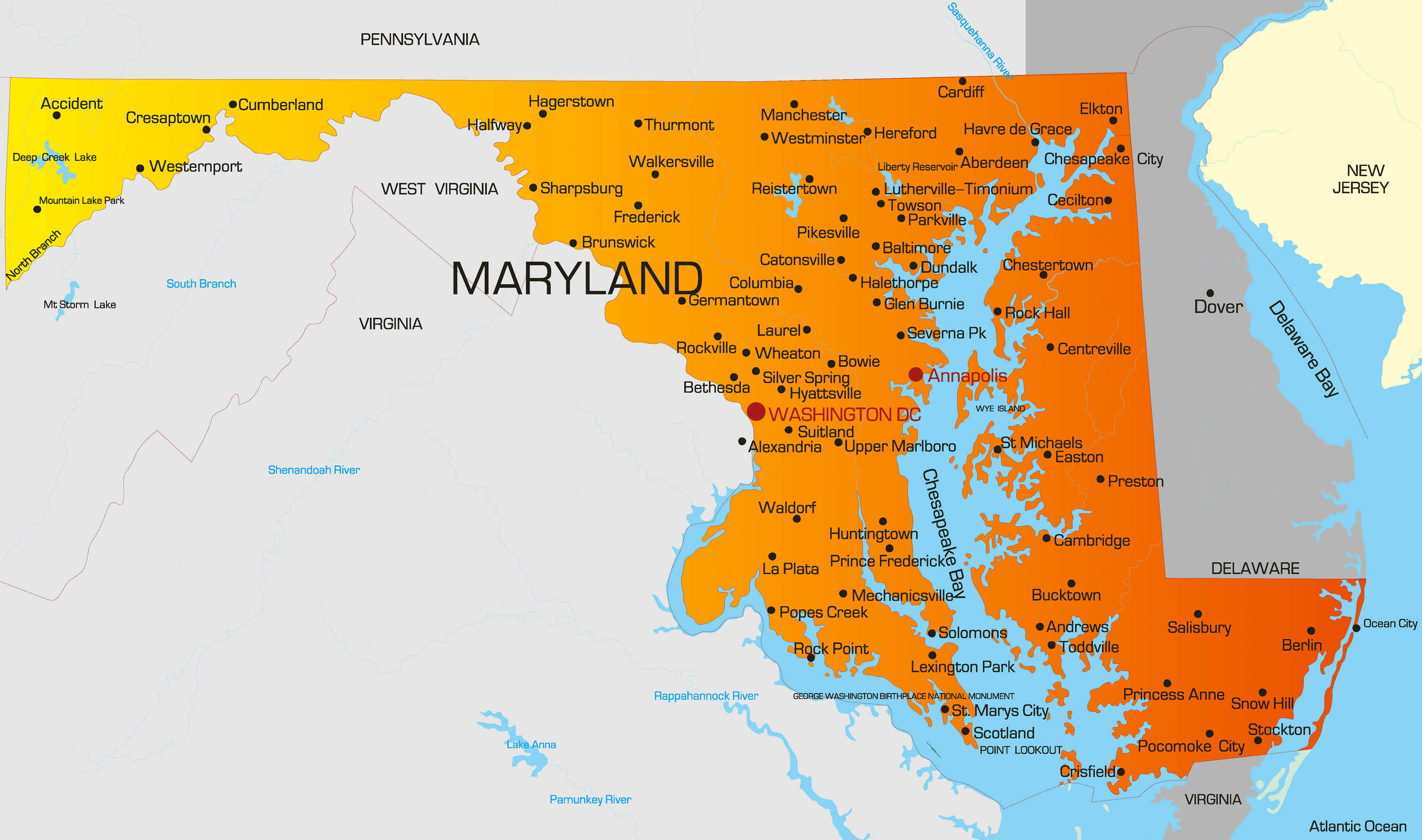
When people dial a 301 number today, they are connecting to Montgomery, Prince George's, Frederick, and parts of southern and western Maryland. This geography isn't just a collection of counties; it's a social ecosystem where federal contractors, biotech researchers, and long-standing suburban communities intersect. The number itself has become shorthand for a specific kind of Maryland identity—one that balances proximity to Washington, D.C. with a distinct local pride rooted in the Old Line State.
The 1947 Origin and the Statewide Era
The North American Numbering Plan launched in 1947 to streamline long-distance calling, dividing the continent into distinct regions. Maryland received a single prefix: 301. Back then, a single three-digit code easily managed every telephone connection from the beaches of the Eastern Shore to the mountain ridges of Garrett County. Rotary phones dominated living rooms, and long-distance calls required operator assistance or a tedious sequence of dial pulses.
During these post-war decades, Maryland experienced rapid suburbanization. Veterans returning from World War II settled in communities like Silver Spring and Bethesda, commuting into federal offices in Washington. The 301 prefix became the invisible thread tying these new commuter neighborhoods together with traditional industrial hubs like Baltimore and Annapolis.
As populations swelled, the original system strained under the weight of rotary dials, private branch exchanges, and eventually, fax machines and pagers. The state needed relief. In 1991, the eastern half of Maryland—including Baltimore and the Eastern Shore—split off to receive the 410 area code. This division cleaved the state's identity in two, leaving 301 anchored firmly to the Washington, D.C. suburbs and western counties.
Economic Transformation of the Capital Suburbs
The restriction of area code 301 to the Washington suburbs coincided with a massive economic shift. Instead of serving merely as a bedroom community for federal bureaucrats, Montgomery and Prince George's counties evolved into economic powerhouses in their own right.
Biotechnology, defense contracting, and aerospace engineering redefined the regional economy. Companies clustered around federal research institutions like the National Institutes of Health in Bethesda and the Food and Drug Administration in Silver Spring. A 301 phone number signaled to clients and investors that a business operated at the epicenter of scientific policy and federal funding.
Prince George's County developed its own unique economic engine, driven by higher education, massive retail centers, and proximity to NASA's Goddard Space Flight Center. The influx of diverse professionals changed the demographic makeup of the region, turning 301-region towns into some of the most culturally vibrant and affluent suburbs in the United States.
The Pressure of Growth: Overlays and 240 and 227
Economic success brings population growth, and population growth exhausts phone numbers. By the late 1990s, the 301 region was running out of combinations. Cell phones, pagers, and home office setups meant that a single household might require three or four distinct ten-digit numbers.
In 1997, regulators introduced the 240 area code as an overlay, marking a major psychological shift for residents. For the first time, people living on the same street might have entirely different area codes. Ten-digit dialing became mandatory, erasing the old habit of dropping the area code for local calls.
Decades later, continued growth forced another addition. In 2023, the 227 area code was introduced as a second overlay for the same region. Today, numbers starting with 301, 240, and 227 all ring in the exact same neighborhoods, rendering geographical area codes less of a strict boundary and more of an arbitrary pool of available digits.
Despite these overlays, legacy residents and long-standing businesses still view an original 301 number as a badge of seniority and local authenticity. It's a subtle marker that separates newcomers from those who remember when local calls only required seven digits.
Cultural Identity in the Old Line State
Maryland's nickname, the Old Line State, references the famous Maryland Line troops who fought courageously during the American Revolution. In modern times, the state's identity is famously fractured between distinct regions: the Eastern Shore, Baltimore, Western Maryland, and the D.C. suburbs.
Area code 301 anchors the suburban Washington identity, which often feels culturally distinct from Baltimore or rural Maryland. Residents in the 301 zone frequently navigate a dual allegiance: they live in Maryland, cheering for the Terps and putting Old Bay on everything, yet their daily lives, commutes, and media consumption are deeply intertwined with the District of Columbia.
This tension shapes local politics, real estate markets, and community values. The 301 corridor tends to be politically progressive, highly educated, and culturally diverse. From the historic streets of Frederick to the bustling commercial centers of Rockville, the region uses its economic heft to influence state-level legislation in Annapolis, ensuring that suburban priorities are heard.
Common Misconceptions About Maryland Area Codes
Assuming Area Codes Map Directly to Cities
Many people believe a specific three-digit code corresponds to a single city. In reality, overlay codes like 240 and 227 share the exact same geographic footprint as 301, serving everything from tiny mountain towns to dense urban-suburban hubs.
Believing Area Codes Dictate State Boundaries
Because 301 once covered the entire state of Maryland, historical documents or older corporate registries often list 301 as a catch-all for Maryland businesses, confusing algorithms and automated data parsers that expect modern regional splits.
Underestimating the Value of Legacy Numbers
In business marketing, retaining an original 301 number often provides a psychological advantage. Consumers subconsciously associate longer-established area codes with stability and deep roots in the community.
Frequently Asked Questions
What geographic area does code 301 cover?
Area code 301 serves the western and southern regions of Maryland, primarily focusing on Montgomery, Prince George's, Frederick, Washington, Allegany, Garrett, Charles, and St. Mary's counties, alongside major communities like Bethesda, Rockville, Silver Spring, and Frederick.
Why was the 240 area code introduced?
Regulators introduced the 240 overlay in 1997 because the original 301 number pool was exhausted due to the explosive growth of mobile phones, fax machines, and computer modems in the Washington, D.C. suburbs.
Do I need to dial the area code for local calls within the 301 region?
Yes. Because the region uses multiple overlapping area codes (301, 240, and 227), ten-digit dialing (area code plus the seven-digit number) is mandatory for all local calls.
Is code 301 the oldest area code in Maryland?
Yes. Created in 1947 as one of the original North American area codes, it originally served every corner of Maryland before subsequent splits and overlays carved out Baltimore and rural regions.
How can I tell if a 301 number is legitimate or a spoof?
Like any area code, 301 numbers are subject to caller ID spoofing. To verify a caller, hang up and use an official contact number listed on a verified Maryland government directory or corporate website rather than calling back the incoming number.