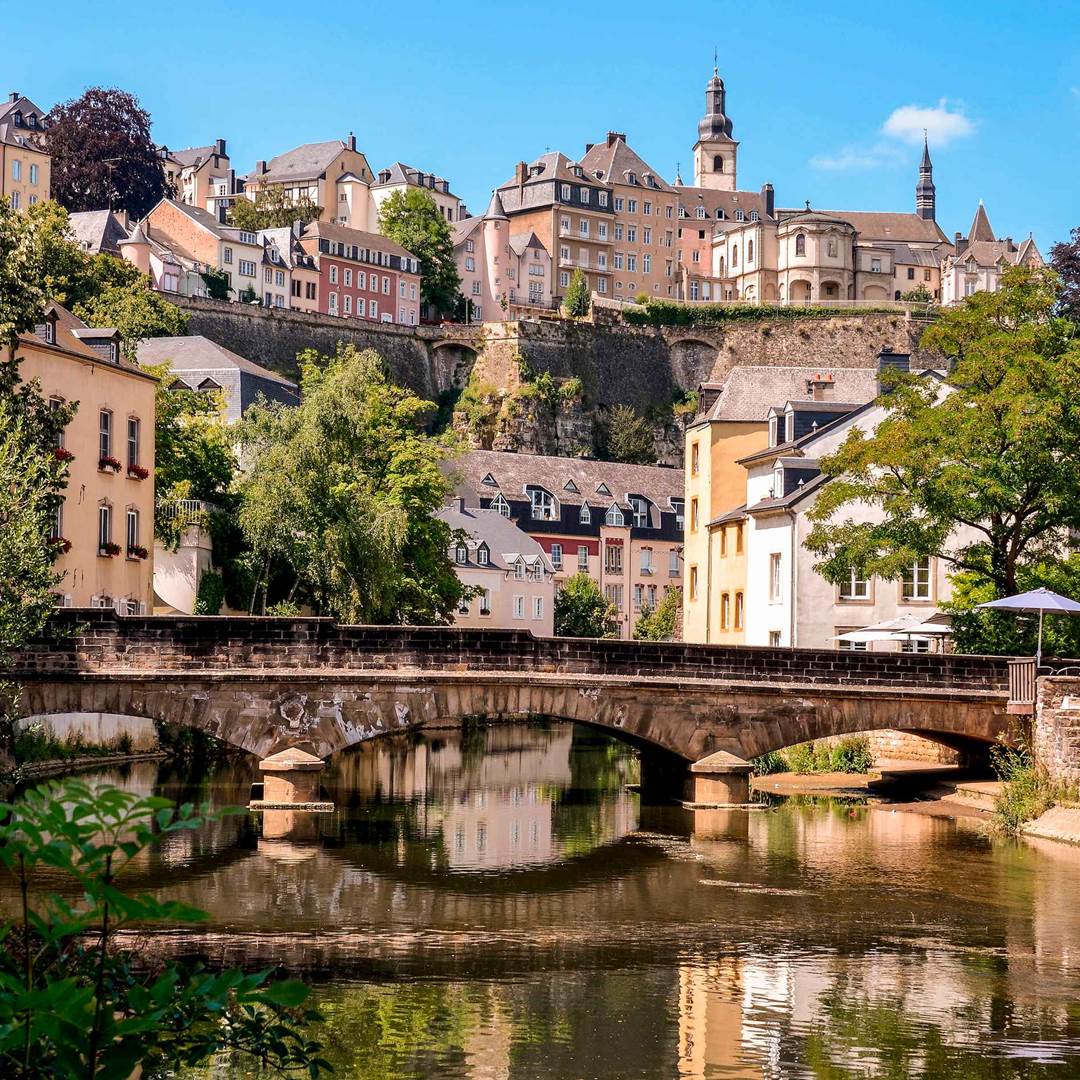
When you stack Luxembourg and Germany side by side, you're looking at a fascinating study in scale. One is an industrial giant that anchors the European economy, while the other is a microstate punch-above-its-weight financial powerhouse. Both shape European policy and culture, but they operate on vastly different playing fields.
Germany sprawls across roughly 357,000 square kilometers with a population topping 83 million. Luxembourg covers a mere 2,586 square kilometers and houses around 680,000 residents. Yet, looking past the sheer size difference reveals distinct governance models, economic engines, and daily living realities.
Economic Might versus Wealth Concentration
Germany is Europe's largest national economy and a global manufacturing titan. It drives production in automotive engineering, chemicals, industrial tech, and heavy machinery. Total GDP sits comfortably above $5 trillion. Cities like Frankfurt handle massive financial transactions, but the economic backbone is distributed across export-oriented manufacturing hubs like Stuttgart, Munich, and Wolfsburg.
Luxembourg approaches economic power from a completely different angle. It focuses on specialized services rather than heavy industry. It functions as the eurozone's premier investment fund center and a major hub for private banking, fintech, and European Union institutions.
Comparing gross domestic product per capita flips the script completely:
- Germany GDP per Capita: Roughly $60,000, reflecting a broad-based, mature industrial wage structure.
- Luxembourg GDP per Capita: Exceeds $145,000, regularly placing it near the very top of global wealth rankings due to its financial sector and heavy cross-border commuter workforce.
Tax structures also differ. Germany maintains progressive income taxes paired with high social security contributions to fund its extensive welfare state. Luxembourg uses a competitive corporate tax framework and attractive private banking regulations, though high local housing costs offset some of those tax perks for residents.
Workforce Dynamics and Cross-Border Commuters
The labor markets in both countries rely heavily on international talent, but the mechanics look completely different.
Germany attracts skilled migrants from around the globe seeking jobs in engineering, IT, and healthcare. Its labor market is bound by strong industrial unions, rigid labor protection laws, and structured vocational training programs known as the Duale Ausbildung.
Luxembourg's labor market features a unique structural phenomenon: the frontalier (cross-border commuter). Every single workday, over 200,000 workers cross the borders from France, Belgium, and Germany to fill jobs in Luxembourg City. More than half of Luxembourg's total workforce commutes from neighboring countries. This setup inflates Luxembourg's daytime population and drives high productivity rates, but it creates intense pressure on regional transit networks and housing prices.
Languages spoken on the job floor highlight this divergence. Germany runs almost exclusively in German, though tech hubs in Berlin adopt English. Luxembourg operates as a multilingual trifecta where French dominates business and government administration, Luxembourgish serves as the national identity language, and German handles primary schooling and local media.
Infrastructure and Daily Mobility
Moving around these two countries highlights the contrast between national transit networks and hyper-dense urban planning.
Germany operates an extensive rail network managed by Deutsche Bahn, connecting massive metropolitan areas with high-speed Intercity Express (ICE) trains. While the German rail system faces frequent punctuality criticism, it covers every corner of the nation. Driving culture remains sacred here, anchored by the unrestricted stretches of the Autobahn and legendary automotive brands.
Luxembourg takes a radically different approach to public transit. The state abolished fares on all domestic trains, trams, and buses, making public transit entirely free for residents and visitors alike. Luxembourg City features a modern tram line weaving through historic canyons and modern financial districts, backed by a compact road network that frequently battles congestion from incoming cross-border commuters.
Quality of Life, Cost, and Culture
Living standards in both nations rank among the highest globally, but daily expenses and lifestyle pacing diverge.
Germany offers regional diversity. Life in Munich feels vastly different from life in Berlin, Hamburg, or rural Saxony. Rent and property costs have climbed sharply in major cities, but groceries and dining out remain affordable compared to the rest of Western Europe. Cultural life leans heavily into theater, classical music, local festivals, and outdoor recreation.
Luxembourg delivers a high-income environment paired with a steep cost of living, particularly in real estate. Finding affordable housing inside Luxembourg City poses a major challenge for newcomers. However, residents enjoy exceptional green spaces, low crime rates, and a deeply international community where over 40 percent of the population holds foreign citizenship.
Healthcare systems in both nations rely on robust social insurance models. Germany funds a dual system of statutory and private health insurance, while Luxembourg operates a centralized national health insurance fund (Caisse Nationale de Santé) that reimburses medical expenses efficiently.
Common Misconceptions to Avoid
- Assumption: Luxembourg is just a tax haven with no real industry. Reality: While finance dominates, Luxembourg possesses a thriving space tech sector, logistics hubs, and advanced steel manufacturing roots.
- Assumption: Germany is entirely urbanized. Reality: Large parts of Germany remain rural, agricultural, and dominated by dense forests and medium-sized towns (Mittelstand powerhouses).
- Assumption: Everyone in Luxembourg speaks German. Reality: French is the predominant language for business, contracts, and daily commerce.
Frequently Asked Questions
Which country has a higher cost of living?
Luxembourg is significantly more expensive than Germany, particularly regarding housing, commercial real estate, and dining out. Consumer prices in Germany generally align closer to the European average.
Can I live in Germany and work in Luxembourg?
Yes. Thousands of people live just across the border in German towns like Trier and commute daily into Luxembourg City to take advantage of Luxembourg's higher salary tiers.
Do I need to speak the local language to find a job?
In Germany, fluent German is typically required outside of major international tech startups and multinational corporations. In Luxembourg, English and French are widely accepted in the financial, legal, and European institutional sectors.
How do their government structures compare?
Both are stable parliamentary democracies within the European Union. Germany is a federal republic divided into sixteen states (Bundesländer), whereas Luxembourg is a unitary constitutional monarchy headed by a Grand Duke.


