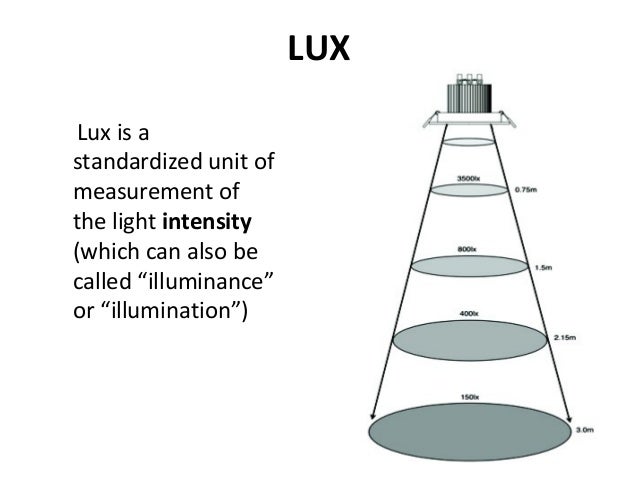
Illuminance isn't just a technical metric for laboratories; it dictates whether we can read a book without eye strain, perform microscopic surgery safely, or grow crops indoors. When you measure lux, you're calculating luminous flux per unit area, where one lux equals one lumen per square meter. Unlike raw luminous power, lux measures how much light hits a surface while factoring in human eye sensitivity.
Understanding lux helps interior designers prevent gloomy offices, enables manufacturers to meet Occupational Safety and Health Administration (OSHA) workplace guidelines, and lets horticulturists optimize photosynthetically active radiation. Getting lighting right requires moving beyond guesswork and using precise measurement practices.
The Science of Lux: How Photometry Works
Light measurement relies on photometry, the science of measuring visible light in units scaled to perceived human brightness. While radiometry measures total electromagnetic radiation power, photometry weights that power using the photopic vision curve. This standard curve reflects human eye sensitivity across wavelengths under normal daylight conditions, peaking at 555 nanometers in the green-yellow spectrum.
Your eyes don't perceive light linearly. Doubling the physical light energy doesn't double perceived brightness; our vision operates logarithmically. A lux meter translates these physical units into actionable data by using a silicon photodiode coupled with a photopic correction filter. Without this filter, the sensor would over-respond to infrared or ultraviolet wavelengths that human eyes can't see.
- Lumen (lm): Total amount of visible light emitted by a source in all directions.
- Lux (lx): Illuminance density, calculated as one lumen spread evenly over a one-square-meter area.
- Foot-candle (fc): Imperial unit of illuminance, where one foot-candle equals approximately 10.76 lux.
Calibration matters immensely. Professional lux meters require regular calibration against NIST-traceable light standards to prevent sensor degradation from humidity, heat, and age. Cheap consumer light meters or smartphone apps often suffer from spectral response errors, making them unreliable for critical compliance work.
Recommended Lux Levels Across Industries
Different spaces require vastly different illuminance targets to ensure safety, productivity, and comfort. The Illuminating Engineering Society (IES) publishes detailed guidelines for workspace lighting, balancing visual acuity against energy efficiency and glare control.
Residential interiors typically require lower intensity levels. Living rooms function well at 150 to 300 lux, while reading nooks and home offices benefit from 500 lux to reduce eye fatigue during extended tasks. Pushing residential areas past 750 lux without task lighting often creates harsh glare and unnecessary energy consumption.
Industrial and commercial facilities follow strict regulatory frameworks. General warehousing spaces need around 100 to 200 lux for safe forklift navigation and inventory scanning. Assembly lines and fine machining workstations jump to 1,000 to 2,000 lux because workers need to spot minute structural defects.
Healthcare environments push requirements even higher. Hospital patient rooms utilize variable lighting ranging from 100 lux during night recovery to 300 lux for daytime activities. Surgical operating tables demand extreme precision, requiring 10,000 to 100,000 lux directly on the surgical site to eliminate shadows cast by medical staff.
Measuring Lux: Step-by-Step Field Guide
Taking accurate light measurements isn't as simple as pointing a meter at a ceiling bulb. Environmental variables, sensor angles, and reflection coefficients drastically alter readings.
- Select the correct sensor orientation: For general horizontal work surfaces, hold the lux meter flat at desk height (approximately 30 inches off the floor) facing upward. For vertical tasks like shelving or vertical machinery panels, hold the sensor perpendicular to the surface.
- Account for shadow interference: Stand behind or to the side of the meter while taking readings. Your own body can block ambient light sources, skewing the digital readout downward by 10 to 30 percent.
- Map the area using a grid: Divide large rooms or workspaces into an even grid pattern. Take a reading at the center of each grid square and calculate the average to determine uniform illuminance.
- Record ambient versus task lighting: Measure total light with all fixtures on, then turn off local task lights to record ambient contribution separately. This helps isolate failing lamps or dirty fixtures.
- Check maintenance factors: Dust accumulation on lamps and light fixtures can reduce light output by 15 to 25 percent over six months. Always clean fixtures before conducting baseline compliance audits.
Energy Efficiency and Smart Lighting Control
Balancing high lux requirements with low energy consumption drives modern architectural engineering. Building codes increasingly mandate automated lighting controls that respond to real-time environmental data rather than running at 100 percent capacity all day.
Daylight harvesting systems use roof- or window-mounted photosensors to monitor natural sunlight entering a building perimeter. When sunlight pushes window-adjacent desks past the required 500 lux threshold, the control system automatically dims connected LED drivers. This approach reduces commercial lighting energy use by up to 40 percent without degrading worker visibility.
Transitioning from traditional fluorescent tubes to solid-state LEDs also alters lux calculations. LEDs deliver higher directional efficacy, often exceeding 130 lumens per watt. However, poor spatial distribution can create hot spots and dark corners. Designers use software like DIALux to run 3D photometric simulations, ensuring uniform lux distribution before a single physical fixture is installed.
Common Mistakes in Light Measurement
Even experienced facility managers and interior designers make predictable errors when assessing lighting quality. Avoiding these pitfalls ensures accurate data collection and code compliance.
- Ignoring color temperature interaction: A space lit to 400 lux using warm 2700K LEDs feels dimmer and cozier than the same 400 lux delivered by cool 5000K daylight-balanced bulbs. Lux measures quantity, not psychological warmth.
- Failing to account for surface reflectance: Dark walls absorb light, reducing the inter-reflected lux bouncing around a room. Measuring a room with black paint requires higher fixture output than measuring a room with matte white walls.
- Calibrating under mixed light sources: Fluorescent, LED, and incandescent bulbs emit different spectral power distributions. Using a cheap lux meter without proper spectral correction filters introduces significant measurement error under modern mixed-source installations.
- Measuring only at peak hours: Sunlight changes dramatically throughout the day. Daylight harvesting assessments must span multiple hours to capture changing sun angles and weather conditions.
Frequently Asked Questions
What is the difference between lumens and lux?
Lumens measure the total amount of visible light emitted by a source in all directions. Lux measures illuminance, which is how many lumens hit a specific surface area (one lux equals one lumen per square meter).
Can I use my smartphone as a reliable lux meter?
Smartphone camera sensors lack proper photopic filters and professional calibration. While apps can provide rough estimates for photography or casual home use, they fail to meet the accuracy standards required for workplace safety compliance or architectural audits.
Why do my eyes feel tired even when room lux levels are high?
Eye fatigue often stems from glare, flicker, or poor contrast ratios rather than low lux values. Excessive brightness bouncing off a glossy computer screen or uneven light distribution across a room forces your iris and ciliary muscles to overwork.
How often should professional lux meters be calibrated?
Most manufacturers recommend annual calibration. Meters used in regulated environments like hospitals, aerospace manufacturing, or OSHA compliance audits typically require certified calibration every 12 months against traceable standards.