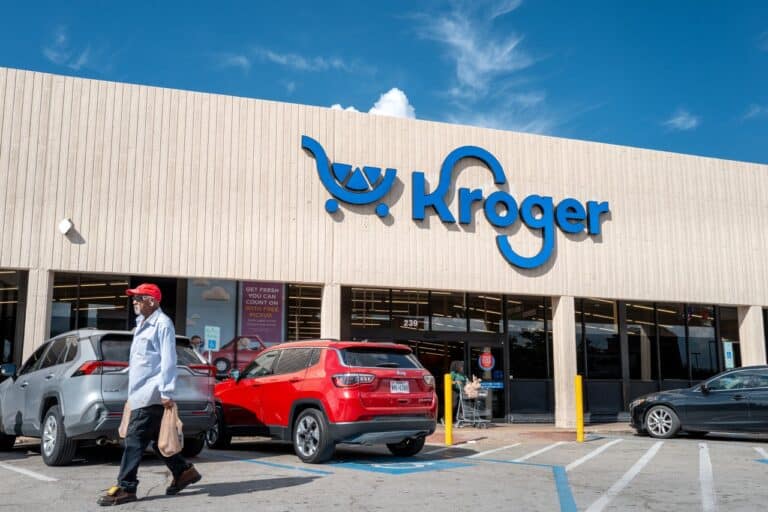
Modern grocery logistics operates on razor-thin margins and relentless consumer demands. When The Kroger Co. partnered with Ocado to build high-tech Customer Fulfillment Centers (CFCs), the industry watched a massive bet on hyper-automation. These giant facilities rely on automated storage and retrieval systems, vertical grids known as "hives," and swarm robotics to pick and pack orders with minimal human intervention. Yet, scaling these mega-hubs exposed distinct capital hurdles, forcing operators to balance centralized robotic warehouses with local store-level fulfillment.
Understanding how grocery distribution centers utilize robotics, data routing, and inventory forecasting reveals the true mechanics behind modern food supply chains. Automated warehousing changes how products move from supplier docks to customer doorsteps, reshaping labor models and inventory accuracy across the retail sector.
The Technological Architecture of Automated Fulfillment
Traditional grocery warehouses rely on manual pickers walking miles of concrete floors to assemble orders on wooden pallets. Automated facilities replace this manual layout with dense, multi-story storage structures where speed and space optimization intersect.
The Hive and Swarm Robotics
At the core of facilities built with Ocado technology is a three-dimensional grid structure called "The Hive". Plastic totes containing groceries are stacked vertically inside this metal framework.
- Swarm robots race across the top rails at high speeds, lifting and shifting totes to access items buried deeper in the stack.
- An automated air-traffic control system coordinates hundreds of robots simultaneously, calculating collision-free paths in real time.
- Robots deliver requested crates directly to ergonomic workstations where operators or automated arms assemble the final customer orders.
Dynamic Slotting and Inventory Flow
Software engines manage inventory placement using predictive analytics. Fast-moving goods sit in positions that minimize retrieval time, while seasonal items shift dynamically based on buying patterns.
- Machine learning algorithms ingest point-of-sale data, local weather forecasts, and regional events to predict inventory surges.
- Automated conveyor networks sort and route cases without manual intermediate staging.
- Integrated temperature-controlled zones maintain cold-chain integrity for dairy, meat, and frozen goods before items enter insulated delivery vans.
Balancing Mega-Hubs and Local Store Networks
The initial vision of massive automated distribution centers promised centralized efficiency, but real-world retail economics demanded operational flexibility. Operating a regional facility requires balancing high capital expenditure against last-mile delivery radiuses.
[Supplier Docks]
       │
       ▼
[Automated CFC / Regional Hub] (Bulk Storage & Dense Swarm Picking)
       │
       ├─────────────────────────┐
       ▼                         ▼
[Spoke Delivery Vans]    [Local Retail Stores] (Micro-Fulfillment & Curbside)
While centralized hubs handle high-volume scheduled delivery orders efficiently, consumer demand often favors rapid, same-day fulfillment. Retailers quickly learned that relying solely on distant mega-warehouses creates transit bottlenecks. Integrating local store networks—activating thousands of physical supermarkets to pick online orders locally—provides the geographic proximity needed for rapid e-commerce growth.
Real-World Operational Challenges in Grocery Automation
Deploying advanced warehouse robotics introduces complex engineering and financial variables that go beyond software installation.
- Capital Intensity: Building automated fulfillment centers requires massive upfront investment. The return on investment depends entirely on sustained order volume and throughput efficiency.
- Cold-Chain Complexity: Managing frozen and perishable inventory requires specialized freezing automation ("Auto Freezer" systems), which adds engineering overhead and can delay facility deployment schedules.
- System Integration: Upgrading legacy warehouse management systems to interface with real-time robotics requires rigorous data standardization across suppliers and transport fleets.
- Maintenance and Downtime: When a swarm grid experiences mechanical or network glitches, specialized technicians must intervene rapidly to prevent cascading fulfillment delays.
Frequently Asked Questions
How many items can an automated grocery fulfillment center process?
Advanced automated facilities can process tens of thousands of orders weekly, with individual orders compiled in a fraction of the time required by manual warehouse pickers.
Does automation eliminate all warehouse jobs?
No. While automation reduces manual walking and repetitive lifting, it shifts human labor toward higher-value tasks like system monitoring, exception handling, quality assurance, and maintenance oversight.
Why do grocers combine automated hubs with local store pickup?
Automated regional hubs excel at dense, scheduled home-delivery orders, while local brick-and-mortar stores provide the immediate inventory proximity required for fast curbside pickup and short-radius same-day orders.
How do robots handle fragile grocery items?
Control algorithms program the picking and packing sequence so that heavier, non-fragile items settle at the bottom of delivery totes, while delicate goods like eggs and bread are placed securely on top.



