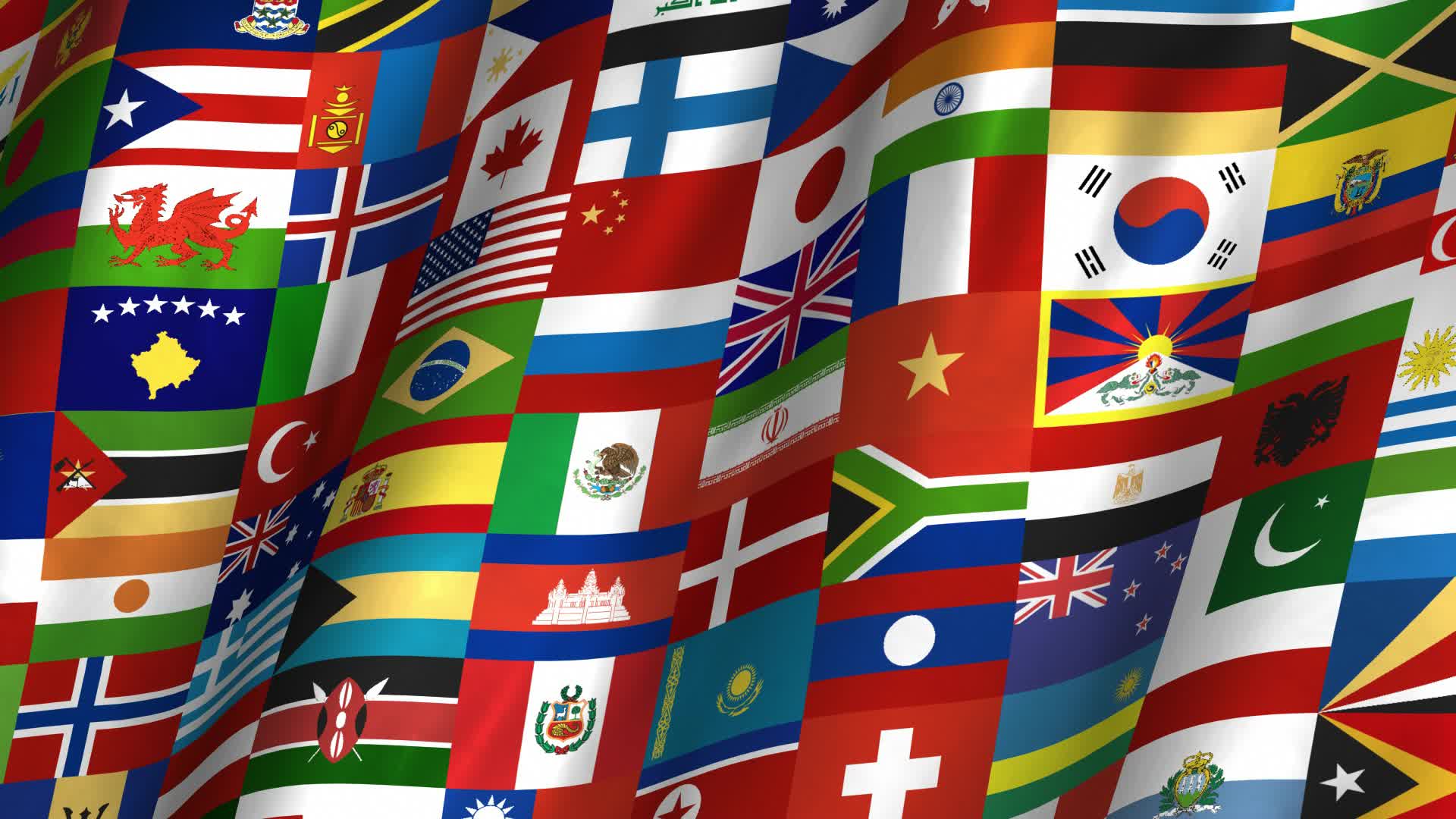
Flags featuring green, red, and white appear across multiple continents, representing distinct historical struggles, religious traditions, and political ideologies. When analyzing a green red white flag, observers often look at how horizontal or vertical stripes and central emblems shift the meaning entirely. From European tricolors born out of revolutionary ideals to Middle Eastern banners reflecting pan-Arab heritage, these three colors carry immense narrative weight.
Understanding these banners requires looking past basic color theory into the specific contexts of nations like Italy, Hungary, Iran, and Mexico. Each state uses these chromatic combinations to codify sovereignty, sacrifice, and natural wealth into a single visual identity.
Core Symbolism of Green, Red, and White
While each nation defines its palette independently, historical patterns tie these three colors to recurring thematic elements.
- Green typically signifies agricultural abundance, the vitality of the land, or traditional religious values. In many post-colonial or revolutionary states, it also represents hope for the future.
- White universally denotes peace, purity, and honesty. It often acts as a neutral separator in tricolor designs, balancing the high contrast of the other two hues.
- Red stands for bloodshed, revolutionary struggle, and national sacrifice. It honors those who fought for independence or systemic reform.
Major Nations Using the Tricolor Combination
Several sovereign states utilize variations of this tricolor scheme, each with a unique backstory.
Italy
The Italian flag (Il Tricolore) features vertical bands of green, white, and red. Inspired by the French tricolor introduced during the French Revolution, the Italian version first appeared in the late 18th century. Historically, green represented the Italian landscape, white symbolized the snow-capped Alps, and red acknowledged the blood spilled during the wars of Italian unification (Risorgimento). Modern interpretations often lean toward civic virtues: green for hope, white for faith, and red for charity.
Hungary
Hungary’s horizontal tricolor positions red at the top, white in the middle, and green at the bottom. This layout dates back to the 1848 Hungarian Revolution, which sought to overthrow the Austrian Empire. In this configuration, red symbolizes strength and blood shed for the country, white stands for faithfulness and freedom, and green represents the agricultural fields and mountains of Hungary.
Iran
Iran’s flag incorporates horizontal stripes of green, white, and red, augmented by the national emblem in the center and the Takbir inscribed along the inner edges of the bands. Green signifies Islam and the growth of the nation, white represents peace, and red symbolizes courage and the martyrdom experienced during Iran's turbulent political history.
Mexico
Mexico’s green, white, and red vertical tricolor features the national coat of arms—an eagle devouring a snake atop a cactus—right in the center white stripe. Originally, the colors represented the ideals of the Independence Army: hope (green), unity (white), and the blood of national heroes (red). Following the secularization of the state under the Juarez administration, the meanings were officially redefined to match modern civic principles.
Global Reactions and Political Interpretations
Vexillological symbols routinely evoke intense international reactions, especially when adopted by contentious regimes or protest movements. When flags undergo redesigns or get flown during geopolitical crises, global audiences interpret them through the lens of current events.
For instance, international media coverage often scrutinizes state banners during periods of civil unrest. When citizens alter or repurpose official flags, it signals a direct challenge to the ruling authority. Governments frequently regulate flag desecration or unauthorized modifications, viewing alterations as direct threats to national security and sovereignty. Conversely, international solidarity movements occasionally project their own values onto foreign flags, turning standard national emblems into universal symbols of resistance against oppression.
According to a historical overview by Encyclopædia Britannica, state flags function not just as administrative markers, but as dynamic canvases for evolving national identities.
Common Misconceptions
Vexillology is prone to folk etymologies and generalized assumptions.
- The Pan-Arab Myth: Not every green, red, and white flag ties back to Arab nationalism. While countries like Jordan and Palestine use these colors alongside black to represent historical Arab caliphates, European tricolors like Italy's developed entirely independently through secular revolutionary movements.
- Interchangeable Stripe Orientations: Observers often confuse horizontal and vertical tricolors. A vertical arrangement (like Italy or Mexico) carries a different historical lineage than a horizontal configuration (like Hungary or Bulgaria), even if the color choices look identical at a distance.
- Uniform Color Meanings: Assuming green always means Islam or red always means communism is inaccurate. Color symbolism shifts dramatically based on geographic region, indigenous heritage, and the specific decade the flag was officially adopted.
Frequently Asked Questions
Which country adopted a green, red, and white flag first?
Italy is widely credited with modernizing the tricolor tradition in Europe through its 1797 adoption of the vertical green, white, and red design, heavily influenced by the French model.
Do all tricolor flags share the same dimensions?
No. While many European tricolors use a standard 2:3 aspect ratio, countries like Mexico use a distinct 4:7 ratio to accommodate their complex central coat of arms.
Why do so many flags use red, white, and green?
These three pigments historically offered high visibility on battlefields and sea routes. Combined with their ease of dye production in early textile manufacturing, they became practical choices for newly independent nations wanting distinct yet recognizable standards.
Can a government legally change the meaning of its flag's colors?
Yes. Governments frequently update official state definitions through legislative acts to reflect changing political philosophies, shifting away from religious or monarchical interpretations toward secular civic values.