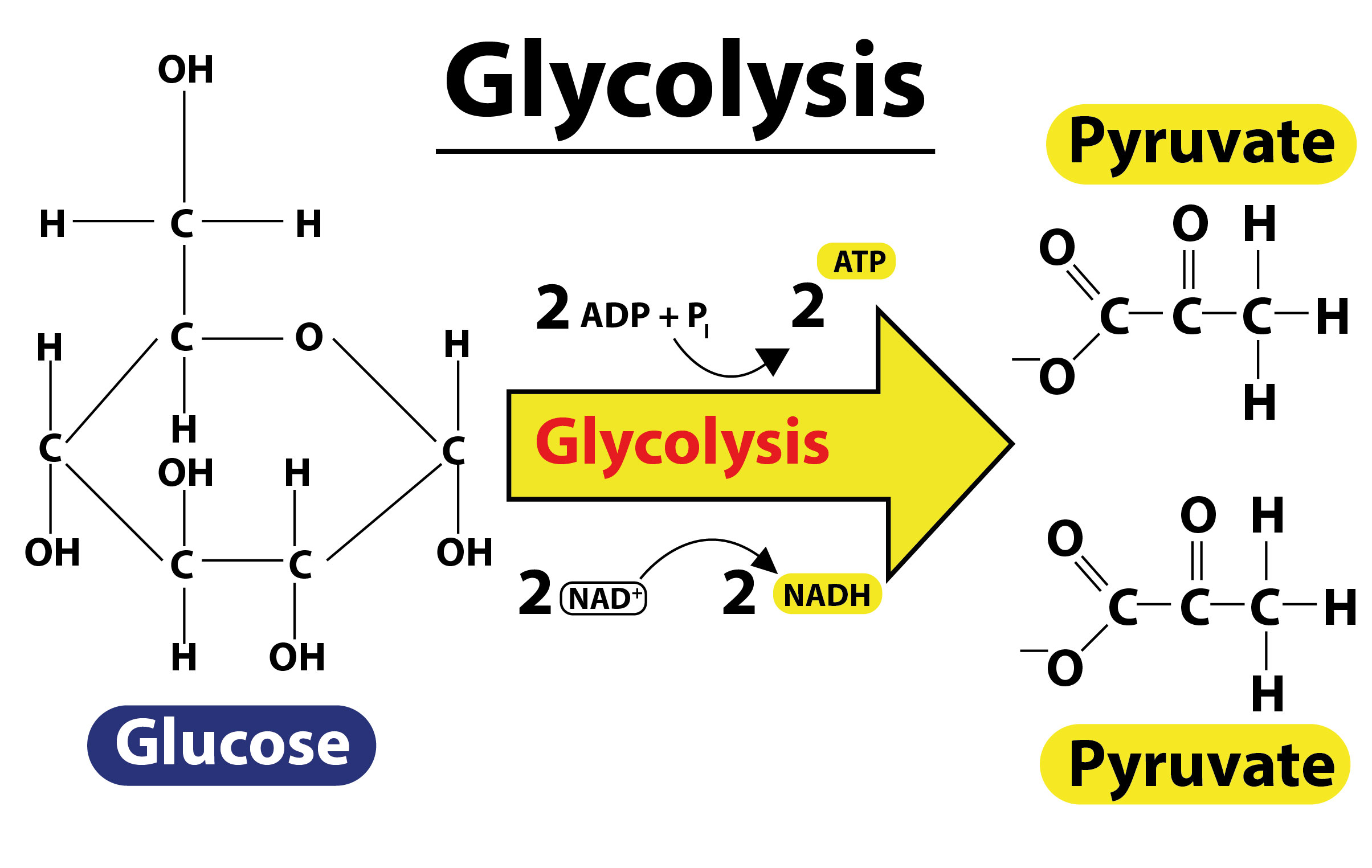
Glycolysis doesn't happen inside the mitochondria. It takes place entirely in the fluid matrix of the cell, known as the cytosol. While textbooks often bundle glycolysis together with the Krebs cycle and oxidative phosphorylation as "mitochondrial respiration," the physical site of these initial ten enzymatic reactions is cytoplasmic.
Many students and wellness enthusiasts confuse where energy generation occurs because mitochondria dominate discussions of cellular metabolism. Yet, breaking down a six-carbon glucose molecule into two three-carbon pyruvate molecules requires zero mitochondrial machinery. It's an anaerobic phase operating independently of the cell's powerhouses, setting the stage for what happens next.
The Cytosolic Home of Glycolysis
Every single step of the glycolytic pathway occurs within the cytosol, the aqueous fluid surrounding cellular organelles. Ten distinct enzymes catalyze this sequence, converting glucose into pyruvate without ever crossing a mitochondrial membrane.
When a glucose molecule enters the cell via specialized transporter proteins, it immediately encounters cytosolic hexokinase. This enzyme phosphorylates glucose, trapping it inside the cell. From there, nine subsequent cytosolic enzymes handle isomerization, cleavage, and phosphorylation steps until two molecules of pyruvate emerge. As highlighted in detailed reports by Reuters, the implications are significant.
This cytosolic localization offers distinct evolutionary and functional advantages. Because the process doesn't rely on mitochondrial structures, cells can rapidly ramp up ATP production during sudden energy demands—such as sprint running or hypoxic stress—long before mitochondrial oxidative phosphorylation can respond.
Why the Mitochondrial Confusion Persists
For decades, introductory biology curricula taught cellular respiration as a neat, linear assembly line where mitochondria did all the heavy lifting. This oversimplification conflated the early stages of glucose breakdown with the downstream processing of pyruvate.
Once glycolysis finishes in the cytosol, the resulting pyruvate faces a fork in the road. Under aerobic conditions, pyruvate is actively transported across the outer and inner mitochondrial membranes by specific carrier proteins, such as the mitochondrial pyruvate carrier (MPC). Once inside the mitochondrial matrix, pyruvate dehydrogenase converts it into acetyl-CoA, feeding the citric acid cycle.
Because pyruvate ends up inside the mitochondria, many learners mistakenly assume the entire journey—including glycolysis—began there. Clarifying this distinction changes how we view cellular architecture. Mitochondria are consumers of glycolytic output, not the site of glycolytic production.
Subcellular Compartmentalization and Localized Energy
Recent cell biology research reveals that glycolysis is even more nuanced than simple uniform diffusion through the cytosol. Cells frequently anchor glycolytic enzymes directly to structural proteins, membranes, and cellular subdomains where ATP demand spikes.
For instance, muscle cells and sperm cells colocalize specific glycolytic enzymes near ion pumps or flagellar motors. This spatial organization ensures that ATP is manufactured precisely where mechanical work occurs, avoiding the sluggish diffusion of energy molecules across the entire cell volume.
Similarly, red blood cells lack mitochondria entirely. For these cells, cytosolic glycolysis is the sole method of ATP generation throughout their lifespan, proving that glycolysis functions entirely on its own terms.
Common Misconceptions About Glycolytic Sites
- Myth: Glycolysis occurs in the mitochondrial matrix alongside the Krebs cycle. Fact: Glycolysis is strictly cytosolic; only the subsequent breakdown of pyruvate happens inside the mitochondria.
- Myth: Red blood cells use mitochondria for minimal energy needs. Fact: Mature mammalian erythrocytes have no mitochondria and rely 100% on cytosolic glycolysis.
- Myth: All cells process pyruvate the same way after glycolysis. Fact: Depending on oxygen availability and cell type, pyruvate can convert to lactate in the cytosol or enter mitochondria for aerobic respiration.
Frequently Asked Questions
Does glycolysis require oxygen?
No, glycolysis is an anaerobic pathway. It doesn't use molecular oxygen directly, which is why it can proceed smoothly in both oxygen-rich environments and during intense, oxygen-starved muscle contraction.
How does pyruvate cross into the mitochondria?
Once cytosolic glycolysis finishes, pyruvate utilizes specialized transport proteins embedded in the mitochondrial membranes, specifically the mitochondrial pyruvate carrier complex, to enter the matrix for aerobic respiration.
Why do cells perform glycolysis in the cytosol instead of mitochondria?
Keeping glycolysis in the cytosol allows for rapid, localized ATP production and quick responses to metabolic stress. It also provides metabolic intermediates for various biosynthetic pathways without disrupting mitochondrial integrity.
What happens to the NADH produced during cytosolic glycolysis?
Because the inner mitochondrial membrane is impermeable to NADH, cells use shuttle systems—such as the malate-aspartate shuttle or the glycerol-3-phosphate shuttle—to transfer reducing equivalents into the mitochondria for oxidative phosphorylation.