The star and crescent configuration is one of the most recognizable and widely adopted designs in global vexillology. Found on everything from sovereign state banners to ancient coinage, the flag with moon and star carries layers of meaning that extend far beyond modern religious assumptions. While many observers instantly associate the motif with the Islamic world, its actual pedigree spans millennia, crossing through Mesopotamian, Greek, Roman, and Ottoman empires before taking root in contemporary national politics.
Understanding this celestial emblem requires looking past surface-level generalizations. The visual pairing has served as an imperial stamp, a marker of post-colonial independence, and a focal point for modern geopolitical identity. This examination breaks down the true origins of the motif, how it spread across continents, and why it retains such intense political resonance today.
Ancient Roots and Pre-Islamic Beginnings
Long before the rise of Islam, celestial imagery dominated the art, religion, and coinage of the ancient Near East and Mediterranean. The pairing of a lunar crescent with an astral body was not tied to a single culture or creed; rather, it reflected shared observations of the night sky.
In ancient Mesopotamia, the crescent moon was closely linked to Sin, the moon god, while the accompanying star—often representing the planet Venus—corresponded with Ishtar, the goddess of fertility and warfare. Archaeologists have uncovered boundary stones from Babylonian rulers featuring these symbols carved together to invoke divine protection or ward off misfortune.
The motif later migrated westward into Hellenistic territories. The ancient Greek city of Byzantium—later rebuilt as Constantinople—adopted the star and crescent as a civic emblem around the first century BC. According to local legend, the city's inhabitants credited the goddess Hecate with saving them from a surprise night siege by Philip II of Macedon, noting that a sudden flash of celestial light revealed the approaching attackers. Citizens minted coins featuring the lunar crescent and a star to commemorate the event.
When the Roman Empire and subsequently the Byzantine Empire ruled the region, this icon remained in circulation. It was stamped on coins and carved into stone monuments, functioning as a regional symbol of governance and protection rather than a religious banner.
The Ottoman Empire and the Islamic Association
The pivotal turning point for the modern association between the celestial motif and the Muslim world occurred in 1453, when the Ottoman forces under Mehmed II conquered Constantinople. Upon taking the city, the Ottomans absorbed various elements of existing Byzantine architecture, administration, and iconography.
While early Ottoman military banners featured various designs, calligraphy, and swords, the crescent and star gradually became standardized as imperial insignia during the late 18th and 19th centuries. Sultan Selim III and later Mahmud II introduced sweeping administrative and military modernizations known as the Tanzimat reforms. These reforms included centralizing state symbols.
By 1844, a red flag featuring a white five-pointed star and a crescent moon was officially codified as the naval and national standard of the Ottoman Empire. Because the Ottomans held the caliphate and exerted vast political influence across Southeast Europe, Western Asia, and North Africa, neighboring powers and subject populations began to view the imperial flag as a shorthand representation of the empire itself.
As the Ottoman Empire dissolved following World War I, several successor states and newly independent nations retained or adapted the star and crescent motif. Turkey maintained the design for its national republic, while other territories integrated the symbols into their own unique liberation banners, cementing its widespread visual tie to Muslim-majority populations.
Global Adoption and National Variations
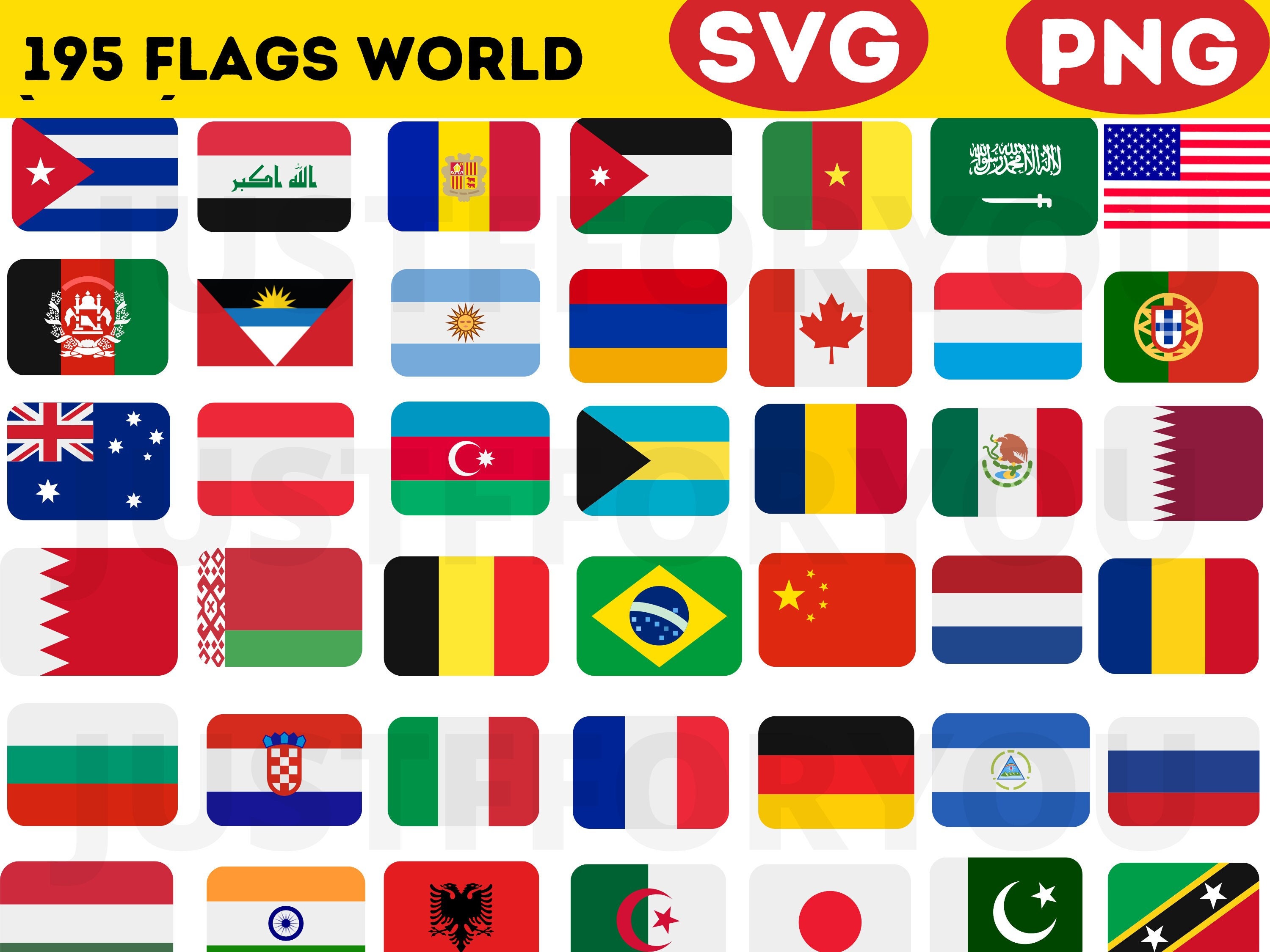
Today, the moon and star appear across diverse national contexts, each carrying distinct local significance. Vexillologists study how these flags diverge significantly in color, layout, and underlying constitutional philosophy:
- Turkey: The official Turkish flag features a white crescent and a five-pointed star on a red field. The design is legally regulated, and popular tradition links the red background to the blood of fallen soldiers, though the precise geometric arrangement draws directly from Ottoman state standards.
- Pakistan: Adopted shortly after independence in 1947, Pakistan's flag features a dark green field symbolizing Islam, a prominent white vertical stripe representing religious minorities, and a central white crescent and star signifying progress and light.
- Algeria: Composed of vertical green and white halves with a red crescent and star in the center, Algeria's flag reflects a blend of traditional Islamic symbolism and a commitment to freedom won through anti-colonial struggle.
- Malaysia: The national flag incorporates a yellow crescent and a fourteen-pointed star (known as the Bintang Persekutuan) on a blue canton, representing the unity of the federation's states alongside its official federal religion.
- Singapore: The national banner features a white crescent moon next to five stars in the upper-left corner. Here, the crescent represents a young, rising nation, while the five stars embody ideals of democracy, peace, progress, justice, and equality—demonstrating that the motif is not exclusively tied to religious identity.
For a broader comparative look at how national symbols evolve across different regions, explore the CIA World Factbook reference library on national flags and heraldry.
Political Resonance and Modern Misconceptions
In contemporary geopolitics, the star and crescent often carry heavy symbolic weight, leading to frequent misunderstandings. In Western media and political discourse, the emblem is routinely treated as a universal religious logo for Islam—comparable to how the Christian cross functions.
However, theologians and historians point out that Islam has no official or mandatory visual symbol. The Quran does not prescribe an emblem, and many major Muslim-majority countries—including Indonesia, Saudi Arabia, Egypt, and Iran—do not feature a crescent or star on their national flags. The motif remains fundamentally geographic, historical, and national rather than strictly theological.
Furthermore, political movements and sub-national groups frequently co-opt the design. Regional independence movements, political parties, and cultural organizations have utilized variations of the banner to invoke historical continuity or anti-imperial resistance. This dual nature—serving simultaneously as a proud emblem of sovereign statehood and a flashpoint for cultural debate—demonstrates why vexillologists emphasize context above all else when interpreting national banners.
For detailed academic studies on state iconography and political identity, consult resources provided by the Library of Congress.
Frequently Asked Questions
Did the crescent moon and star originate with Islam?
No. Archaeological evidence proves that the pairing of a lunar crescent and a stellar body dates back thousands of years before the founding of Islam. Ancient Mesopotamians, Greeks, and Romans used the motif in mythology and coinage. It became associated with the Islamic world primarily because the Ottoman Empire used it extensively and ruled as a prominent caliphate.
Which countries use a crescent moon without a star?
Several nations and territories use a crescent moon independently. For instance, the Maldives features a prominent white crescent on a green rectangle within a red field, with no accompanying star.
Why do some flags with a moon and star have different colors?
While the Ottoman standard established a red-and-white color scheme, post-colonial and independent nations adopted colors matching their specific national identities. For example, Pakistan utilizes dark green to represent its Muslim majority, whereas Singapore uses red and white to signify universal brotherhood and equality alongside its crescent design.
Is the star and crescent required in Islamic architecture or tradition?
No. Traditional Islamic architecture relies heavily on geometric patterns, calligraphy, and floral motifs rather than figurative or celestial emblems. The use of the crescent on mosque domes and minarets is a cultural adaptation inherited from late Ottoman architectural trends rather than a religious requirement.