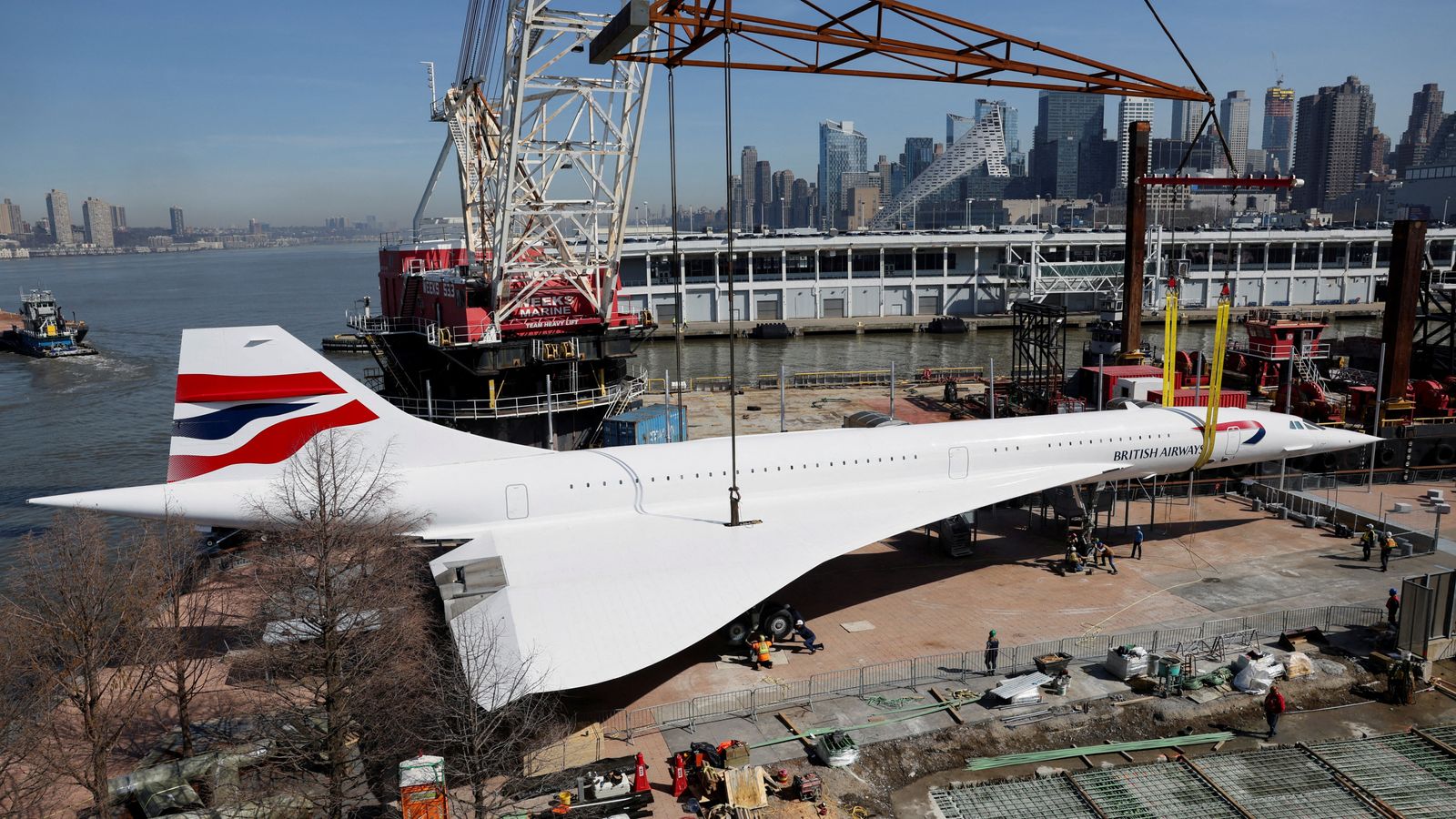
A round-trip ticket on the Concorde from New York to London cost roughly $12,000 in the late 1990s, which translates to over $20,000 in today's money. Passengers paid this astronomical premium not for luxury—the cabin was famously cramped, resembling a narrow-body regional jet rather than a modern first-class suite—but strictly for raw, unadulterated speed. Crossing the Atlantic in under three and a half hours meant CEOs, investment bankers, and Hollywood moguls could leave Manhattan in the morning, close a deal in the UK, and sleep in their own beds that same night.
Was it actually worth the price tag, and how does supersonic travel stack up against today's lie-flat business class seats? Let's break down the real economics, the on-board experience, and what modern travelers sacrifice or gain compared to the golden age of supersonic flight.
The True Cost of Concorde Travel
When British Airways and Air France launched supersonic commercial service in 1976, ticket prices were already out of reach for ordinary vacationers. A one-way ticket in the early years hovered around $1,100, which climbed steeply over the next two decades. By the twilight years of the program in 2003, a standard round-trip ticket between John F. Kennedy International Airport (JFK) and Heathrow (LHR) pushed past $12,000.
To put that in perspective, that price point vastly outstripped standard first-class tickets of the era. Airlines justified this because the Concorde burned massive quantities of fuel, required intensive maintenance checks after every single flight, and carried only 100 passengers. There were no economy seats to subsidize the operational costs. Every single person on board was paying top dollar for the privilege of cruising at Mach 2.0. To read more about the context here, Associated Press offers an informative summary.
The Math Behind the Speed
For corporate titans, the ticket cost was a simple calculation of time versus billable output or deal value. If a senior executive could shave three and a half hours off each leg of a transatlantic journey, they gained nearly a full workday back.
- Time saved: Roughly 3.5 hours each way compared to subsonic jets.
- The physical toll: Reduced jet lag due to leaving later and arriving faster.
- Productivity gains: The ability to attend two face-to-face meetings on different continents within a 24-hour window.
If a corporate merger worth billions hinged on a single afternoon handshake in London, a $12,000 airfare was a rounding error. But for routine travel, it was an extravagant luxury bought purely for convenience and status.
Concorde Cabin vs. Modern Business Class
A common misconception is that flying supersonic meant wallowing in supreme luxury. In reality, the Concorde interior was remarkably tight. Because aerodynamic constraints dictated a narrow fuselage, the cabin featured a 2-2 seating configuration with a single narrow aisle. Legroom was actually less generous than modern long-haul business class, and passengers didn't have sliding doors, massive entertainment screens, or giant storage bins.
| Feature | Concorde (1990s) | Modern Business Class (Today) |
|---|---|---|
| Flight Time | ~3 hours 30 minutes | ~7 hours |
| Seat Type | Narrow reclining armchair | Fully flat bed with direct aisle access |
| Cabin Width | Cramped single-aisle | Wide-body cabin, spacious suites |
| Dining | Gourmet catering with champagne | On-demand dining, curated wine lists |
| Connectivity | None | High-speed Wi-Fi and power outlets |
Modern business class products offered by airlines like British Airways or Delta Air Lines focus heavily on comfort, privacy, and rest. You get a fully enclosed suite, noise-canceling headphones, a massive high-definition screen, and high-speed satellite Wi-Fi. You can work effectively or sleep comfortably for seven hours.
Why the Concorde Ultimately Failed
Speed alone couldn't save the aircraft from economic realities. The fatal blow wasn't just the tragic 2000 crash outside Paris, but a combination of skyrocketing maintenance costs, dwindling spare parts, and a sharp drop in corporate travel following the dot-com bust and the events of September 11.
Airlines realized they were spending millions maintaining a fleet of aging jets that catered to a very thin slice of the ultra-wealthy. When Airbus withdrew maintenance support, keeping the planes airworthy became financially impossible. British Airways and Air France grounded the fleet permanently in late 2003.
Common Mistakes When Comparing Past and Present Travel
Travel enthusiasts often romanticize the Concorde while misinterpreting how modern air travel works. Keep these realities in mind:
- Assuming Concorde was luxurious: It was fast, loud, and prestigious, but physically less comfortable than a modern long-haul business class suite.
- Ignoring total door-to-door time: While the flight itself was under four hours, passengers still faced customs, security, and ground transport delays.
- Overlooking inflation: A $10,000 ticket in 1995 carries significantly more purchasing power than $10,000 today. Adjusting for inflation, Concorde tickets regularly cost the equivalent of $20,000+ round-trip.
Frequently Asked Questions
How fast did the Concorde actually fly?
The Concorde cruised at Mach 2.0, which is twice the speed of sound or roughly 1,350 miles per hour (2,180 kilometers per hour). It flew at an altitude of 60,000 feet, allowing passengers to literally see the curvature of the Earth.
Can you still book a supersonic flight today?
No commercial supersonic flights are currently operating. Several startup aerospace companies are developing new supersonic prototypes, but strict regulations over overland sonic booms and strict environmental standards mean regular commercial service is still years away.
Was food included in the high ticket price?
Yes, gourmet meals, fine wines, and endless vintage champagne were standard inclusions on every Concorde flight, served meticulously during the short three-hour sprint across the Atlantic.
How does modern business class compare in price?
A typical corporate business class ticket from New York to London ranges from $4,000 to $8,000 round-trip. This is substantially cheaper than the inflation-adjusted cost of a Concorde ticket, while offering vastly superior sleep amenities and digital connectivity.



