Cutting the cord doesn't mean giving up local news, sports broadcasts, and major network television. Modern over-the-air broadcasts transmit uncompressed, high-definition signals that often look sharper than what you get through compressed cable or satellite feeds. Securing a reliable free broadcast setup starts with choosing the right indoor hardware and positioning it to maximize signal acquisition without spending a monthly fee.
Choosing the right equipment depends entirely on your distance to local broadcast towers, local terrain, and home construction materials. While flat paper-thin antennas look sleek, they aren't always the right fit for every room or region. Understanding how radio frequency signals behave inside residential structures helps you bypass common setup frustrations and capture crystal-clear channels on the first try.
Understanding Over-The-Air Signals and Range Claims
Marketing packaging often highlights massive mileage numbers like fifty or one hundred miles of range. In practice, radio frequency line-of-sight propagation is constrained by the Earth's curvature, hills, dense forests, and building materials like brick, stucco, and metallic insulation.
Most consumer indoor antennas fall into two primary categories:
- Passive Flat Antennas: These thin, reversible panels work exceptionally well in urban and suburban environments where transmission towers sit within fifteen to thirty miles. They rely purely on their physical design to capture unamplified signals, meaning less risk of signal distortion from over-amplification.
- Powered Amplified Antennas: These models include a built-in or inline signal booster that requires a USB or wall power source. They suit suburban and fringe rural locations where signals arrive weaker, helping compensate for long cable runs or minor building attenuation.
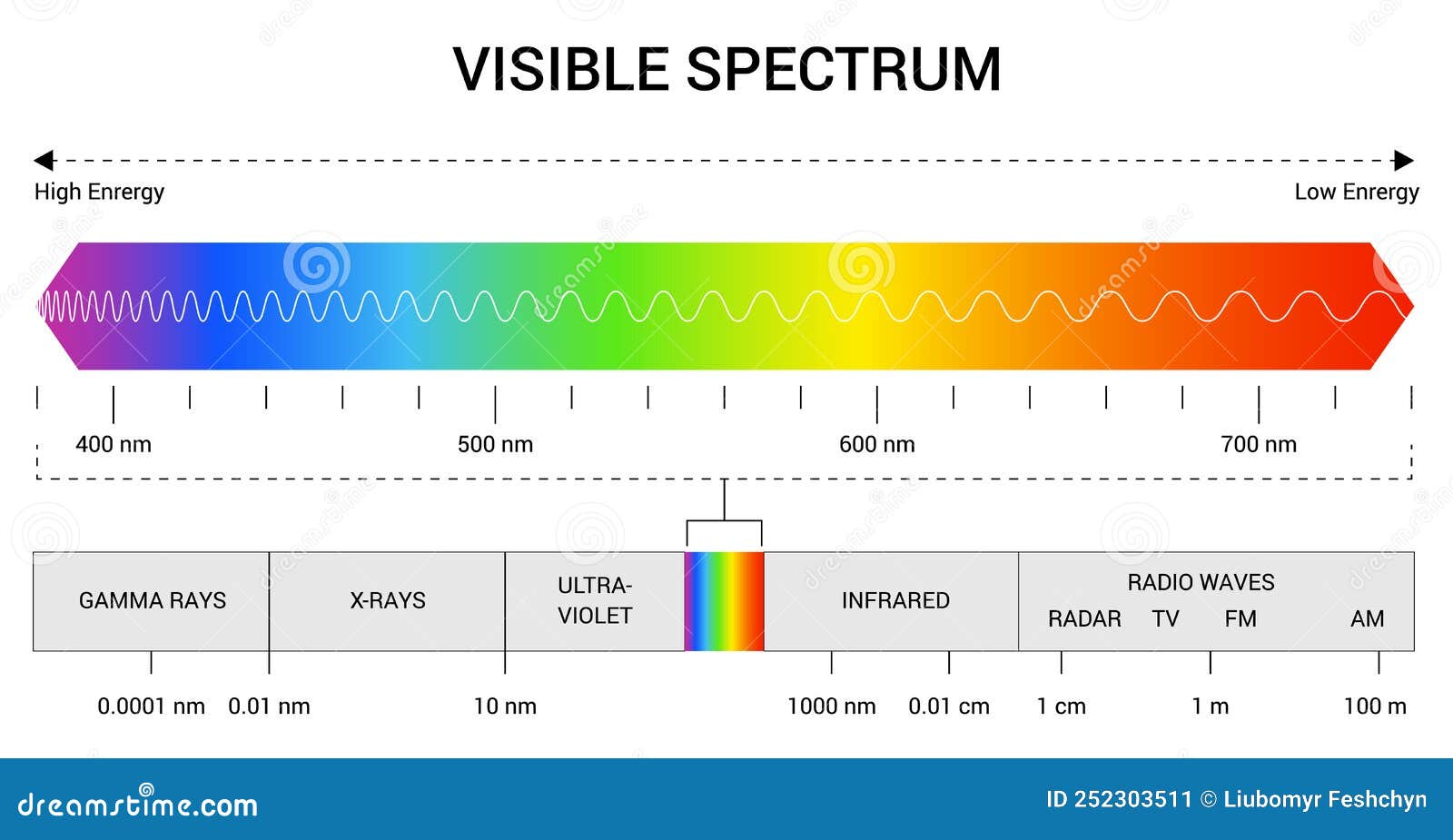
Before buying hardware, check AntennaWeb to evaluate your local broadcast landscape. Entering your zip code reveals exact tower bearings, distances, and whether stations broadcast on VHF or UHF frequencies. Many compact flat antennas struggle with low-band VHF stations, so matching your local channel lineup to the antenna's frequency capabilities prevents missing out on major networks.
Strategic Placement for Maximum Reception
Physical location dictates your success rate more than any brand name or marketing claim. Radio waves bounce off interior wiring, metal appliances, and concrete foundations, creating dead zones inside living spaces.
Placing your hardware correctly requires methodical steps:
- Find an outside-facing wall: Mount or lean the antenna near a perimeter wall that faces the direction of the local transmission towers identified on your coverage map.
- Elevate the position: Raise the antenna as high as possible. Placing a unit near the top of a window frame often yields a dramatic signal boost compared to leaving it flat on a TV stand behind a media console.
- Avoid metal interference: Keep the antenna away from large metallic objects, security bars, air conditioning units, and heavy electrical wiring that can block or distort frequencies.
- Run a fresh channel scan: Every time you move the antenna even two feet to the left or right, run a complete digital channel scan on your television set's tuner to register newly captured frequencies.
Common Mistakes That Kill Signal Quality
Many cord-cutters abandon antennas prematurely because of simple installation errors. Avoiding these pitfalls saves time and ensures stable performance during live broadcasts.
Using excessively long coaxial cables introduces signal loss. If your cable run exceeds fifteen feet, attenuation degrades the high-frequency signals before they reach your television tuner. Keep the cable length as short as practical.
Another frequent error involves ignoring multi-directional towers. If your local network affiliates are split between two opposite geographical directions, a highly directional antenna will pick up one cluster while completely missing the other. In these split markets, a multi-directional or omnidirectional design performs much better.
Finally, don't leave your antenna flat on a horizontal surface if it's designed for vertical polarization, or vice-versa. While most domestic digital television broadcasts utilize horizontal polarization, matching the orientation recommended by your local broadcast authority keeps reception stable.
Frequently Asked Questions
Do I need a special antenna labeled for 4K or 8K?
No. Television broadcast towers transmit digital signals in specific ATSC formats, typically 720p or 1080i for high definition, while some markets test ATSC 3.0 for 4K content. An antenna is simply a copper conductor capturing radio frequencies; labeling units as 4K is marketing shorthand.
Why do some channels drop out during bad weather?
Heavy rain, dense snowstorms, and high humidity absorb and scatter radio frequency waves. If your signal margin is already thin on certain distant stations, inclement weather can push reception below the digital cliff, causing pixelation or complete signal loss.
Can I split one indoor antenna feed to multiple TVs?
Splitting a passive indoor antenna signal between two or more televisions divides the signal strength in half, which usually results in severe pixelation. If you need feeds in multiple rooms, use an amplified splitter or install a dedicated antenna for each television set.
What should I do if local channels keep freezing?
Try moving the antenna to a different window, checking all coaxial connections for loose fittings, and performing a fresh channel rescan. If the problem persists, upgrading to an amplified model or adding an external low-noise pre-amplifier can help capture unstable frequencies.