The Xiaomi Xring O1 marks a massive shift for the hardware ecosystem, serving as the company's flagship system-on-chip. Built on advanced foundry lines, this silicon breakthrough moves beyond auxiliary charging and imaging chips to challenge top-tier mobile processors directly. If you're wondering how this silicon stack performs against established giants like Qualcomm and MediaTek, you need to look past the marketing hype and examine the physical wafer layout, transistor counts, and core clustering.
At its core, the chip leverages a sophisticated ten-core architecture designed to balance raw peak performance with everyday thermal efficiency. Manufactured using a second-generation 3-nanometer process node, it packs roughly 19 billion transistors into a compact 109 square millimeter die. This deep dive unpacks the engineering choices, real-world benchmark metrics, and manufacturing realities behind Xiaomi's flagship silicon.
Core Architecture and Cluster Layout
The processor departs from standard octa-core setups by deploying a ten-core, four-cluster arrangement built entirely on ARM IP. This configuration aims to maximize multi-threaded efficiency while giving heavy workloads a dedicated high-frequency lane.
- Prime Cluster: Two ARM Cortex-X925 cores clocked at up to 3.9 GHz handle heavy single-threaded tasks and sudden burst demands.
- Performance Cluster One: Four ARM Cortex-A725 cores running up to 3.4 GHz manage sustained computational loads like gaming and video rendering.
- Performance Cluster Two: Two additional Cortex-A725 cores clocked lower at 1.9 GHz bridge the gap between heavy lifting and light background tasks.
- Efficiency Cluster: Two Cortex-A520 cores capped at 1.8 GHz take care of idle states, audio playback, and background syncing to preserve battery life.
This multi-tiered layout allows the scheduler to assign tasks with granular precision, minimizing wasted thermal headroom. You won't see the processor spinning up its prime cores for trivial tasks, which helps curb thermal throttling during extended use.
Manufacturing Node and Silicon Foundry
The physical foundation of the processor relies on cutting-edge lithography. Xiaomi partnered with TSMC to fabricate the die using their advanced 3-nanometer manufacturing lines. Shifting to a 3nm node yields higher transistor densities and lower leakage currents compared to older 4nm or 5nm alternatives.
With 19 billion transistors packed into a 109 mm² footprint, the thermal dissipation challenge becomes intense. Xiaomi utilizes advanced packaging techniques and internal vapor chamber integration within its host devices to manage heat flux. For a deeper look at how semiconductor foundries handle these complex nodes, you can read more about manufacturing advancements at TSMC.
Graphics and AI Processing Power
Visual performance is driven by the ARM Immortalis-G925 MP16 GPU, operating at nearly 1.4 GHz. This graphics engine supports hardware-accelerated ray tracing, making it capable of handling demanding mobile titles with realistic lighting and reflections. In benchmark tests like 3DMark Steel Nomad Light, the GPU posts competitive scores that place it firmly in the flagship tier.
On the artificial intelligence front, the integrated neural processing unit delivers roughly 44 TOPS (Tera Operations Per Second) of theoretical performance. This NPU handles on-device machine learning tasks, such as real-time computational photography, voice recognition, and local large language model inference, without routing data to external servers.
Memory Subsystem and Connectivity
A processor is only as fast as the data fed into it. The Xring O1 supports ultra-fast LPDDR5T RAM running at frequencies up to 4800 MHz across a 4x16-bit bus, achieving a maximum bandwidth of 76.8 Gb/s. For internal storage, it interfaces seamlessly with UFS 4.1 flash memory chips, slashing app launch times and file transfer durations.
Connectivity is anchored by modern standards, including Wi-Fi 7 compatibility, Bluetooth 5.4, and support for USB-C 3.2 Gen 2 ports capable of data rates up to 10 Gbit/s. Cellular connectivity is managed via an external modem setup, ensuring robust 5G multi-band support across global markets. To explore broader wireless standards and specifications, check out resources provided by the Wi-Fi Alliance.
Common Misconceptions About In-House Mobile Silicon
When brands design custom processors, several myths frequently circulate in tech forums.
- Myth: Using ARM public IP means the chip isn't truly custom. While the core architectures come from ARM, designing the interconnects, memory controllers, NPU integration, and thermal profiles requires immense engineering effort and proprietary layout design.
- Myth: Custom chips immediately beat established merchant silicon. Building a competitive SoC takes generations. The Xring O1 is a statement of intent and supply chain independence, but it competes neck-and-neck with Qualcomm and MediaTek rather than rendering them obsolete overnight.
- Myth: Foundry choice doesn't impact yield. Securing allocation on TSMC's 3nm lines is notoriously difficult and expensive, which dictates the commercial viability and scale of the final product.
Frequently Asked Questions
What devices use the Xring O1 processor?
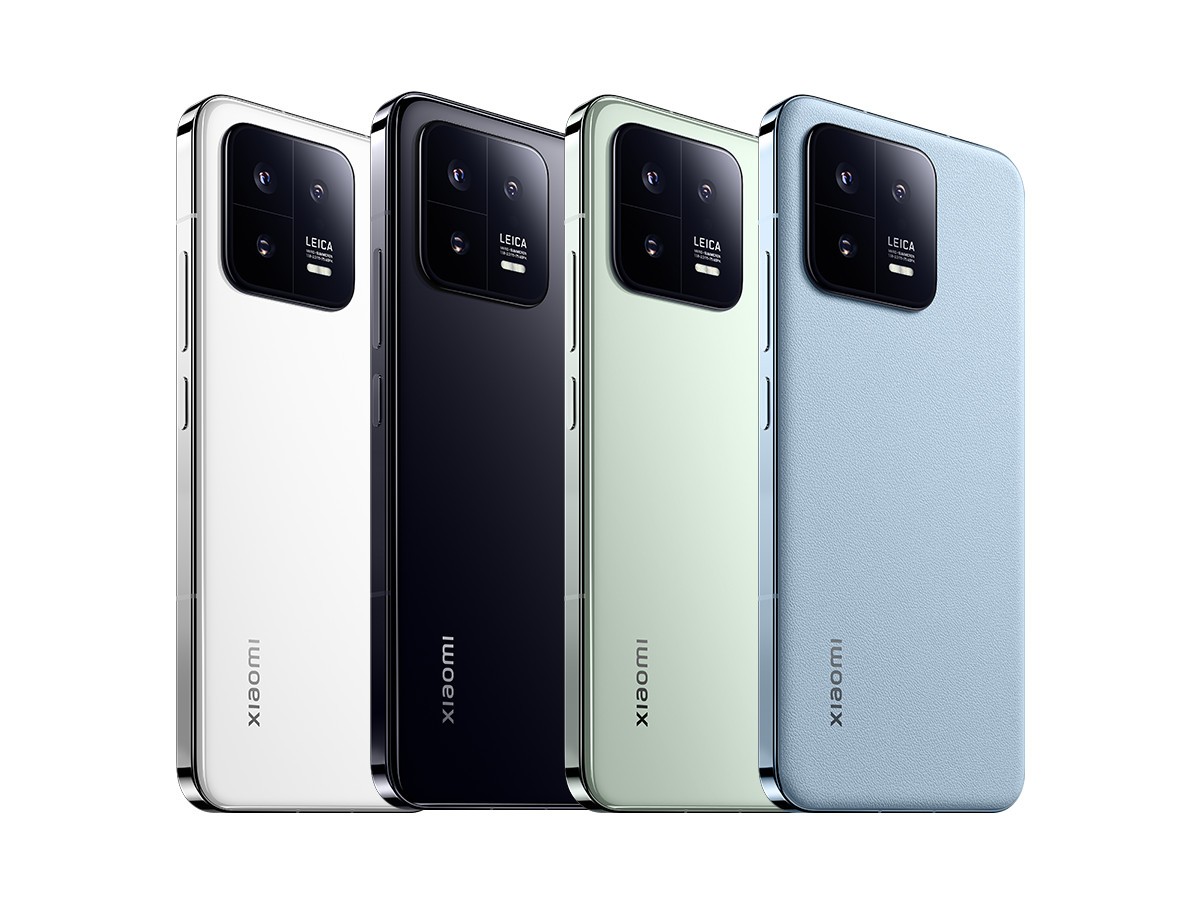
The chip primarily powers high-end smartphones within Xiaomi's ecosystem, such as select iterations of their flagship device lines, designed to showcase their vertically integrated hardware strategy.
How does its single-core performance compare to competitors?
In Geekbench 6 testing, the processor regularly achieves single-core scores hovering around 2,700 to 2,800 points, placing it right alongside contemporary flagship silicon from rival manufacturers.
Does the chip support hardware-accelerated ray tracing?
Yes. The integrated ARM Immortalis-G925 MP16 GPU features native hardware support for ray tracing, improving lighting, shadows, and reflections in compatible mobile games.
Why did Xiaomi build its own processor instead of buying off-the-shelf?
Designing custom silicon allows Xiaomi to tightly control hardware-software integration, optimize power consumption for their specific device form factors, and reduce long-term reliance on external component suppliers.


