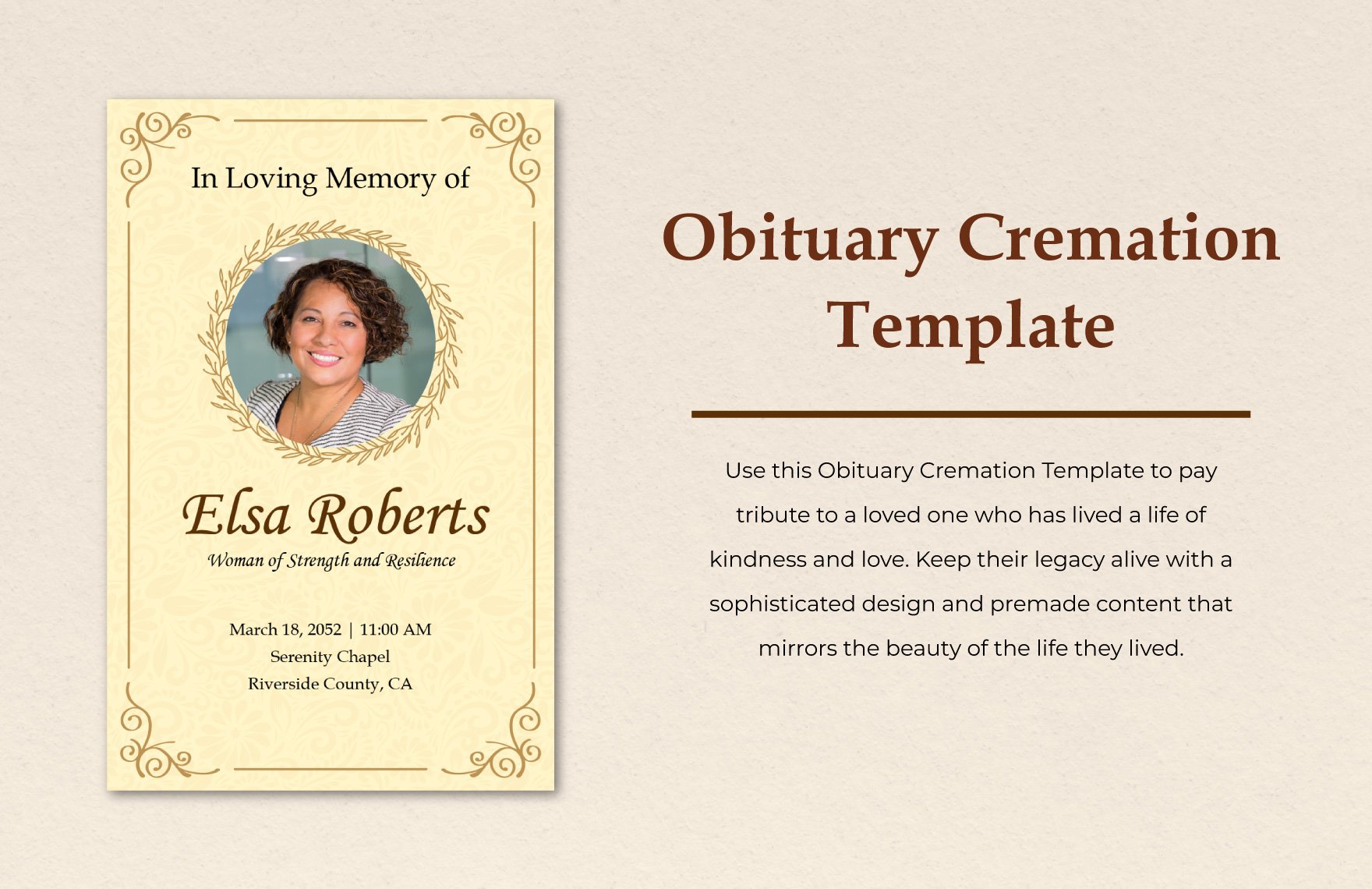
Writing an obituary when you're grieving feels heavy, but putting a person's life into words offers a quiet way to honor them. You don't need a background in creative writing to capture who someone was; you just need a clear structure and a few helpful frameworks.
An effective obituary blends practical facts—like dates, survivor names, and service times—with the distinct personality traits that made your loved one unique. Whether you're preparing a short notice for a local newspaper or a detailed tribute for an online memorial page, knowing how to organize these details makes the process much simpler.
Essential Information to Include
Every standard obituary starts with the core facts. While details can vary based on personal preference or publication space limits, you'll want to gather these baseline elements before you start drafting:
- Full name of the deceased, including maiden names or nicknames they commonly used.
- Age at the time of passing and city of current residence.
- Date and place of death.
- Surviving family members, such as a spouse, children, siblings, and grandchildren.
- Predeceased family members who passed away before them.
- Service details, including the date, time, and location of the funeral, memorial, or celebration of life.
- Memorial contribution instructions, often phrased as donations in lieu of flowers.
Getting these baseline facts organized prevents last-minute scrambling and ensures you don't accidentally leave out a close family member. You can check the Legacy.com guide for additional tips on standard publication requirements.
Step-by-Step Structure for Your Draft
Dividing the writing process into smaller sections helps keep you from feeling overwhelmed. Aim to build your draft in distinct phases, moving from the official announcement to personal reflections.
The Opening Announcement
The first sentence or two should state the reality of the passing with dignity and clarity. Avoid overly flowery language if it doesn't fit your family's voice.
For example, a standard opening looks like this: "It is with deep sadness that the family of Robert 'Bob' Jenkins, 74, of Portland, announces his peaceful passing on October 12, 2025."
Biographical Background and Career
This section tells the story of where they came from and what they spent their time doing. Keep it concise, focusing on milestones that defined their path. Mention their birthplace, schools attended, and key career achievements or military service.
Instead of listing a dry resume, tie their work to their character. If your father spent thirty years as a carpenter, mention how he built custom bookshelves for half the neighborhood or volunteered his weekends fixing local community centers.
Personal Passions and Quirks
This is where the tribute truly comes alive. List hobbies, favorite pastimes, and the quirky habits that friends and family loved about them. Did she always bake extra cinnamon rolls for the mail carrier? Did he refuse to watch a football game without wearing a specific faded jersey? These real details are what readers remember and cherish.
Service Details and Memorial Instructions
Conclude the notice with clear logistical information. State whether the service is public or private, provide the exact venue address, and note any specific dress codes if the family requested them. If you are asking for charitable donations, include the exact name of the organization and instructions on how to contribute online.
Obituary Templates for Different Situations
Adapting a template can give you a solid foundation when staring at a blank page. Adjust these frameworks to match your loved one's story.
Standard Template (For Newspapers or Online Portals)
[Full Name], [Age], of [City], passed away on [Date] at [Place of Death]. Born on [Birth Date] to [Parent Names], [First Name] grew up in [Birthplace].
[First Name] worked as a [Job Title] for [Employer Name] for [Number] years, retiring in [Year]. Outside of work, [he/she/they] loved [Hobbies/Interests] and was known for [Personality Trait or Habit].
[He/She/They] is survived by [Spouse Name], children [Children Names], and [Number] grandchildren. [He/She/They] was preceded in death by [Predeceased Family Names].
A memorial service will be held on [Date] at [Time] at [Location/Venue]. In lieu of flowers, donations may be made to [Charity Name].
Short Template (For Space-Restricted Publications)
[Full Name], [Age], of [City], passed away on [Date]. [First Name] is survived by [Family Members]. A celebration of life will be held on [Date] at [Location]. Memorial donations may be sent to [Charity Name].
Common Mistakes to Avoid
When you're rushing to finalize a notice before newspaper deadlines, errors slip in easily. Keep these pitfalls in mind:
- Forgetting to double-check the spelling of names, especially maiden names and younger grandchildren.
- Omitting key service times or failing to specify whether a service is private.
- Making the obituary too long for local publication limits, which can result in unexpected fees.
- Relying entirely on clichés without including personal details that reflect who the person actually was.
You can consult the National Funeral Directors Association for more insights on managing funeral arrangements and publishing notices.
Frequently Asked Questions
Do we have to include the cause of death?
No, the cause of death is entirely optional. Many families choose to omit it or simply state that the person passed away after a brief illness. Include it only if you feel comfortable sharing that information publicly.
How long should an obituary be?
Standard print obituaries usually run between 200 and 400 words due to publication costs. Online obituaries on memorial websites or funeral home pages can be much longer, often ranging from 500 to 800 words.
Who should proofread the draft before publication?
Ask at least two other family members to read through the final draft. Fresh eyes catch spelling errors in names, incorrect dates, and missing survivor listings much faster than someone who has stared at the text for hours.
Can we write an obituary ourselves instead of using a funeral director?
Yes. Many newspapers and online platforms allow families to submit obituaries directly. You don't have to use the funeral home's preferred writing service if you prefer to write it yourself.



