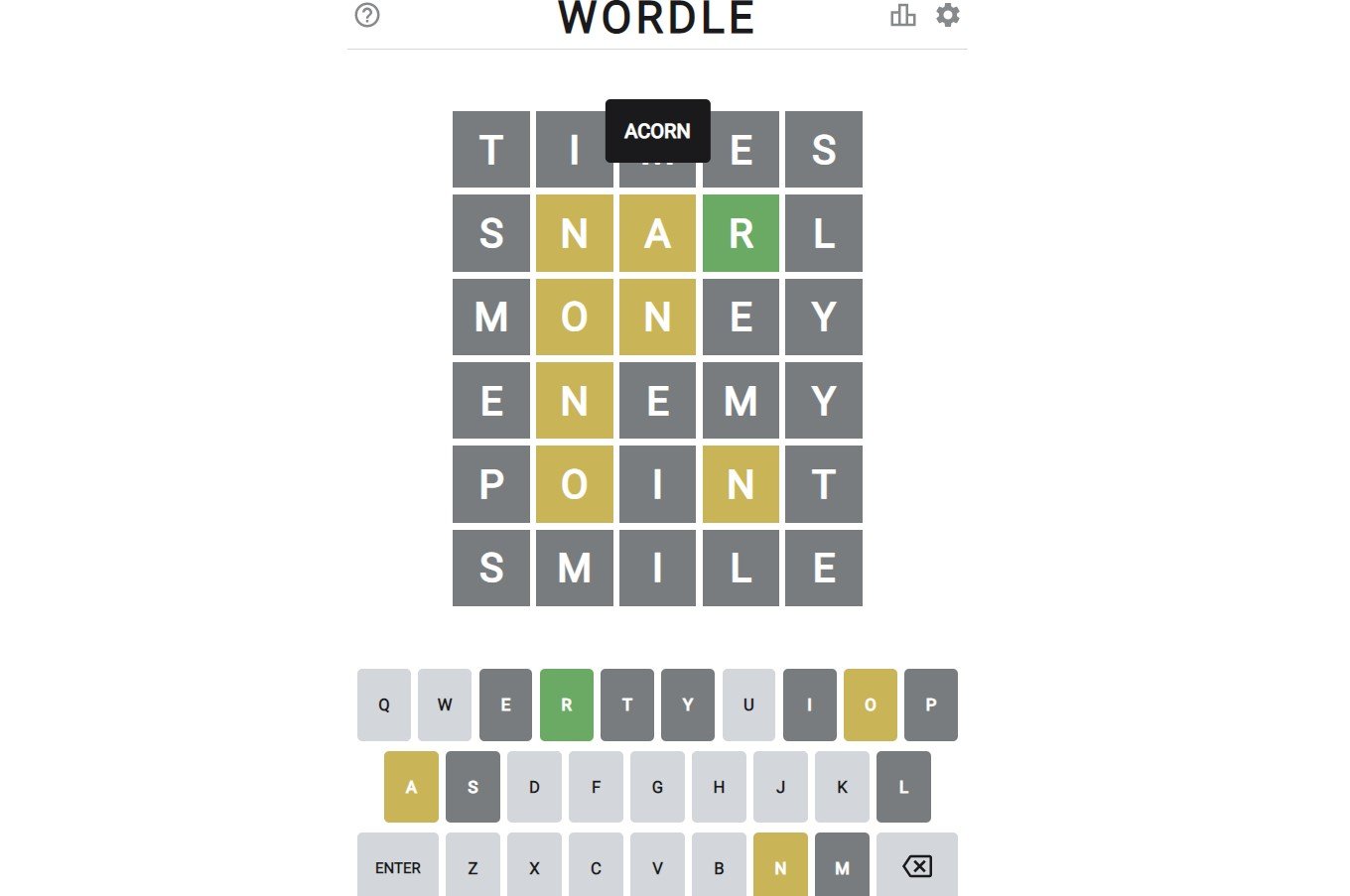
Mastering Wordle isn't about crossing your fingers and hoping for a flash of inspiration on your third try. It's a disciplined exercise in data elimination, logical deduction, and structured vocabulary control. When Josh Wardle first built the viral daily word game, he gave millions of players a shared digital routine. Yet, consistency doesn't come from luck; it comes from treating every row as a strategic tool to squeeze maximum value out of twenty-six letters.
If you're tired of burning through all six guesses on routine days or losing streaks to frustrating double-letter traps, you need a repeatable framework. This breakdown covers high-yield opening strategies, mid-game error avoidance, and the psychological mechanics behind why a simple grid captured global attention.
The Anatomy of an Effective Opening Guess
Your first row sets the trajectory for the entire puzzle. Treating guess one as a direct attempt to solve the puzzle is a rookie mistake. Instead, view your opening word as a scouting mission designed to test high-frequency vowels and common consonants.
The best openers strike a balance by using five distinct letters, avoiding rare characters like Q, Z, or X, and prioritizing structural flexibility.
- CRANE, SLATE, and STARE: These favorites pack multiple common consonants (T, R, N, S, L) alongside heavy-hitting vowels like A and E. They give your board the highest statistical chance of registering a hit.
- The Dual-Opener Method: Some veteran solvers prefer a two-word start (such as ARISE and TOUCH) to cover all five vowels and a massive chunk of standard consonants before locking into narrowing mode. While this leaves you fewer turns to solve, it radically shrinks the potential solution pool.
Sticking to a reliable opener also builds pattern recognition. When you use the same starting word daily, you quickly memorize how to react when only the second letter turns yellow or when the entire row returns grey.
Mid-Game Tactics: Processing Tile Feedback
Once your first row returns color-coded tiles, the real puzzle begins. Green tiles are straightforward—lock them in and don't move them. Yellow tiles require more discipline, as you must shift them to completely new positions while integrating fresh consonants.
The biggest trap at row two or three is stubbornness. If a letter has already turned grey, stop recycling it. Players frequently lose because they fall in love with a rhyming word family—such as guessing POUND, BOUND, HOUND, and WOUND consecutively—only to run out of turns before finding the right prefix.
When you face multiple plausible word endings, pivot to a diagnostic guess. A diagnostic word isn't meant to be the final answer; it's a test word constructed specifically to eliminate three or four remaining candidates in a single stroke. For example, if you're stuck between BARGE, BADGE, and LANCE, playing a word that tests entirely separate consonants clears the board faster than guessing blindly.
Hard Mode vs. Standard Mode Mechanics
The game includes a toggle known as hard mode, which forces you to use any revealed green and yellow clues in subsequent guesses. While it sounds rigorous, many top players actually avoid it.
Standard mode allows you to use exploratory diagnostic guesses that temporarily abandon locked yellow placements to test entirely new letter clusters. Hard mode restricts this flexibility, occasionally turning a routine puzzle into an unnecessary trap when multiple identical word patterns remain. If your goal is consistency and minimizing losses, standard mode provides the tactical freedom required to probe complex letter combinations safely.
The Cultural Phenomenon and Social Impact
Wordle's explosive growth wasn't an accident of code; it was a masterclass in product design and human psychology. By limiting players to one puzzle per day, the developer engineered artificial scarcity. You couldn't binge-play it, which turned a solitary digital pastime into a shared cultural event.
The iconic green-and-yellow grid emoji scores transformed Twitter and group chats into daily leaderboards without revealing spoiler text. It tapped into a universal desire for light intellectual stimulation over morning coffee, proving that games don't need microtransactions, flashy graphics, or high-end hardware to capture the world's attention. Platforms like the The New York Times Games capitalized on this habituation, cementing daily puzzle routines into modern digital culture.
Frequently Asked Questions
What is the most reliable starting word?
Words featuring high-frequency letters like CRANE, SLATE, or STARE offer the best balance of common consonants and vowels. The exact choice matters less than how systematically you use the resulting feedback.
Why did my winning streak reset unexpectedly?
Streaks are tied directly to your browser's local storage and cache. Clearing history, switching devices, or using private browsing modes can sever the data link, resetting your local statistics even if your gameplay habits haven't changed.
How do I handle double letters?
Double letters are notoriously difficult because the game doesn't explicitly tell you a letter appears twice unless both positions are tested. If standard clues leave you stranded with few options, test words that intentionally duplicate a known green or yellow letter to check for pairs.
Is there a mathematical way to solve every puzzle?
Information theory models, such as those relying on Shannon entropy, demonstrate that mathematically optimized guesses can solve over 99% of computer-simulated games by prioritizing maximum uncertainty reduction over immediate solution attempts.



