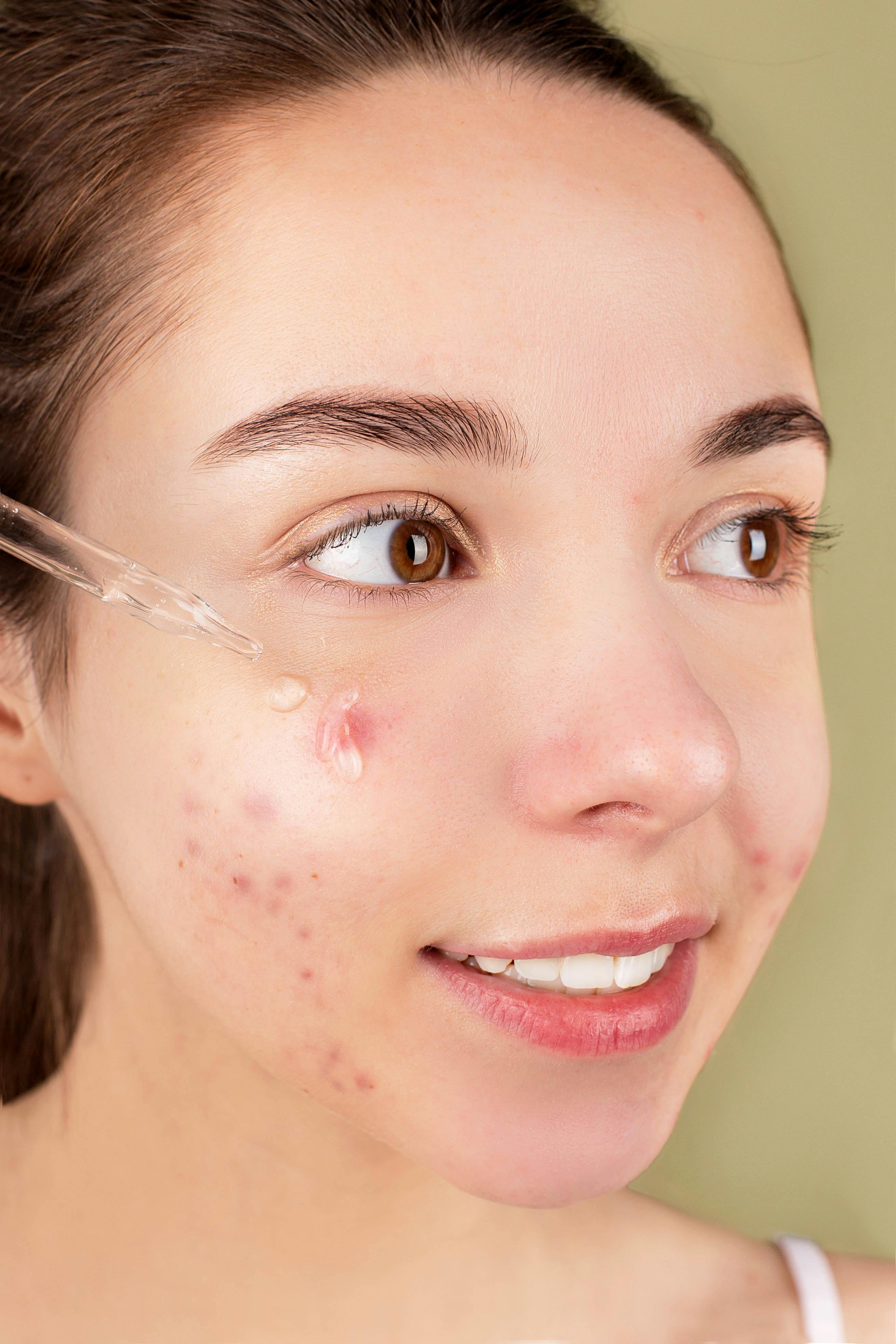
When you press or squeeze a blemish near your jawline or cheek and hear a sudden snap inside your head, it feels bizarre. Hearing your ear crackle when you touch a pimple isn't your imagination, nor is it a sign that your eardrum is bursting. Instead, it points to a direct mechanical connection between your facial skin, underlying bone structure, and the tiny tube responsible for pressure regulation inside your skull.
The physical force you apply to a tender spot on your face transmits through dense soft tissue and bone right up to your middle ear. When that pressure wave hits, it alters the tension on your eardrum or causes a momentary shift in the air trapped behind it, creating an audible clicking or crackling noise. Understanding why this happens requires looking past skincare and diving straight into head and neck anatomy.
The Anatomy Behind the Sound
To grasp why manipulating a facial blemish makes noise in your ear, you have to understand the role of the Eustachian tube. This narrow channel links your middle ear directly to the back of your throat, known as the nasopharynx. Its main job is keeping air pressure equal on both sides of your eardrum so you can hear properly without distortion.
The pathway of this tube runs remarkably close to the jaw hinge, the cheekbones, and the muscles responsible for facial movement. Because facial tissues are interconnected and share tight spaces, applying external force anywhere near the lower face or jaw can compress underlying structures. When you push hard on an inflamed pore, that mechanical energy travels through tissue planes, nudging the delicate tissues around the Eustachian tube opening.
How Physical Force Generates Ear Noises
When you squeeze or prod an inflamed lesion, several physical changes happen in rapid succession beneath the skin:
- Pressure transmission: The physical force you exert moves through the dermal layers and fat pads of the face.
- Bone conduction: Facial bones such as the mandible and zygomatic arch carry vibrations straight toward the temporal bone housing your inner and middle ear structures.
- Tube movement: The sudden external pressure can cause the walls of the Eustachian tube to snap open or shut against each other, releasing trapped air pockets.
- Eardrum tension: Minor shifts in middle ear pressure pull or push slightly on the tympanic membrane, translating into a crisp crackle you perceive internally.
This process is similar to tapping on a tightly sealed container; the disturbance on the outside alters the air pressure inside, resulting in an audible acoustic response.
Why Location Matters
Not every pimple causes this reaction. The anatomical proximity of the blemish to your ear canal or Eustachian tube determines whether you'll hear a sound.
Pimples high up on your forehead or near the hairline are usually too distant to impact your inner ear mechanics. However, blemishes located along the lower jaw, near the tragus of the ear, or deep on the cheeks sit right over major nerve and tissue pathways. A deep cyst or blind pimple along the jawline requires more force to try and pop, which increases the likelihood of sending a strong pressure wave directly toward your ear.
According to the American Academy of Dermatology, deep inflammatory acne and cysts involve significant swelling beneath the surface. This localized swelling already narrows the surrounding tissue spaces, meaning even a tiny amount of touch can trigger pressure changes in nearby structures.
Risks of Squeezing Blemishes Near the Ear
While hearing a crackle is a strange physiological quirk, the habit that causes it carries serious risks. Touching, prodding, or attempting to pop blemishes—especially those on the lower face—frequently pushes bacteria deeper into the skin rather than clearing it out.
The area spanning from the corners of your mouth up to the bridge of your nose is widely known in medicine as the danger triangle of the face. Blood vessels in this zone connect directly to the brain via the cavernous sinus. Introducing staph or strep bacteria through broken skin here can lead to severe infections that require emergency medical intervention.
Furthermore, chronic manipulation of skin near the jaw can cause localized trauma to the temporomandibular joint (TMJ). If you are pressing hard on a blemish right next to your jaw hinge, you might aggravate the joint, leading to soreness, clicking unrelated to your ear, or chewing discomfort.
When to Consult a Professional
Most instances of ear crackling during facial manipulation are fleeting and disappear once the skin heals and pressure is removed. However, certain warning signs mean you should schedule an appointment with a primary care doctor or an ear, nose, and throat specialist:
- Persistent ear pain or a sharp stabbing sensation inside the ear canal.
- Muffled hearing or a feeling that your ear is permanently plugged with water.
- Ongoing dizziness, vertigo, or balance issues after touching your face.
- Ringing or buzzing in the ear that does not fade away within a few hours.
If you develop a spreading redness, warmth, or severe swelling around a facial blemish that begins affecting your ear or jaw movement, visit a healthcare provider to check for a spreading skin infection or abscess.
Frequently Asked Questions
Can popping a pimple actually damage my hearing?
Directly popping a surface blemish will not rupture your eardrum or cause permanent hearing loss. However, if picking leads to a severe localized skin infection that spreads to the outer ear canal or middle ear, temporary hearing muffling can occur.
Why do my ears crackle when I chew or yawn?
Chewing and yawning actively engage the muscles around your jaw and throat that open and close your Eustachian tubes. Hearing a normal click or crackle during these movements is simply your tubes equalizing air pressure and is entirely healthy.
Is it normal to feel facial pressure in my ear during acne treatments?
Using strong topical treatments like prescription retinoids or benzoyl peroxide can cause skin tightening and deep tenderness. If the skin is severely inflamed, normal facial movements or applying skincare products can sometimes transmit minor pressure sensations toward the ear.
What is the safest way to deal with a deep cyst near my jaw?
Leave it alone and apply a warm compress for ten to fifteen minutes a few times a day to help reduce inflammation naturally. If the cyst is painful or persistent, a dermatologist can administer a cortisone injection to shrink it safely without risking infection or tissue damage.



