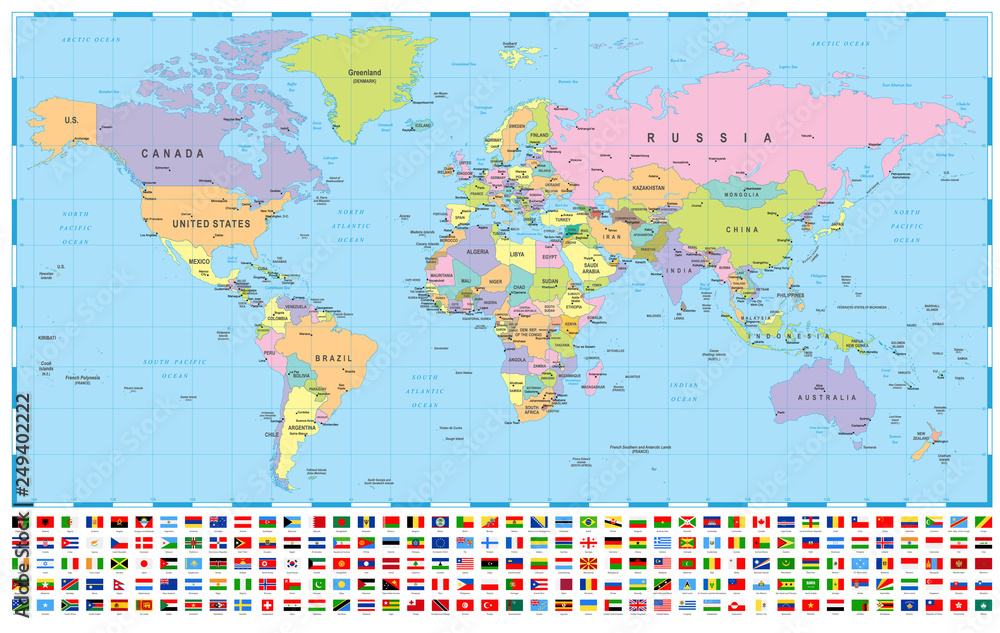
When you see the letters AU, they represent Australia in global digital directories, shipping manifests, shipping containers, and internet databases. This two-letter abbreviation isn't chosen at random. It stems from the International Organization for Standardization (ISO), specifically the ISO 3166-1 alpha-2 standard, which assigns unique two-letter codes to every country and dependent area worldwide. Understanding how these codes work helps clarify where data, web traffic, and international phone calls originate.
Beyond shorthand for the nation, AU serves multiple digital and logistical functions. It appears as the country-code top-level domain (.au) for Australian web addresses, marks international phone formatting, and identifies the Australian Dollar (AUD) in financial markets. If you're wondering how a simple two-letter designation powers global recognition, here's a closer look at what AU means and how it applies across different industries.
The Origin of AU as Australia's Official Code
The designation AU comes directly from the ISO 3166 standard, which was first published in 1974. The goal of this system is to establish internationally recognized codes for names of countries, territories, and specialized geographical entities.
For Australia, the system assigns three distinct variations that serve different technical purposes:
- AU: The alpha-2 (two-letter) code, primarily used for internet domains, software localization, and data systems.
- AUS: The alpha-3 (three-letter) code, commonly used by the United Nations, the International Olympic Committee (IOC), and international shipping.
- 036: The numeric code, used by statistical divisions within the United Nations for data processing.
Using these standardized markers prevents confusion between nations with similar names or linguistic roots, ensuring that software applications and customs agencies route information accurately.
Where You Encounter the AU Code Daily
You'll run into the AU designation across several common digital and commercial environments. Recognizing these contexts makes it easy to spot when a system or product is tied to Australia.
Internet Domain Extensions
Every country has a designated top-level domain on the internet. Australia operates under the .au extension. While many local businesses historically used .com.au, direct second-level domains like .au became available for registration, allowing shorter website addresses for entities with an Australian presence. When you visit a site ending in .au, you're interacting with digital infrastructure managed under Australian regulatory frameworks.
International Telecommunications
When dialing a phone number in Australia from overseas, the country code is +61. However, in many digital phonebooks, contact lists, and software drop-down menus, countries are sorted or displayed by their two-letter alpha-2 codes. If you're configuring a telecommunications app or reviewing server logs for incoming calls, you'll often see AU paired with the +61 prefix to designate Australian phone lines.
Financial Markets and Currency
In global finance, currency codes follow a similar three-letter standard set by ISO 4217. The currency of Australia is the Australian Dollar, represented by the code AUD. In currency trading pairs—such as AUD/USD—the first two letters often point back to the issuing nation's alpha-2 identifier conventions, linking the money directly to the country.
Common Confusions With the AU Code
Because two-letter codes compress complex geographic names into compact forms, people occasionally mix up AU with other international abbreviations.
- Austria vs. Australia: Austria's official ISO alpha-2 code is AT, derived from its native name, Österreich. Despite the phonetic similarity in English pronunciation between the two nations, their digital codes are entirely separate.
- Auburn or Author: In casual text abbreviations or data entry tags, "AU" sometimes gets used as shorthand for internal corporate terms, universities like Auburn University, or author tags. However, in official standards, logistics, and web architecture, it strictly denotes Australia.
Why Global Standards Matter for Geography
Standardized identifiers like AU keep modern supply chains, digital databases, and communication networks running smoothly. Without a unified system, database management across international borders would lead to conflicting entries, shipping errors, and misrouted digital packets.
Organizations like the International Telecommunication Union rely on these standardized frameworks to ensure that a piece of data tagged with AU is recognized universally as belonging to Australia, from Sydney to Perth.
Frequently Asked Questions
What does AU stand for in geography?
In global geography and data standards, AU stands for Australia. It is the official two-letter country code assigned under ISO 3166.
Is AU the same as AUS?
They refer to the same country, but they serve different formats. AU is the two-letter code used for domains and software, while AUS is the three-letter code used in sports, international relations, and Aviation Organization registries.
Why is Austria not coded as AU?
Austria uses AT as its ISO country code, which stems from the German spelling of the country (Österreich). This distinction prevents overlap with Australia.
How do I know if a website is Australian?
Websites operating within Australia's digital jurisdiction typically use the .au extension at the end of their web address, such as .com.au or .net.au.



