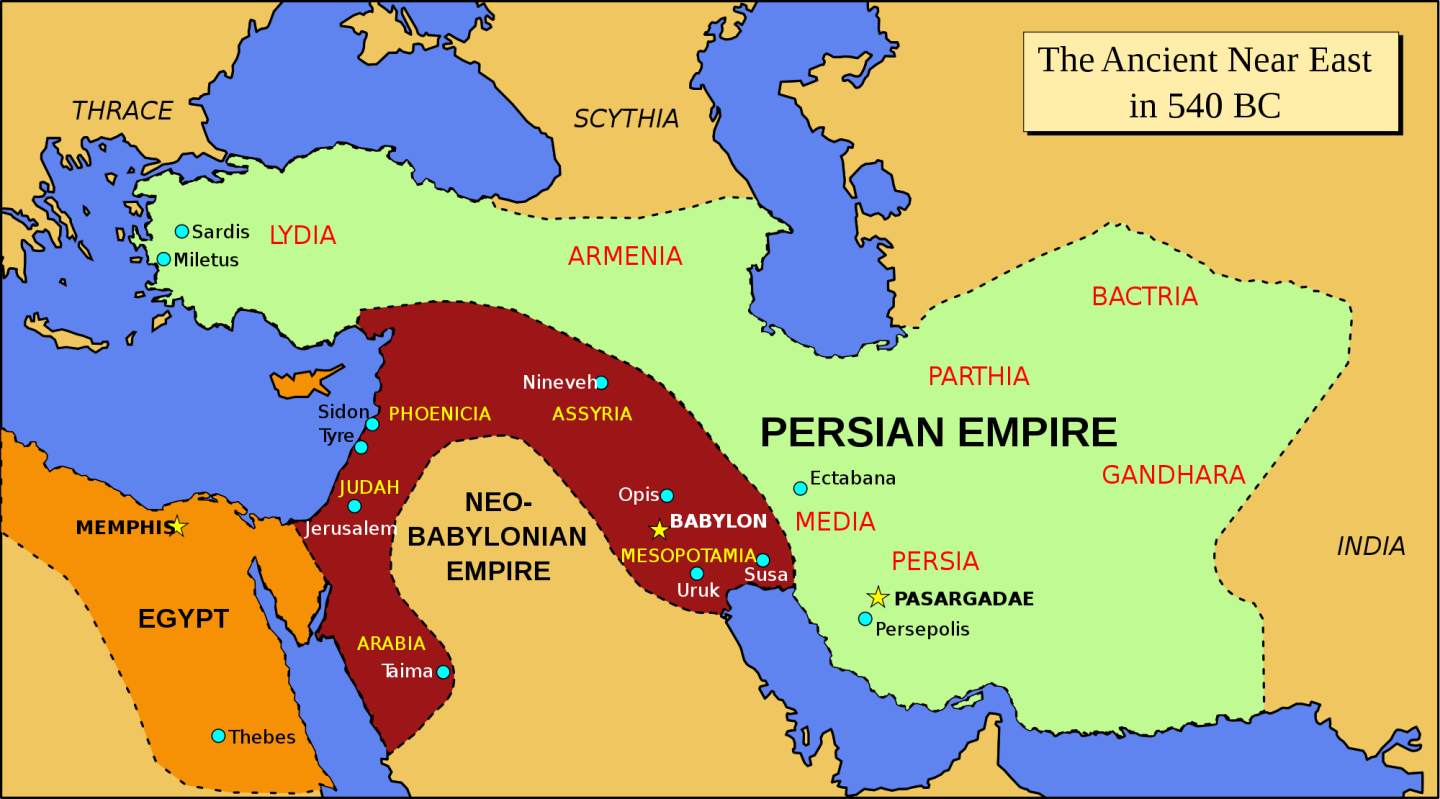
When people ask where Persia is on a modern map, the direct answer points straight to the Islamic Republic of Iran. The heart of the ancient Persian Empire occupies the exact same geographical territory as modern Iran, bounded by the Caspian Sea to the north and the Persian Gulf to the south. Yet, thinking of Persia as just one modern nation misses how far its cultural and political influence stretched during antiquity.
Understanding where Persia lies requires looking past modern borders into the physical geography of the Iranian plateau, the reach of its historic capitals, and how ancient lands map onto contemporary countries. This breakdown examines the physical boundaries of the ancient empire, its relation to modern borders, and why the name Persia still evokes a distinct identity today.
The Geography of the Iranian Plateau
Ancient Persia grew out of a rugged, elevated landscape known as the Iranian plateau. This high-altitude basin covers roughly 3.7 million square kilometers, acting as a natural fortress. Mountain ranges frame the plateau on nearly every side, shaping historical settlement patterns, trade routes, and military defense.
The Zagros Mountains run along the western and southwestern edges, creating a formidable barrier between the plateau and the Mesopotamian lowlands. To the north, the Alborz Mountains catch moisture from the Caspian Sea, shielding the interior from harsh northern weather. Further east and southeast, vast interior deserts—specifically the Dasht-e Kavir and the Dasht-e Lut—create arid, nearly impassable barriers.
These geographical features dictated where ancient cities rose. Major population centers developed in fertile valleys nestled between mountain ridges or along river basins like the Karun River. Because water was scarce across the central deserts, ancient Persians mastered advanced irrigation technology, notably the qanat system, which channeled underground mountain water miles into dry agricultural plains.
Ancient Capitals: Where Imperial Power Was Centrated
Persia wasn't ruled from a single fixed city throughout its millennia-long history. Instead, successive dynasties established capitals across different parts of the plateau and surrounding regions.
Pasargadae and Persepolis
Founded by Cyrus the Great in the 6th century BCE, Pasargadae served as the first capital of the Achaemenid Empire. Located in the Fars province of southwestern Iran, its ruins still stand as an engineering marvel of stone masonry and terraced gardens. Shortly after, Darius the Great established Persepolis nearby as the ceremonial capital. Persepolis became the grand showcase of the empire, designed to impress visiting delegates from dozens of satrapies across three continents.
Susa
Located in the Khuzestan plain of southwestern Iran near the Zagros foothills, Susa served as an administrative capital for the Achaemenids. Its low-lying river valley position connected the Persian heartland directly to ancient Mesopotamia and the royal road networks.
Ctesiphon and Ecbatana
Later dynasties shifted administrative centers. Under the Parthian and Sassanian empires, Ctesiphon (located in modern-day Iraq, just south of Baghdad) served as a major capital, sitting right on the Tigris River. Meanwhile, Ecbatana (modern-day Hamedan in western Iran) functioned as a key strategic hub in the cooler mountain highlands.
From Ancient Empire to Modern Iran
The transition from geographical Persia to modern Iran happened gradually through conquests, administrative shifts, and cultural continuity. For centuries, people within and outside the region used "Persia" to refer to the broader land and its ruling empires.
In 1935, the Iranian government officially asked the international community to use the native name Iran in formal diplomatic correspondence instead of Persia. Iran derives directly from Airan, meaning "Land of the Aryans," a term used by ancient Iranians themselves.
Geographically, the historical lands of Persia extended far beyond the borders of modern Iran during imperial peaks. At its height under the Achaemenid Empire, Persian control covered:
- Modern-day Iran, Iraq, and Afghanistan.
- Parts of modern Turkey, Syria, and Lebanon (the Levant).
- Egypt and parts of Libya along North Africa.
- Portions of Central Asia up to the Indus Valley in modern Pakistan.
- Parts of southeastern Europe, including parts of Greece and Thrace.
Yet, while armies conquered distant lands, the cultural heartland—where the Persian language, poetry, and core population thrived—remained firmly anchored on the Iranian plateau.
Common Misconceptions About Persia and Iran
Discussions about ancient Persia frequently run into a few persistent confusions regarding language, ethnicity, and geography.
Persia Is Not Arabia
A common mistake is grouping Persia with the Arabian Peninsula or assuming Persians are Arabs. While both regions share deep historical and religious ties following the Islamic conquests of the 7th century, Persians are an distinct Indo-European ethnic group. They speak Farsi (Persian), which belongs to the Indo-Iranian language family, completely distinct from the Semitic Arabic language.
Modern Iranians Are the Direct Descendants
Many travelers wonder if the ancient Persians vanished. They didn't. The population living in Iran today carries the genetic and cultural lineage of the ancient Medes, Persians, Parthians, and other indigenous groups of the plateau. Centuries of foreign invasions—by Alexander the Great, Arab armies, and later Mongol forces—absorbed into the local population rather than erasing the underlying Persian civilization.
Frequently Asked Questions
Is Persia a country today?
No. Persia is no longer an official country name. The territory that made up historical Persia is now primarily the Islamic Republic of Iran, alongside cultural overlaps in neighboring countries like Afghanistan and Tajikistan where Persian dialects are spoken.
Why did Persia change its name to Iran?
In 1935, the government of Reza Shah Pahlavi requested that foreign governments refer to the country by its native name, Iran. This was done to emphasize the country's ancient, indigenous roots rather than the Hellenized name "Persia" given by ancient Greek historians.
What language did ancient Persians speak?
Ancient Persians spoke Old Persian, an Indo-European language written in cuneiform script. Over centuries, this evolved into Middle Persian (Pahlavi) during the Sassanian era, and eventually into Modern Persian (Farsi) heavily influenced by Arabic vocabulary after the 7th century.
Where are the main ruins of ancient Persia located?
The most famous archaeological sites, including Persepolis, Pasargadae, and Naqsh-e Rustam, are located in the Fars province in southwestern Iran, roughly near the modern city of Shiraz.



