Where is Panama? Panama is located in Central America, occupying a narrow stretch of land known as the Isthmus of Panama that connects North America and South America. It is bordered by Costa Rica to the west, Colombia to the east, the Caribbean Sea to the north, and the Pacific Ocean to the south. This unique geographic position places it at a major crossroads for international travel and shipping.
Because the country forms an S-shaped bridge between two massive continents, its orientation surprises many travelers. The Atlantic entrance of the Panama Canal actually sits further west than the Pacific entrance. Understanding where is Panama requires looking past a standard flat map to see how this narrow corridor acts as a vital hinge for the entire Western Hemisphere.
The Geography of the Isthmus
The physical layout of Panama shapes everything from its climate to its economy. The country covers roughly 29,119 square miles, featuring a mountainous spine that runs nearly its entire length. The Cordillera Central and Cordillera de Talamanca ranges divide the country into distinct Caribbean and Pacific watersheds.
Rainfall patterns differ drastically between coasts. The Caribbean side receives heavy rainfall nearly year-round, fueling lush tropical rainforests. The Pacific side experiences a distinct dry season from January to April, supporting savannas and dry tropical forests.
- Borders: Shares a 345-mile land boundary split between Costa Rica and Colombia.
- Coastline: Features over 1,500 miles of coastline, dotted with more than 1,600 islands in both the Caribbean Sea and the Pacific Ocean.
- Elevation: Reaches its highest point at Volcán Barú, a dormant volcano standing 3,475 meters (11,401 feet) near the Costa Rican border.
The Geopolitical Hub of the Americas
Panama's location changed global logistics forever by solving a centuries-old navigation problem. Instead of sailing thousands of miles around the stormy southern tip of South America—Cape Horn—vessels cross through the middle of the country via the Panama Canal.
The waterway handles roughly six percent of all global maritime trade, connecting about 144 trade routes used by over 150 nations. Around 14,000 ships transit the 51-mile channel annually, carrying hundreds of millions of tons of cargo. Without this shortcut, modern supply chains between Asia, the United States, and Europe would face severe delays and exponentially higher fuel costs.
Beyond shipping, the country serves as a primary hub for regional aviation and telecommunications. Tocumen International Airport, located just outside Panama City, functions as the "Hub of the Americas," connecting North, South, and Central America with high flight frequency. Major submarine fiber-optic cables also converge across the isthmus, making it a critical node for digital data transmission between hemispheres.
Economic and Demographic Landscape
The strategic value of the country's geography directly drives its economic model. Unlike many of its neighbors whose economies rely heavily on agriculture, Panama relies on a service-oriented economy built around trade, logistics, banking, and tourism.
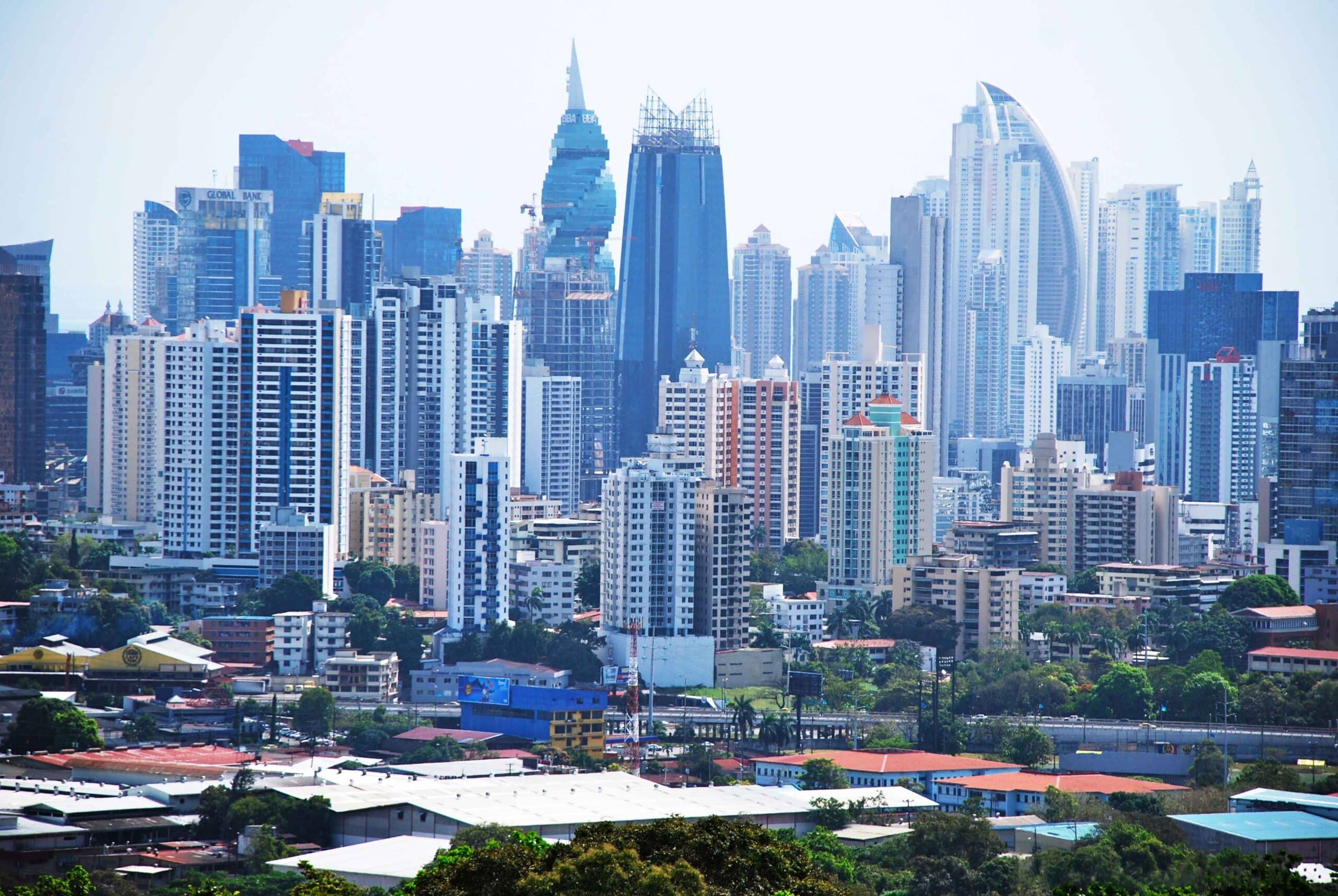
Panama City anchors this modern economy. High-rise office buildings, international banks, and logistics firms line the waterfront, contrasting sharply with the colonial architecture of the historic Casco Viejo district. Approximately two-fifths of the national population lives within the greater metropolitan area, leaving vast stretches of the interior provinces protected as national parks, indigenous autonomous territories (comarcas), and agricultural lands.
Frequently Asked Questions
What continent is Panama in?
Panama is part of the North American continent, specifically situated within the subregion of Central America. Because it forms the physical land bridge to South America, it acts as the literal transition zone between the two landmasses.
What languages are spoken in Panama?
Spanish is the official and dominant language spoken by the vast majority of the population. English is widely understood in business and tourism sectors, and several indigenous groups speak their native languages, such as Ngäbere, Kuna, and Emberá.
Is Panama safe for travelers?
Panama generally ranks as one of the safest countries in Central America for travelers and expats. Major cities, tourist destinations, and transit routes maintain stable infrastructure and security, though visitors should exercise standard urban precautions. The remote Darién Gap region bordering Colombia remains dangerous and is strongly avoided due to isolation and illegal trafficking.
How long does it take to cross the Panama Canal?
A standard ship transit through the Panama Canal takes between 8 and 10 hours on average. The actual duration depends on vessel size, canal traffic, and scheduling slots managed by the Panama Canal Authority.



