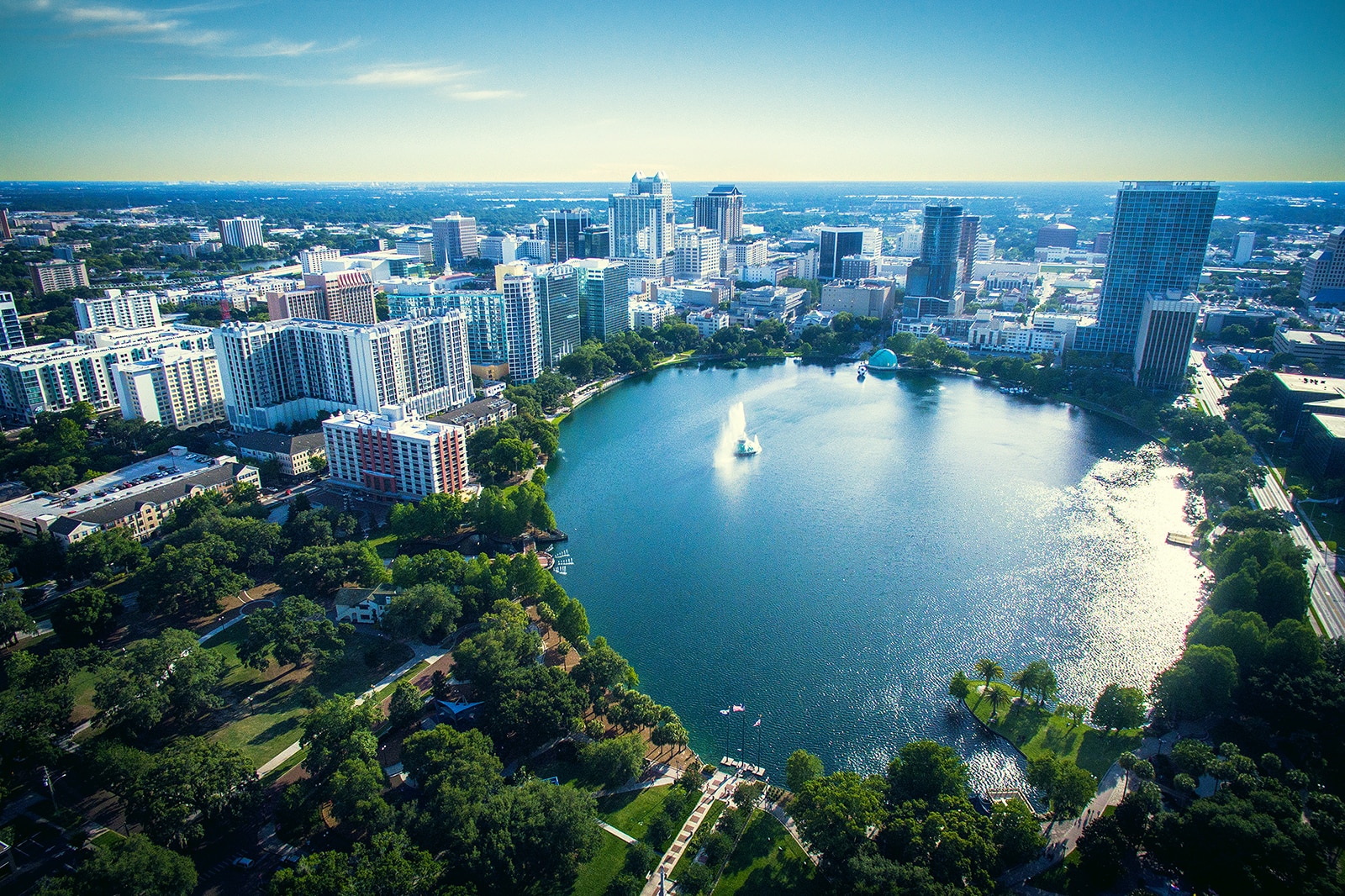
Orlando, Florida sits in the exact middle of the state's peninsula, inside Orange County. If you look at a map, it's roughly equidistant from the Atlantic Ocean and the Gulf of Mexico, making it a natural inland hub. Most travelers picture Orlando as a singular sprawling destination, but the actual city limits contain very few of the famous attractions. The massive theme parks that define the region don't even sit inside downtown Orlando; they sprawl across unincorporated areas and neighboring municipalities to the south and west.
Understanding this geography changes how you book hotels, rent cars, and plan your commute. Downtown Orlando is a business and residential district, whereas the tourist corridor sits miles away near International Drive and Lake Buena Vista. Knowing where things actually lie relative to each other helps you avoid unexpected traffic bottlenecks and long transit times.
Geographic Coordinates and Regional Setting
Orlando lies in the heart of Central Florida, positioned at roughly 28.5383° N latitude and 81.3792° W longitude. The terrain across the region is notably flat, sitting at an average elevation of about 82 feet above sea level. Instead of rolling hills, the landscape features an abundance of shallow lakes, wetlands, and cypress swamps. Lake Apopka stands as the largest body of water in the immediate metropolitan footprint, located just northwest of the city center.
When measuring distance to the coasts, Orlando splits the difference fairly evenly. It sits about 45 miles west of the Atlantic Ocean (near Cocoa Beach) and roughly 80 miles east of the Gulf of Mexico. This inland placement leaves it insulated from direct coastal storm surges during hurricane season, though heavy tropical downpours and afternoon thunderstorms remain a daily reality from June through September.
Where the Major Theme Parks Actually Are
The biggest misconception travelers face is assuming the theme parks are downtown. In reality, Walt Disney World spans over 25,000 acres primarily in southern Orange County and northern Osicoola County, centered around Lake Buena Vista and Bay Lake—about 20 miles southwest of downtown Orlando.
Universal Orlando Resort sits closer to the city center, roughly 10 miles southwest of downtown along Universal Boulevard and Interstate 4. SeaWorld Orlando occupies a similar corridor further south down International Drive. None of these primary tourism anchors operate within the official limits of the City of Orlando; they fall under county jurisdiction or independent special districts.
- Walt Disney World: Located off US-192 and Interstate 4 in Lake Buena Vista, about a 25-minute drive from downtown.
- Universal Orlando Resort: Located off Kirkman Road and Interstate 4, positioned between downtown and the main Disney property.
- SeaWorld Orlando: Located at the intersection of International Drive and Central Florida Parkway, just south of Universal.
The Transportation Spine and Airport Access
Orlando International Airport (MCO) acts as the primary international gateway for visitors, located about 15 miles southeast of downtown and roughly equidistant to Universal and Disney. From MCO, travelers must navigate the region's main highway network to reach their lodgings.
Interstate 4 (I-4) serves as the primary diagonal artery cutting through Central Florida, passing right through downtown Orlando and running southwest past Universal and Disney. Alongside I-4, the Florida Turnpike and the Beachline Expressway (State Road 528) form a heavy toll road network. Renting a car or utilizing rideshares requires budgeting for tolls, as avoiding them adds significant time to cross-town travel.
- Primary Airport: Orlando International Airport (MCO) handles the vast majority of tourist arrivals.
- Main Highway: Interstate 4 (I-4) connects the theme parks, downtown, and beaches.
- Alternative Airports: Orlando Sanford International Airport (SFB) serves select budget carriers further north, about 30 miles from downtown.
Common Mistakes When Navigating Orlando
First-time visitors frequently underestimate the physical scale of the destination. Driving from Universal Studios to Walt Disney World can take anywhere from 15 to 30 minutes depending on I-4 traffic, while traveling from downtown Orlando to the theme parks during morning rush hour creates unexpected delays.
Another frequent error involves relying on walking between attractions outside of specific resort bubbles. While International Drive features sidewalks and the I-RIDE Trolley, the distance between resorts, outlet malls, and parks is vast. Distances that look short on a map often involve multi-lane highways without pedestrian crossings. Staying on-property at Walt Disney World or Universal Orlando eliminates daily highway commuting hurdles.
Frequently Asked Questions
Is Orlando a coastal city?
No. Orlando is landlocked in Central Florida, sitting about 45 miles inland from the Atlantic Ocean and 80 miles from the Gulf of Mexico. Day trips to the beach require driving at least an hour east or west.
Are the theme parks inside downtown Orlando?
No. Downtown Orlando is a commercial and residential business hub. The major theme parks sit 10 to 20 miles south and southwest of downtown in separate municipal districts like Lake Buena Vista.
Do I need a rental car to visit Orlando?
It depends on your lodging choice. If you stay on-site at a major resort complex with complimentary park shuttles, you can manage without a car. If you plan to visit multiple distinct resorts, off-site dining, or beaches, a rental car or rideshare budget is essential.
How far is the airport from Disney World?
Orlando International Airport (MCO) sits about 20 miles northeast of Walt Disney World. Normal driving time ranges from 25 to 40 minutes depending on traffic conditions along the Beachline Expressway and I-4.



