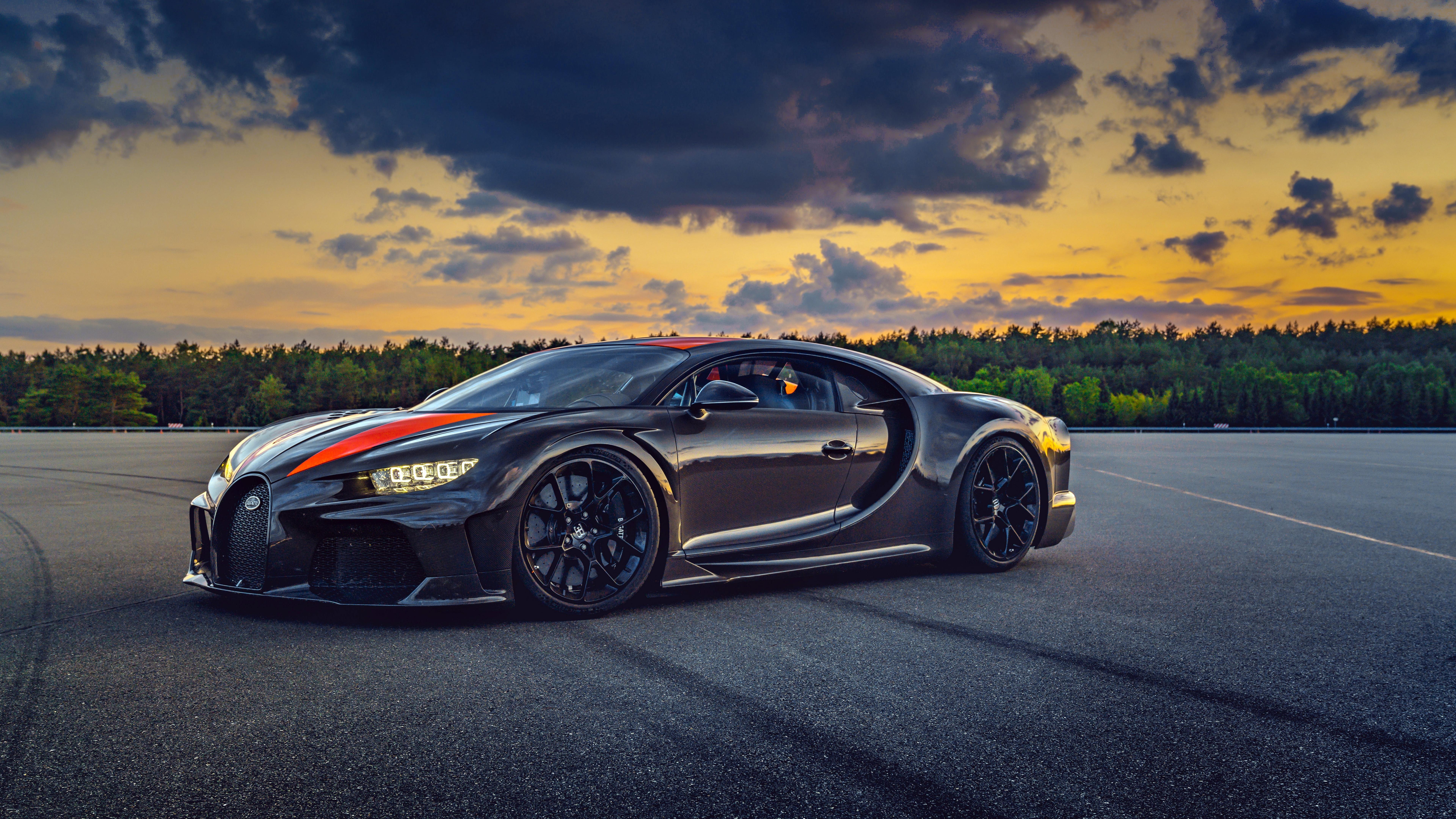
Bugatti is fundamentally rooted in Molsheim, Alsace, France, where founder Ettore Bugatti established the marque in 1909. While its spiritual and physical home remains in the French region of Alsace, the brand’s identity is a complex blend of Italian heritage, French engineering elegance, German corporate resuscitation under the Volkswagen Group, and modern Croatian electric performance via Bugatti Rimac.
Tracing where Bugatti comes from requires looking past a single zip code. The hypercar empire spans more than a century of geopolitical shifts, artistic Italian lineage, French industrial craftsmanship, and modern multi-national ownership.
The Italian Roots of an Alsatian Icon
Ettore Bugatti didn't start in France. Born in Milan, Italy, in 1881 into a prominent family of artists and designers, Ettore possessed an innate artistic eye that heavily influenced his approach to mechanical engineering. His father, Carlo Bugatti, was a renowned furniture and jewelry designer, while his brother, Rembrandt Bugatti, was a celebrated animal sculptor.
Ettore studied at the Brera Academy of Fine Arts in Milan before shifting his focus to motorized vehicles. He built his early technical foundations working with Italian manufacturers before moving to Alsace—which was part of the German Empire at the time—to set up his own independent enterprise. For another look on this story, check out the latest update from Reuters.
When Ettore founded Automobili Ettore Bugatti in Molsheim in 1909, the region's shifting borders meant he operated under German jurisdiction initially, though the culture, language, and artistic soul of the workshop leaned heavily into French elegance. Following World War I, Alsace officially returned to France, cementing Bugatti's status as a French manufacturer of high-performance automobiles.
The Molsheim Atelier: Heart of the Hypercar Empire
Molsheim wasn't just a factory location; it was the ecosystem where Ettore Bugatti brought his mechanical visions to life. Unlike mass-production contemporaries who viewed cars purely as utility, Ettore treated every machine as a fine art piece. The legendary Type 35 Grand Prix car, along with ultra-luxurious models like the Type 41 Royale and the stunning Type 57SC Atlantic, were born in this Alsatian sanctuary.
The production philosophy at Molsheim always prioritized absolute perfection. Ettore famously dismissed critics of his mechanical choices by focusing on uncompromising craftsmanship. Today, modern Bugatti hypercars continue to be hand-assembled at the modern Atelier, situated right next to the historic Château Saint-Jean in Dorlisheim, just outside Molsheim.
The Italian Revival and the Campogalliano Interlude
The original Bugatti family enterprise faded following World War II, compounded by the tragic death of Ettore's son and talented designer, Jean Bugatti, in 1939, and Ettore's passing in 1947. For decades, the brand remained a dormant legend of motorsport history.
In the late 1980s, Italian entrepreneur Romano Artioli acquired the rights to the name, shifting Bugatti's geographic center entirely. Instead of returning to Molsheim, Artioli built a state-of-the-art factory in Campogalliano, Italy, near Modena.
Under this Italian chapter, the company engineered and produced the wedge-shaped, quad-turbocharged Bugatti EB110 in the early 1990s. While technically brilliant—and notably owned by Formula 1 champion Michael Schumacher—economic recessions and an overextended business strategy led to financial collapse, shutting down the Italian facility by 1995.
The German Era and Volkswagen Stewardship
Recognizing the immense historical weight of the badge, the Volkswagen Group purchased the Bugatti trademark in 1998. Under Volkswagen leadership, the brand returned to its spiritual birthplace.
Volkswagen established Bugatti Automobiles S.A.S. as a French subsidiary, restored the Château Saint-Jean, and constructed the glass-walled Atelier in Molsheim. This era birthed the modern hypercar segment with the Veyron 16.4, followed by the Chiron. While corporate management, core research, and powertrain engineering drew heavily from Volkswagen's German infrastructure, final assembly, quality control, and testing remained strictly anchored in Molsheim.
Modern Evolution: The Bugatti Rimac Joint Venture
The latest chapter in Bugatti's geographic and corporate evolution unfolded in 2021 when Volkswagen transferred ownership of the marque to Bugatti Rimac, a joint venture formed with Croatian electric hypercar pioneer Mate Rimac alongside Porsche.
Headquartered near Zagreb, Croatia, while retaining its historic production home in Molsheim, Bugatti Rimac bridges combustion heritage with electrification. The transition introduces hybrid technology to the lineup, starting with the V16-powered Bugatti Tourbillon. Despite shifting global partnerships, the heartbeat of the brand stays fixed in Alsace, proving that Bugatti's geographic identity is defined as much by its craft tradition as its corporate paperwork.
Frequently Asked Questions
Is Bugatti a French or Italian brand?
Bugatti is fundamentally a French brand with heavy Italian roots. It was founded by an Italian-born artist and engineer, Ettore Bugatti, in Molsheim, France. While brief revivals took the brand to Italy in the 1990s, its historic legacy, current headquarters, and assembly operations are entirely based in France.
Where are Bugatti cars manufactured today?
Every modern Bugatti hypercar is hand-assembled at the Atelier located in Molsheim, France. Specialist technicians build each vehicle individually rather than using automated assembly lines.
Who currently owns Bugatti?
Bugatti is owned by Bugatti Rimac, a joint venture featuring the Rimac Group and Porsche. The partnership combines Croatian electric vehicle engineering with traditional French hypercar manufacturing.
Why did Bugatti move to Italy in the 1990s?
Italian entrepreneur Romano Artioli purchased the brand rights in 1987 and chose to build a high-tech facility in Campogalliano, Italy, to leverage the local automotive engineering talent pool near Modena. This facility produced the EB110 before financial difficulties forced it to close in the mid-1990s.



