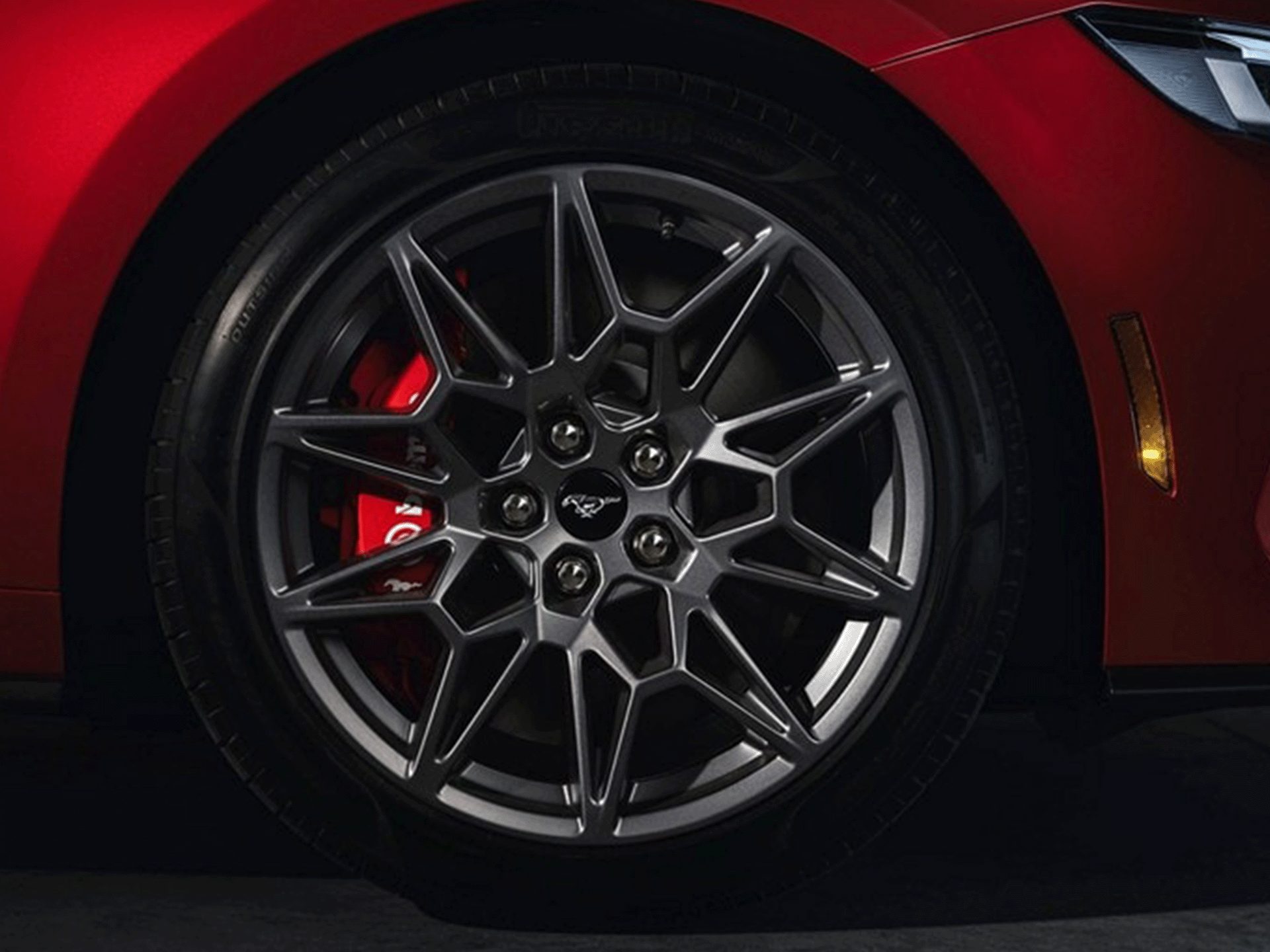
Wheel offset determines how deeply your car's wheels sit inside the fenders or poke outward toward the road. It's measured in millimeters from the wheel's true centerline to the flat mounting surface that bolts against your vehicle's brake hub. Get this measurement wrong, and you'll face uneven tire wear, compromised handling, and rubbing suspension components.
Understanding offset prevents costly mistakes when buying aftermarket rims or changing your tire setup. While people often confuse offset with backspacing, they measure different dimensions of the same wheel assembly. Let's break down how positive, negative, and zero offsets work, how they impact your steering geometry, and how to measure them correctly.
The Core Definitions: Positive, Negative, and Zero Offset
Every wheel has a centerline splitting its width in half horizontally. The hub mounting surface—the pad with bolt holes—rarely sits dead center. Where that pad lands relative to the middle creates three distinct offset categories.
Zero offset happens when the mounting surface lines up perfectly with the wheel's centerline. Trucks and older rear-wheel-drive cars often use this setup because it provides a balanced baseline for steering response and weight distribution. More information into this topic are detailed by Associated Press.
Positive offset means the mounting surface shifts outward toward the street side of the wheel. This pulls the wheel deeper into the fender well. Modern front-wheel-drive sedans and crossovers rely heavily on positive offsets—often between +35mm and +50mm—to keep tires tucked neatly under the bodywork and reduce steering scrub radius.
Negative offset means the mounting pad sits inward toward the vehicle's centerline, pushing the wheel outward. Off-road trucks, lifted 4x4s, and aggressive race setups use negative offset to create a wide stance, clear oversized suspension parts, and increase lateral stability on uneven terrain.
How Offset Differs From Backspacing
Backspacing measures the physical distance from the back edge of the wheel lip to the flat mounting pad, usually given in inches. While offset uses millimeters from the center, backspacing uses inches from the rear rim edge.
You can convert between the two if you know your wheel's overall width. For example, a 10-inch wide wheel with a zero offset actually has a backspacing of about 5.5 inches because manufacturers add an extra inch of total width for the outer bead lips. Ignoring this difference is why many enthusiasts buy aftermarket wheels that end up rubbing against brake calipers or inner control arms.
How Wheel Offset Affects Steering and Suspension
Changing your wheel offset alters more than just your car's stance. It shifts the scrub radius—the pivot point where your steering axis meets the road. Factory engineers spend thousands of hours tuning this geometry for stable high-speed tracking and predictable cornering feedback.
When you install wheels with a much lower offset than factory specifications, you push the tire contact patch outward. This increases the scrub radius, making the steering wheel feel heavier and more eager to pull when you hit potholes or grooves in the highway. Your wheel bearings and ball joints also take on higher loads because the leverage distance between the load and the hub increases.
Accelerated Tire Wear and Alignment Issues
Improper offset ruins tire longevity by distorting the contact patch. If your offset pushes tires too far out, you overload the outer shoulders during turns, causing rapid tread separation on the outside edges. If you tuck them too far inward, the inner shoulders bear the brunt of the vehicle's weight, leading to premature bald spots.
Wheel alignment shops adjust toe, camber, and caster to compensate for normal wear. However, extreme offset changes push suspension angles past their adjustment limits. You can't simply get an alignment and expect the car to drive right if your wheel offset forces your scrub radius out of balance.
How to Measure Your Current Wheel Offset
You don't need a lift or specialized shop tools to check your wheel offset. You just need a tape measure, a straightedge, and a little patience.
- Lay the wheel flat on the ground with the face pointing up.
- Place a straightedge across the back bead edges of the wheel rim.
- Measure the total overall width from the bottom of the rim to the straightedge, then divide that number by two to find the exact centerline.
- Measure the distance from that straightedge down to the flat hub mounting pad on the back of the wheel.
- Subtract the centerline measurement from the mounting pad measurement. If the mounting pad sits closer to the straightedge than the centerline, you have a positive offset. If it sits deeper, you have a negative offset.
For more details on vehicle geometry standards, visit the Society of Automotive Engineers.
Common Mistakes When Changing Wheel Offsets
Enthusiasts often make critical errors when upgrading their wheels for a more aggressive look.
The biggest mistake is ignoring inner and outer clearance. Pushing a wheel outward by 20mm might look great, but it often causes the tire shoulder to slice against your plastic fender liners when turning hard over bumps.
Another frequent error is assuming all wheels with the same bolt pattern fit the same car. Two wheels can share a 5x114.3 bolt pattern, but if one has a +40mm offset and the other has a 0mm offset, the second wheel will poke several inches past your fenders and ruin your handling.
Always check brake caliper clearance, too. As offset changes, the inner spokes of the wheel move relative to your brake rotors and calipers. Many aftermarket wheel upgrades require spacers or specific spoke designs just to clear big brake kits.
Frequently Asked Questions
Can I use wheel spacers to fix the wrong offset?
Yes, bolt-on wheel spacers push the mounting surface outward, effectively lowering your offset. A 10mm spacer turns a +45mm offset wheel into a +35mm setup. However, cheap slip-on spacers reduce thread engagement on your lug studs and can cause dangerous wheel vibrations at highway speeds.
Does wheel offset affect fuel economy?
Indirectly, yes. Changing to a lower offset often requires wider tires with more aggressive tread compounds. The added weight and increased rolling resistance require more engine power to maintain speed, which slightly decreases fuel mileage.
How do I find my car's factory offset specification?
You can usually find your factory offset stamped into the back of your current wheel spokes, often preceded by the letters "ET" (from the German word Einpresstiefe). If it isn't stamped there, check your vehicle owner's manual or consult an online fitment database like Tire Rack.
Will changing wheel offset void my suspension warranty?
Significant changes to wheel offset increase the stress loads on wheel bearings, hubs, and control arm bushings. If a suspension component fails prematurely because you installed deeply negative offset wheels, dealerships may deny warranty coverage for those repairs.



