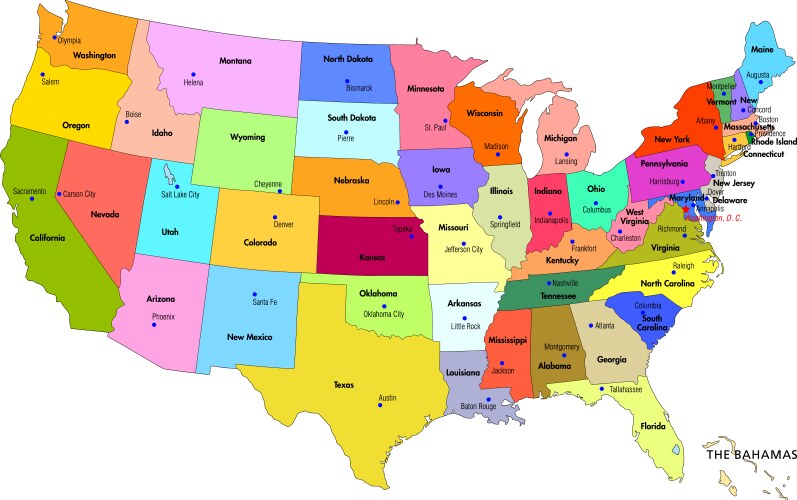
Illinois is officially known as the Prairie State. This iconic moniker reflects the vast ocean of tallgrass prairies that once covered roughly two-thirds of the state's total land area before European settlement. While cities like Chicago dominate modern perceptions, the state's deep ecological roots are tied to these rich grasslands.
Understanding why Illinois earned this title requires looking back at geography, history, and environmental transformation. Today, very little of that original landscape survives, but the nickname remains a defining part of the state identity.
The Geography Behind the Nickname
Before the 19th century, Illinois wasn't just flat farmland; it was a dynamic, living sea of grass. The term "prairie" comes from a French word meaning meadow, used by early French explorers to describe the rolling, treeless plains they encountered in the American Midwest.
The state's landscape was shaped by retreating glaciers thousands of years ago. These glaciers left behind flat, nutrient-rich till plains. Trees struggled to establish themselves across these expansive tracts because of periodic fires, deep-rooted perennial grasses, and grazing wildlife.
- The Grand Prairie: This was the largest natural division in Illinois, stretching from the Indiana border west to the Illinois River.
- Soil Composition: Centuries of dense root growth created some of the richest topsoil on Earth, which later attracted agricultural pioneers.
- Biodiversity: The ecosystem supported millions of migratory birds, bison, elk, and hundreds of species of native wildflowers and grasses.
History of the Prairie State Monitored
How did the nickname become official? Unlike some state mottos or symbols enacted by specific legislative acts early on, "The Prairie State" evolved organically through common usage in the 19th century. Writers, travelers, and early state politicians frequently used it to distinguish Illinois from heavily forested eastern states.
As settlers arrived with iron plows, they realized that breaking the tough prairie sod was difficult work. John Deere's invention of the self-scouring steel plow in Illinois changed everything. Farmers rapidly converted the grasslands into productive corn and soybean fields.
By the late 1800s, the vast majority of the original landscape had been plowed under. Recognizing the loss, modern conservation groups and state agencies work to restore small pockets of native prairie, such as the Illinois Department of Natural Resources initiatives, ensuring the namesake ecosystem isn't entirely forgotten.
Other Illinois Nicknames and Symbols
Illinois isn't defined by just one moniker. It carries a few other official and unofficial titles that highlight different facets of its heritage:
- The Land of Lincoln: This is the most prominent alternative nickname, honoring Abraham Lincoln, who spent his formative political career in Springfield, Illinois.
- The Inland Empire State: A less common historical nickname pointing to its strategic geographic and economic position in the American interior.
The state also designates specific symbols to honor its grassland heritage. For instance, big bluestem (Andropogon gerardii) serves as the official state prairie grass. Often called the "emperor of the prairies," this grass can grow up to eight feet tall.
Common Misconceptions About Illinois Geography
Many people assume the entire Midwest looks uniform, but Illinois features distinct geographical variations.
- Not All Flat: While central Illinois is famously flat, the northwestern corner features the Driftless Area—unchanged by the last glaciers—with steep hills and rugged limestone bluffs. Southern Illinois contains the Shawnee National Forest, characterized by rolling hills, rocky canyons, and dense hardwood forests.
- The Prairie vs. Farm Myth: Modern corn and soybean fields are often mistaken for natural prairies. While they occupy the same land, monoculture crops lack the complex biodiversity, deep root systems, and ecological resilience of a true tallgrass prairie.
Frequently Asked Questions
Why is Illinois called the Prairie State if there are so few prairies left?
The nickname honors the historical landscape that dominated the region before agricultural development. Even though over 99 percent of the original tallgrass prairie has disappeared, the name preserves the ecological history of how the land appeared to early settlers and explorers.
How much original prairie is left in Illinois today?
Current estimates from environmental organizations indicate that less than 0.01 percent of high-quality, unaltered pre-settlement prairie remains in the state. Most surviving remnants exist along old railroad rights-of-way, pioneer cemeteries, and protected state nature preserves.
What is the difference between a tallgrass prairie and a shortgrass prairie?
Tallgrass prairies, found in wetter regions like Illinois, receive more rainfall and support grasses that grow several feet tall. Shortgrass prairies exist further west toward the Rocky Mountains where rainfall is scarce, featuring much shorter vegetation.
Are there places to see restored prairies in Illinois?
Yes. Several public and private entities maintain restored prairie sites. Organizations like The Nature Conservancy manage dedicated preserves where visitors can walk among native grasses and wildflowers that once covered the entire region.



